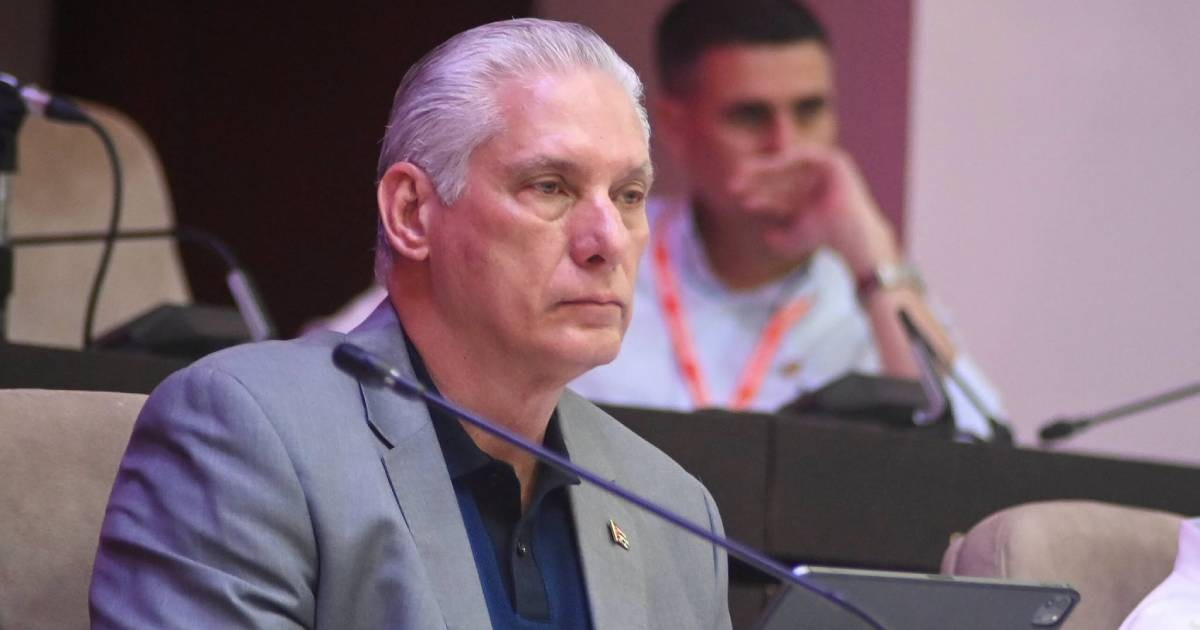
The Cuban leader Miguel Díaz-Canel issued a defiant message towards Washington on Tuesday, asserting that Cuba "will never again be a colony of any empire" and that its sovereignty will be defended "to the last consequences," marking his latest response to the maximum pressure campaign from the Trump administration.
The leader posted the message on social media X shortly before noon in Havana, invoking the island's colonial history to implicitly reject the pressures from Washington.
"Cuba, which knows well the meaning of having been a colony and neocolony of two empires, is clear that it will never again be subjected to either. The blood that has been shed for its independence, sovereignty, and self-determination will not be in vain, and we will defend it to the last consequences," he affirmed.
The reference to "two empires" alludes to Spain—from whose domination Cuba gained independence in 1898—and to the United States, whose influence over the island during the first half of the 20th century is described by the Cuban official discourse as a "neocolonial" period.
The most likely trigger of the tweet was the statement from Secretary of State Marco Rubio on September 3, when he asserted: “Trump and I are firm that Cuba will be free”, a phrase that the Cuban government interprets as an expression of interventionist intentions.
Díaz-Canel's message is part of a rhetoric he has maintained throughout 2026. In January, he declared that "no one tells us what to do"; in July, he insisted that "we will not surrender our sovereignty or our independence"; and at the end of that same month, he accused the United States of being a "neofascist regime".
That rhetoric occurs while the Trump administration has imposed more than 240 sanctions against Cuba since January, including Executive Order 14404 signed by President Donald Trump on May 1, which expanded the blockade on assets and interests related to the Cuban regime in U.S. territory.
Among the recent measures are direct sanctions against Díaz-Canel himself, his wife Lis Cuesta, and Alejandro Castro Espín - son of Raúl Castro - in June, as well as new restrictions approved in August against entities linked to foreign trade, mining, and the acquisition of arms for the Armed Forces.
The that the expanded sanctions since June have even blocked the purchase of fuel for humanitarian purposes, worsening an energy crisis that was already dragging down the Cuban economy after a cumulative decline of around 15% between 2024 and 2025, with widespread blackouts and a halt in transportation.
The popular response to Díaz-Canel's tweet was revealing. While some users echoed official slogans, one internet user wittily summarized the contradiction in the discourse: "Today, Cubans are a colony of a Party."
Rubio has set the goal for Cuba to be on an "irreversible path towards a different future" before Trump's term ends in January 2029.
Related videos:
Filed under: