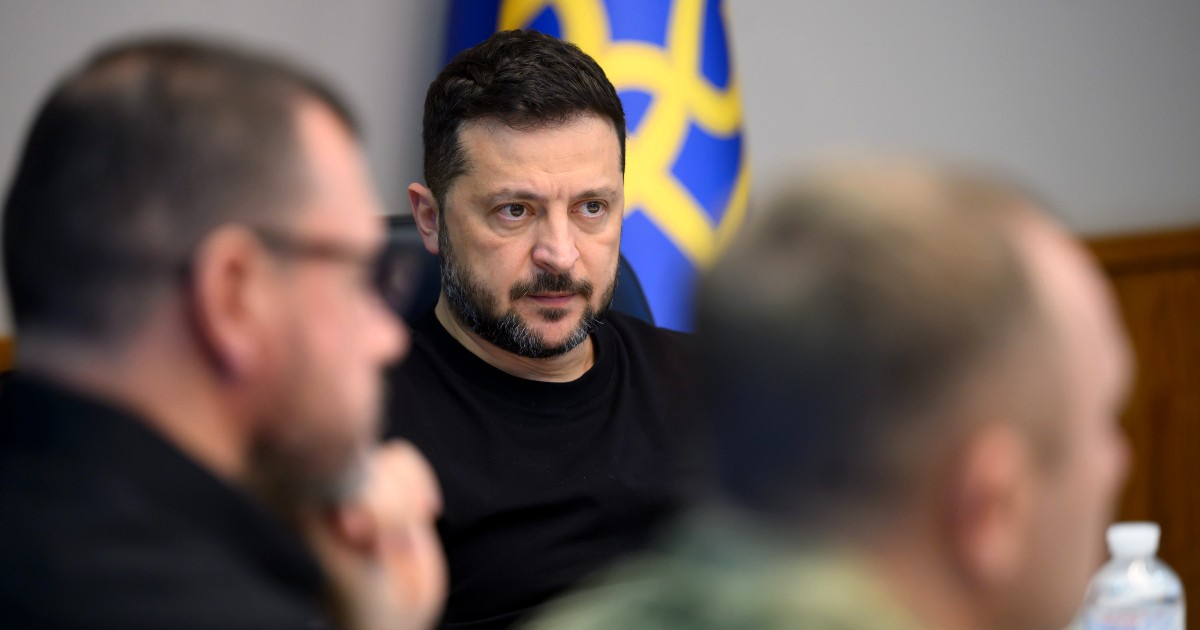
The Ukrainian President Volodymyr Zelensky warned this Monday that Russia has effectively initiated an additional mobilization and plans to expand the enlistment of foreign citizens into its ranks, a warning that comes at a time when the Cuban regime still fails to explain what measures it has taken to stop the departure of Cubans willing to fight for Moscow.
In a message posted on social media, Zelenski was clear: "The Russians have already begun additional mobilization. They are increasing the number of people they recruit by various methods. They also plan to increase the enlistment of foreigners. It is important that the governments of the countries from which Russia recruits people for its army counteract this. We will inform each relevant government."
The warning has a particular resonance for Cuba. Just five days earlier, Zelenski had directly addressed the Cuban regime from the UN General Assembly, pointing out that Russia is using citizens from 47 countries in the war and sending an unambiguous message to Havana: "Do not let Putin drag you into this war".
The Cuban regime has systematically ignored that call and Havana has not reported any concrete measures to stop the flow of Cubans into the Russian ranks.
The recruitment of Cuban citizens for the war in Ukraine is a phenomenon documented since at least 2024. The networks operate mainly outside the island, targeting Cuban emigrants in Russia with promises of work, high salaries, or Russian citizenship, and then sending them to the front lines.
Amnesty International denounced in September 2026 that these practices constitute human trafficking, with cases of Cubans being deceived, coerced, or directly recruited from Russian prisons with the promise of avoiding deportation.
A dossier from the Ukrainian project "I Want to Live" identified in May 2025 1,028 Cubans with verifiable personal data, documents, and dates of enlistment in the Russian army. In August of this year, Russia even granted citizenship to one of those Cuban mercenaries.
As Moscow expands its recruitment network, the cost of the invasion continues to rise. Ukraine has intensified in September its long-range attacks on Russian energy infrastructure, targeting refineries in Moscow, Rostov, Samara, Perm, and Krasnodar.
The attack on September 20 at the Gazpromneft refinery in Moscow halted crude processing, with repairs that industry sources say could take weeks.
In his message on Monday, Zelenski also revealed new information about military cooperation between Russia and North Korea: more than 8,000 North Korean soldiers are currently on Russian territory, and the deployment of another 10,000 selected for training is in preparation. As payment, Moscow has transferred technology to Pyongyang, including the establishment of a production line for Shahed-type attack drones on North Korean soil.
On that same Monday, Russia launched more than 120 drones against Ukraine—over 90 of them being jet-powered—resulting in at least nine deaths in various regions and more than eighty injuries just in Kiev, where a projectile struck the building of the National Academy of Sciences.
Ukrainian intelligence estimates that Russia plans to mobilize up to 600,000 people between 2026 and 2027 to sustain the war, which suggests that the pressure on the governments of countries with citizens in the Russian ranks —Cuba among them— will only increase in the coming weeks.
Related videos:
Filed under: