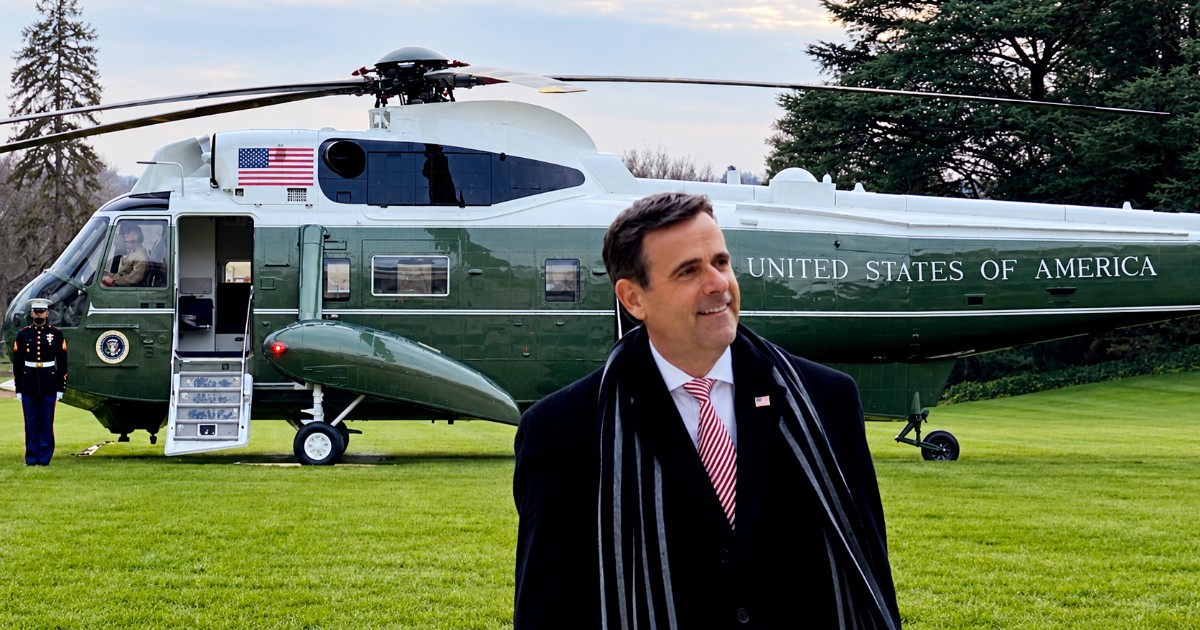
The CIA director, John Ratcliffe, traveled secretly to Moscow at the end of August to deliver a stark assessment of Russia's military and economic state to the head of the Russian intelligence service FSB, Aleksandr Bortnikov.
The goal was to urge the Kremlin to seek a peace agreement with Ukraine before its situation deteriorated further, according to an investigation by the New York Times.
Ratcliffe spent approximately four hours in the Russian capital, marking his first in-person meeting with Bortnikov since Donald Trump returned to the White House. The Kremlin confirmed that there were contacts between intelligence services, but denied that the CIA director met directly with Vladimir Putin.
The message that Ratcliffe took to Moscow did not include explicit threats, but it did provide a brutal overview of the conflict. According to the NYT, he told Bortnikov that "it was time for Moscow to engage in serious negotiations to end the war", presenting the reality of the battlefield as unsustainable for Russia.
This assessment aligns with public statements made by Ratcliffe weeks earlier: he pointed out that the life expectancy of a Russian soldier on the front lines was less than 35 minutes, and that Russia had conquered barely 1% of Ukrainian territory in the 18 months since he took over as director of the CIA, a feat he attributed to Ukraine's dominance in drone technology.
The numbers support this diagnosis. The Center for Strategic and International Studies (CSIS) estimated that Russia accumulated around 1.4 million total casualties —including deaths, injuries, and missing persons— by June 2026, with between 400,000 and 450,000 dead.
Furthermore, the planned Russian military expenditure for this year amounts to 6.3% of GDP, while oil and gas revenues fell by 45% year-on-year in the first quarter, and the country's sovereign fund decreased from 6.5% to 1.8% of GDP since the invasion began.
The Ratcliffe-Bortnikov channel operates in parallel and separately from the diplomatic contacts that envoy Steve Witkoff and Jared Kushner maintain with other advisors of Putin. U.S. officials were confident that Putin—former intelligence officer—would perceive the message from the head of the CIA as more urgent and credible than the ordinary diplomatic channels.
Before flying to Moscow, Ratcliffe spoke with his Ukrainian counterparts to assure them that he would explore Russia's positions without making concessions on their behalf. Ukrainians are skeptical of Witkoff and Kushner, viewing them as too close to Moscow, and see Ratcliffe—historically a critic of Russia—as a more neutral interlocutor.
According to Axios, Ratcliffe also proposed during the visit a trilateral summit between Trump, Putin, and Ukrainian President Volodimir Zelenski as a possible way to resolve the conflict.
The mission in Moscow is part of a pattern of discreet assignments that Trump has entrusted to Ratcliffe throughout 2026.
In January, he was the first U.S. high-ranking official to visit Venezuela following the capture of Nicolás Maduro. In May, he traveled to Havana, where he met with the Minister of the Interior Lázaro Alberto Álvarez Casas and the Chief of Intelligence Ramón Romero Curbelo to warn the Cuban regime about the deterioration of its economy due to the oil blockade and to demand profound political and economic changes.
European diplomats believe that the upcoming winter months present a window of opportunity for an agreement, given the stalled Russian offensive in the Donbas and Ukraine's ability to continue inflicting significant costs with its drones.
As the newspaper NYT pointed out, «it has become increasingly clear that Ukraine will not give up its fight in the east, even with diminished U.S. military support».
Related videos:
Filed under: