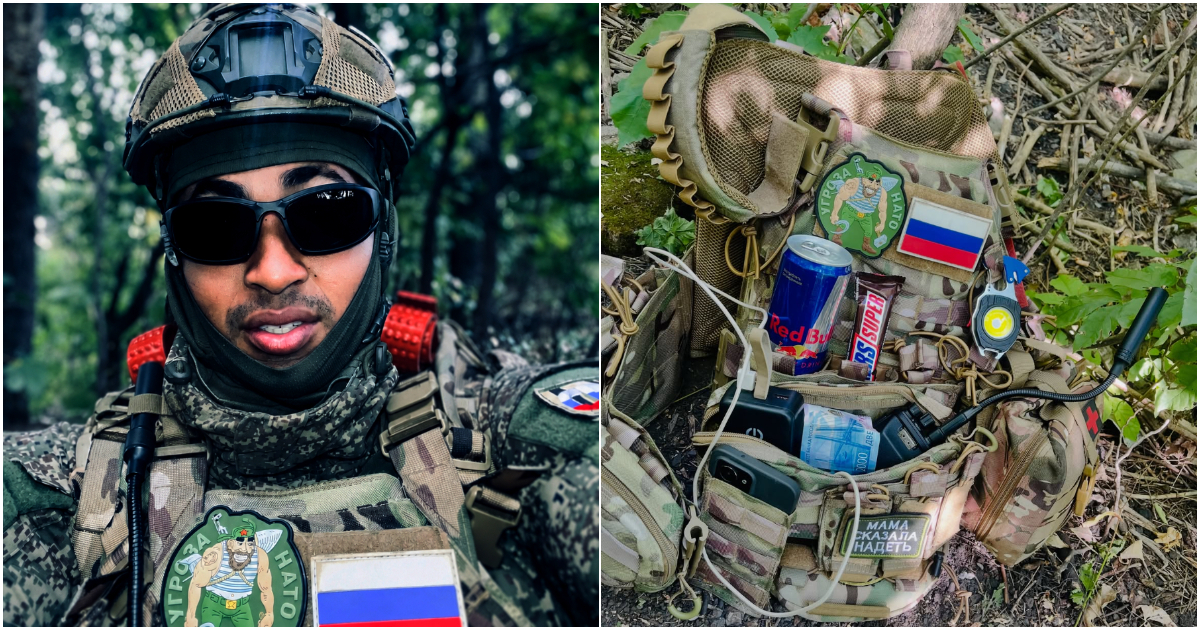
The 2026 Trafficking in Persons Report from the U.S. Department of State, published on October 8, retained Cuba at Tier 3—the most severe category—for the seventh consecutive year and included for the second consecutive time the fraudulent recruitment of Cuban citizens to fight as mercenaries in Ukraine on behalf of Russia,
The document notes that Cubans were lured through fake job offers posted online—jobs in construction or other trades in Russia—and that upon arriving in Moscow, they were coerced into serving as mercenaries on the Ukrainian front.
“According to experts and media reports, Cuban citizens were fraudulently recruited to fight for Russia in Ukraine; individuals with direct experience reported being recruited online for construction or other jobs in Russia and, upon arriving in Moscow, were coerced into working as hired mercenaries in Ukraine,” the report specifies.
This is the second time that the State Department's annual report includes the issue of Cuban mercenaries. The first was in the TIP 2025, published in September of last year, which turns the accusation into a consolidated and reiterated claim.
In response to that initial mention, the Ministry of Foreign Affairs (MINREX) denied any state responsibility and maintained that the Cubans who participated in the conflict did so "on their own", without encouragement, involvement, or consent from the Cuban state.
In light of this year's report, Chancellor Bruno Rodríguez Parrilla once again rejected the document, labeling it as "unilateral" and "deceitful," and described the allegations concerning medical missions as "sick persecution."
Beyond the issue of mercenaries, the 2026 report accuses the Cuban regime of maintaining a "government policy or pattern" of forced labor through its labor export program.
Approximately 18,000 Cuban workers were deployed in 52 countries at the beginning of 2026, down from the 24,000 recorded at the start of 2025, a reduction attributed to U.S. diplomatic pressure and the termination of bilateral agreements with Cuba by four countries over the past year.
The regime retains between 50% and 95% of the salaries that recipient countries pay for the services of these workers, subjects them to surveillance, curfews, and movement restrictions, and threatens their families in Cuba to prevent them from leaving the missions. Health professionals represent 75% of the exported civilian personnel and are the main source of foreign currency for the program.
The report also denounces that the regime subjects some political prisoners to forced labor in agriculture, sugarcane cutting, construction, and public services, and that it exports goods produced with this labor —such as marabou charcoal and tobacco— to some European countries.
In terms of prosecutions, the situation worsened: Cuba investigated 14 cases of sex trafficking in 2024, the same as in 2023, but prosecuted and sentenced only 10 traffickers, compared to 19 convictions the previous year. It did not investigate any cases of forced labor and has not prosecuted or convicted any labor traffickers since at least 2022.
The emphasis on Cuban mercenaries has also been reinforced by other international actors.
In September 2026, Amnesty International published a report documenting the recruitment of foreigners —including Cubans— through deceit and coercion, and urges Ukraine to individually assess whether some prisoners of war are victims of trafficking.
In November 2025, the organization Citizenship and Freedom presented in Berlin a report estimating that up to 25,000 Cubans have been recruited for the Russian army, according to data from Ukrainian intelligence.
Cuba is among the 12 countries in the world with a documented "policy or pattern" of state-sponsored human trafficking, alongside Afghanistan, Belarus, Myanmar, Cambodia, China, Eritrea, Iran, North Korea, Russia, South Sudan, and Sudan.
The attendance restrictions associated with Level 3 will come into effect on October 1, 2026, marking the start of the next U.S. fiscal year.
Related videos:
Filed under: