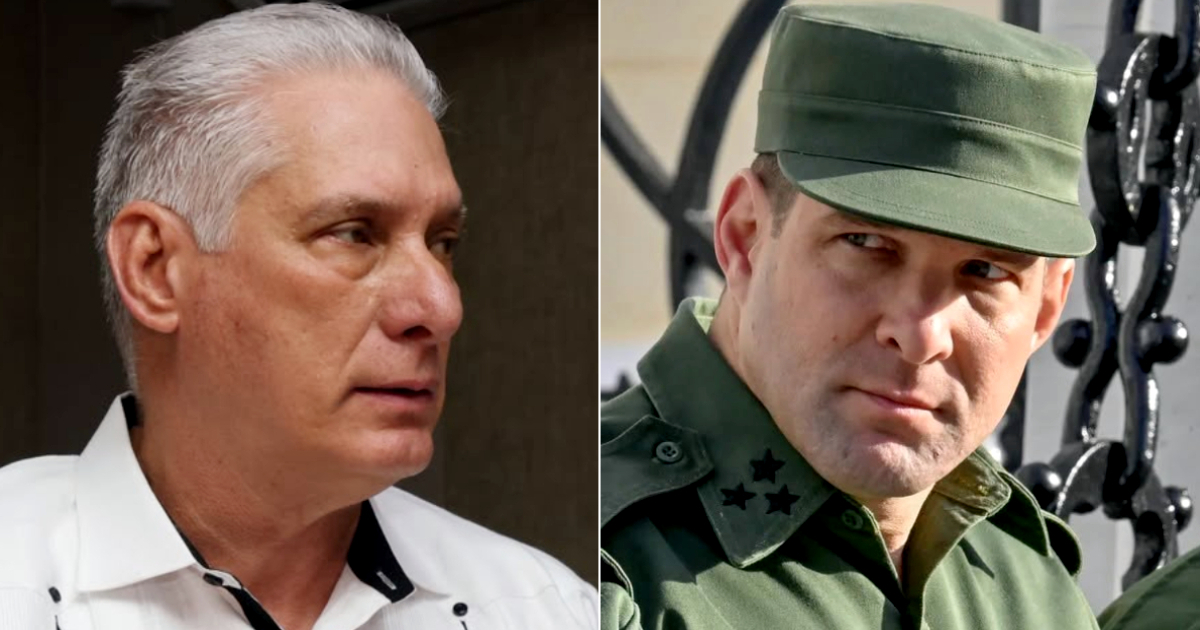
Negotiations between Washington and Havana, channeled through Raúl Guillermo Rodríguez Castro, alias "The Crab" and the grandson of Raúl Castro, are currently stalled because the United States demands the removal of Miguel Díaz-Canel from power as a condition to move forward with any agreement, according to an extensive investigation by The Atlantic published this Monday.
The report, authored by Kevin Sieff, describes how the expectations of the Cuban-American community in Miami —who believed that after the capture of Nicolás Maduro on January 3, Cuba would be "the next"— have been fading over nine months of unfulfilled promises and stalled diplomacy.
The breaking point was precise: when Washington proposed Díaz-Canel's departure as a non-negotiable condition, the regime refused, and the process came to a standstill.
Marco Rubio set the tone back in January when he warned during a press conference in Mar-a-Lago: «If I lived in Havana and were in government, I would be concerned, at least a little».
Nine months later, that language has changed radically. At the UN General Assembly in late September, Rubio stated that “Cuba has a golden opportunity to set itself on an irreversible path toward a better future” and that the U.S. is “prepared to be of help if they are open to it,” a notably more cautious formulation.
The main reason for the halt, according to The Atlantic, is that Trump's decision to go to war with Iran committed aircraft carriers and warplanes in the Middle East, leaving limited resources for a Venezuelan-style operation in Cuba.
The regime, for its part, has insisted that there are no formal negotiations. The Cuban chargé d'affaires in Washington, Lianys Torres Rivera, stated this Tuesday to Reuters: "What we have with the United States are channels of communication."
The chancellor Bruno Rodríguez Parrilla acknowledged at the end of September that there had been "some episodes of conversation" with U.S. officials, but with no results.
Meanwhile, the Trump administration offered fuel and humanitarian assistance to Cuba in exchange for privatizing the energy industry, an offer that the regime formally rejected.
In Miami, frustration is growing among the approximately one million Cubans and Cuban Americans living in Miami-Dade County.
The Cuban-American Chamber of Commerce, founded in the days following Maduro's capture when regime change seemed imminent, formed 14 committees and even planned a future Cuban stock exchange.
A survey from the Miami Herald in April revealed that more than half of Cubans and Cuban Americans in Florida disapproved of the Trump administration's negotiations with the Cuban government.
However, trust in Rubio remains almost intact among the exiles. "I don't trust Trump on Cuba," said an anonymous attendee at a Cuban American Chamber of Commerce event. "But Marco Rubio is our savior."
The Cuban opposition figure Rosa María Payá, who claims to have directly discussed Cuban politics with Rubio, provided a more sober interpretation of the report: «I don't believe he has the position of power to make the final decision».
Rubio told the host Sean Hannity from Fox News that «the truth is that Cuba has already fallen», but acknowledging the humanitarian crisis does not equate to having a plan to overthrow the regime.
With nearly 2 million Cubans having left the island since 2020—about one-fifth of the population—and blackouts exceeding 20 hours a day, the situation in Cuba worsens while diplomacy remains at a standstill.
Related videos:
Filed under: