The Institute for the Study of War (ISW) published a special report on Thursday, concluding that a Russian military victory over Ukraine is not inevitable and that Moscow's forces have made practically no net territorial gains in 2026, while accumulating over 40,000 casualties monthly since July.
The human cost for Russia has been devastating in proportion to what has been achieved: according to the ISW, each square kilometer of lost territory has cost the Russian army around 458 casualties. Since the start of the large-scale invasion in February 2022, the accumulated casualties—dead, wounded, and missing—exceed 1.56 million, which is more than 1% of Russia's total population.
The figures are in stark contrast to the claims from the Kremlin. While Russian officials maintain they have captured about 6,500 square kilometers since January 2026, the ISW's assessment estimates a real net gain of only 73 square kilometers.
Since September, the balance is even more unfavorable for Moscow: Russia is said to have lost a net of 240 square kilometers, compared to the more than 1,800 that its own commanders claim to have captured.
ISW indicates that the pace of Russian advancement in 2026 is approximately 0.25 square kilometers per day. At this rate, Putin's forces would require 60 years to complete the capture of the rest of the Donetsk oblast, that is, until June 2086.
Far from being on the defensive, Ukraine has taken the initiative in key sectors of the front.
The Vivaldi Operation liberated nearly 277 square kilometers and 16 localities to the north and northeast of Lyman, thwarting the Russian plan to encircle the so-called Ukrainian Belt of Fortresses.
In the south, a counteroffensive towards Oleksandrivka recovered over 627 square kilometers and largely expelled Russian forces from the Dnipropetrovsk region between late January and mid-August, liberating 26 localities.
In Kharkiv, Ukrainian troops cleared the city of Kupyansk, refuting Putin's claims of having taken it.
A decisive factor in Ukraine's resistance is the unprecedented technological leap made by its military. Ukrainian drones with ranges of 100 to 200 kilometers strike Russian troop concentrations before they reach the front, creating a "kill zone" 20 to 40 kilometers deep, saturated with reconnaissance and attack systems.
The Ukrainian Ministry of Defense acquired 25,000 ground robotic systems in the first half of 2026, double the number purchased throughout 2025.
At the same time, the campaign of long-range attacks against Russian energy infrastructure has struck 22 refineries between January and June 2026, reducing Russian crude processing to its lowest level in over two decades and causing fuel shortages in almost every region of the country.
The ISW indicates that these attacks "have caused shortages of gasoline and diesel throughout the Russian Federation and create a constant irritation within Russian society," which complicates Putin's decision to order a new massive mobilization that he fears could trigger social unrest.
However, in recent days, the diplomatic landscape has added pressure on Kiev.
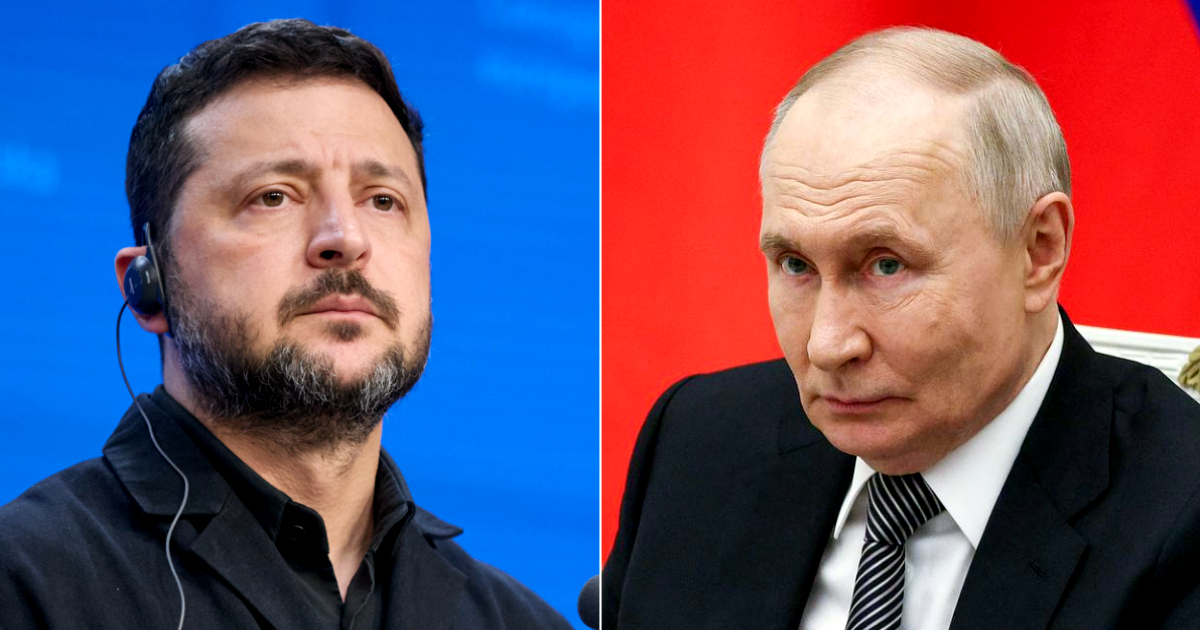
The Trump administration has urged Zelensky to negotiate, going so far as to declare that "it is time for Ukraine to have a new president", and authorized the export of Russian diesel with a suspension of certain sanctions. Zelensky responded by proposing elections conditional on a 60-day ceasefire, a proposal that the Kremlin immediately rejected.
The ISW concludes that only Putin opposes an agreement: “The task for Ukraine and its partners is to continue increasing the pressure on the Kremlin and raise the cost of Putin's unchecked ambitions sufficiently to convince him to accept a peace that he does not dictate.”
Related videos:
Filed under: