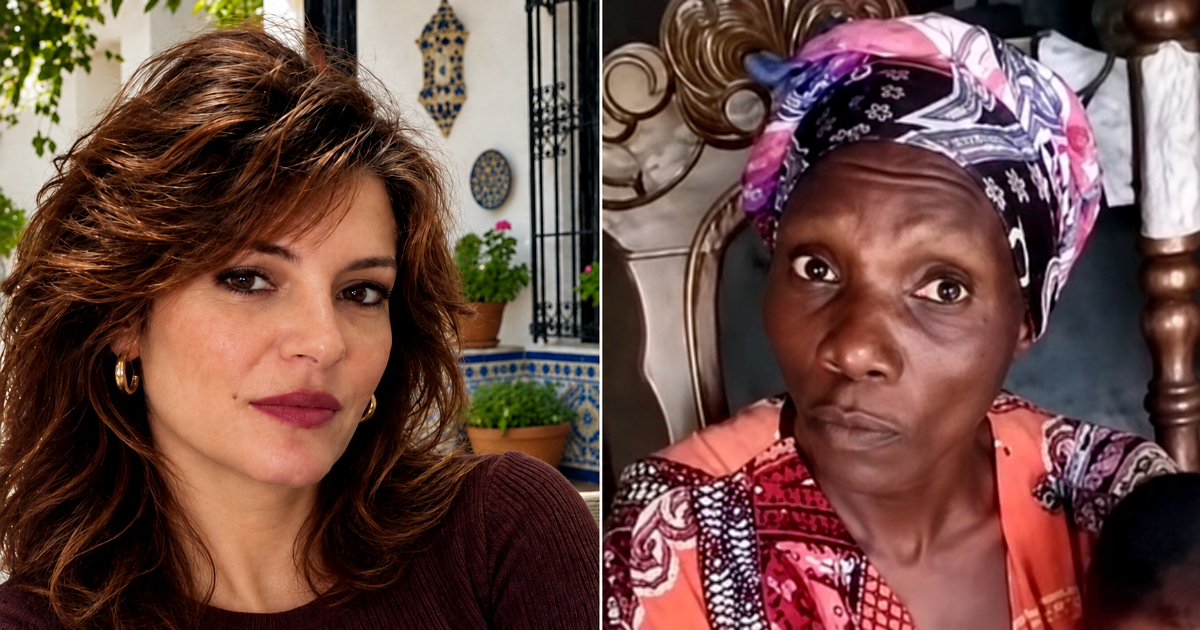
The Spanish activist Ana Hurtado, known for her defense of the Cuban regime and her family ties to the military elite of the Island, has once again turned to revolutionary rhetoric to celebrate an alleged glory of the Cuban people, this time regarding the vote against the U.S. embargo at the United Nations.
"No vote was cast for Cuba. But Cuba was present. That is why glory will belong to only a few, including this people and this Revolution", he wrote on Facebook, accompanying his post with images that criticize several countries for not supporting Havana despite having received Cuban cooperation.
The statement comes after the UN General Assembly approved the resolution against the embargo with 130 votes in favor, 17 against, and 25 abstentions, which marks a loss of 35 supports compared to 2025 and the lowest backing recorded since the initiative began to be presented in 1992.
Hurtado thus transforms a diplomatic setback into a claim of moral superiority, without explaining what glory a population facing endless blackouts, shortages of food and medicine, and a sustained deterioration of their living conditions gains from such an outcome.
Medical solidarity turned into political debt
The images shared by Hurtado remind us of the assistance provided by Cuban professionals in countries such as Argentina, Ecuador, Italy, and Colombia, whose governments have changed their positions regarding the resolution.
The message suggests that this cooperation should translate into diplomatic loyalty towards Havana, as if the services provided by Cuban doctors and specialists created a permanent obligation for political support of the regime.
However, the merit of the professionals who cared for thousands of patients does not belong to the leaders who organized those missions. Nor does it obligate the receiving governments to support their international positions.
The statement also overlooks the complaints regarding the working conditions of the cooperators.
Experts from the United Nations have expressed concern over alleged coercive practices in Cuban medical missions, while a report from the Inter-American Commission on Human Rights in April 2026 documented testimonies of restrictions on movement, threats, and the retention of documents, and warned that certain practices could amount to forced labor or human trafficking.
The work of Cuban professionals deserves recognition, but it cannot be used to ignore their rights or turn their labor into a political debt owed to third countries.
Glory and sacrifice, always for the same ones
It is not the first time that Hurtado invokes the heroism and sacrifice of the Cuban people. In early October, he published an article in Cubadebate in which he drew on the epic tales of the wars in Vietnam, Afghanistan, and Iraq to warn the United States about the consequences of a potential military intervention.
Now, in light of the loss of diplomatic support, it is once again presenting the revolutionary resistance as a source of collective glory.
The contradiction takes on another dimension due to Hurtado's position, married to Senén Casas Más, son of the late general Senén Casas Regueiro, and familially connected to the military power structure in Cuba.
The Spanish government has made defense of the regime a central part of its public activities, while extolling sacrifices imposed on a population facing increasingly difficult living conditions.
During the discussion of the resolution at the United Nations, the U.S. ambassador Mike Waltz condemned the stark contrast between the deprivations of the citizens and the privileges of the ruling elite. He questioned the resources accumulated by the military conglomerate GAESA and referenced the luxury watches, yachts, and properties owned by leaders and their families while medicines and fuel are in short supply.
These are accusations made by Washington, but they raise a question that Hurtado also does not address: the unequal distribution of resources and sacrifices within the system he defends.
Everyday reality offers little room for the epic. Cuba is facing serious breakdowns in its thermoelectric plants, fuel shortages, generation deficits surpassing 2,000 megawatts, and prolonged power outages that paralyze homes, services, and economic activities.
And even within the ruling party, questions about that rhetoric are starting to be heard. Recently, when Hurtado recommended an application to manage blackouts and attributed them solely to Donald Trump and the embargo, Cuban journalist Ana Teresa Badía responded by demanding explanations and empathy: "One must feel like someone who has no electricity".
The observation, coming from a communicator associated with official institutions, reflects at least the tension between the narratives of resistance and the everyday experience of those suffering from the crisis.
The question remains what that glory means for those who spend a good part of the day without electricity, search for medications they cannot find, and barely manage to feed their families.
Hurtado promises this in the name of the people and the so-called "revolution," but he does not explain how it translates into a better life for Cubans or why the sacrifices he praises fall upon those with the least capacity to determine their own future.
Related videos:
Filed under: