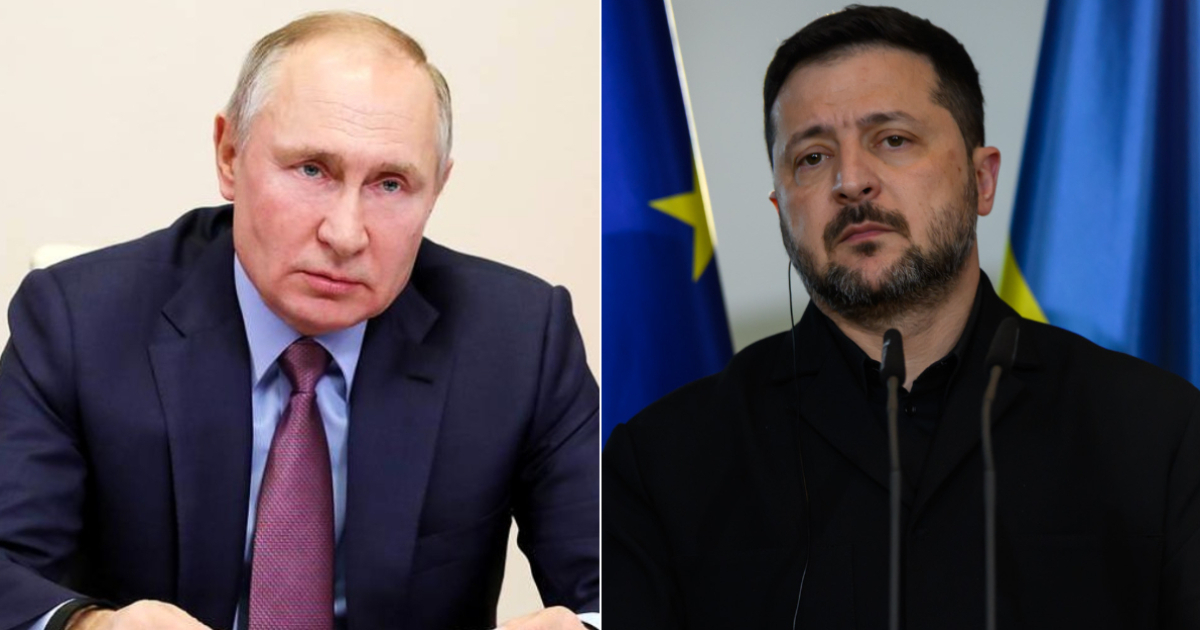
Delegations from Russia and Ukraine will meet on November 10 and 11 in Abu Dhabi, United Arab Emirates, for a new round of trilateral talks with U.S. mediation, as confirmed this Tuesday by both the Kremlin and Ukrainian President Volodymyr Zelensky from Berlin.
According to the information published by El País, this will be the third time this year that both countries meet face to face on Emirati territory, following two previous rounds held in January and February 2026 that did not yield substantial agreements.
The Kremlin spokesperson, Dmitri Peskov, was the first to confirm the summons. Hours earlier, in the early hours of Tuesday, Russia had launched a multiple bombing campaign against energy infrastructure in the regions of Vínnitsia, Dnipropetrovsk, and Kharkiv, leaving nearly 200,000 people without electricity and causing dozens of injuries, including at least 73 in an attack against a hospital complex in Kharkiv.
The White House special envoy, Steve Witkoff, had announced the news on Monday through his social media, indicating that the meeting will address "post-war security agreements, de-escalation, humanitarian measures, and the end of the war".
According to a senior U.S. official quoted by Reuters, Witkoff and Jared Kushner, son-in-law of President Donald Trump, will represent Washington in Abu Dhabi. The Kremlin, for its part, confirmed that Vladimir Medinski, an advisor to Putin, will lead the Russian delegation.
Putin agreed to resume negotiations after meeting with Witkoff in St. Petersburg two weeks ago, in what the Trump administration describes as America's last effort to halt the bloodiest conflict in Europe since World War II.
In that meeting, the sale of Russian diesel to the United States was also discussed, an agreement that has eased Moscow's finances, which were hit hard by Western sanctions.
The previous two rounds in Abu Dhabi managed to keep the diplomatic channel open and resulted in a swap of 314 prisoners of war in February, but they hit the same wall: Russia demands that Ukraine recognize the territories occupied during the invasion as sovereign and withdraw its troops from the areas of Donbas that Moscow does not control, conditions that Kyiv rejects.
Conversations have been stalled since mid-February, partly due to the conflict between Israel, the United States, and Iran—and the subsequent closure of the Strait of Hormuz—which shifted international attention. On the front, the Russian offensive remains stagnant since January 2026, with Russia controlling approximately 80% of the Donetsk province without significant advancements.
Zelenski, meeting in Berlin with the German Chancellor Friedrich Merz, urged that Europe has a place at the table. "Trilateral negotiations are a format that can provide long-term solutions," said the Ukrainian president, although both leaders warned that "this war will not end without Europe."
Merz was particularly emphatic in rejecting the notion that Ukraine's future could be decided without its president: "It is completely unacceptable for third countries to discuss Ukraine's future without the president of Ukraine. And where Ukraine is represented, Europe is represented." His words also point to Trump's attempt to organize a trilateral summit with Vladimir Putin and Chinese leader Xi Jinping.
Germany, the largest European contributor to the defense of Kiev, approved a new aid package of 200 million euros this Tuesday, aimed mainly at addressing the needs of the Ukrainian population during the winter, and committed to transferring new batteries of Iris-T and Patriot air defense systems.
Zelenski will continue his European tour this Wednesday in Brussels, where a conference will be held between representatives of the European Union, the United States, and NATO, while Merz announced a summit of the Coalition of Volunteers for November 19, focused on military aid for 2027 and security guarantees for Ukraine.
Related videos:
Filed under: