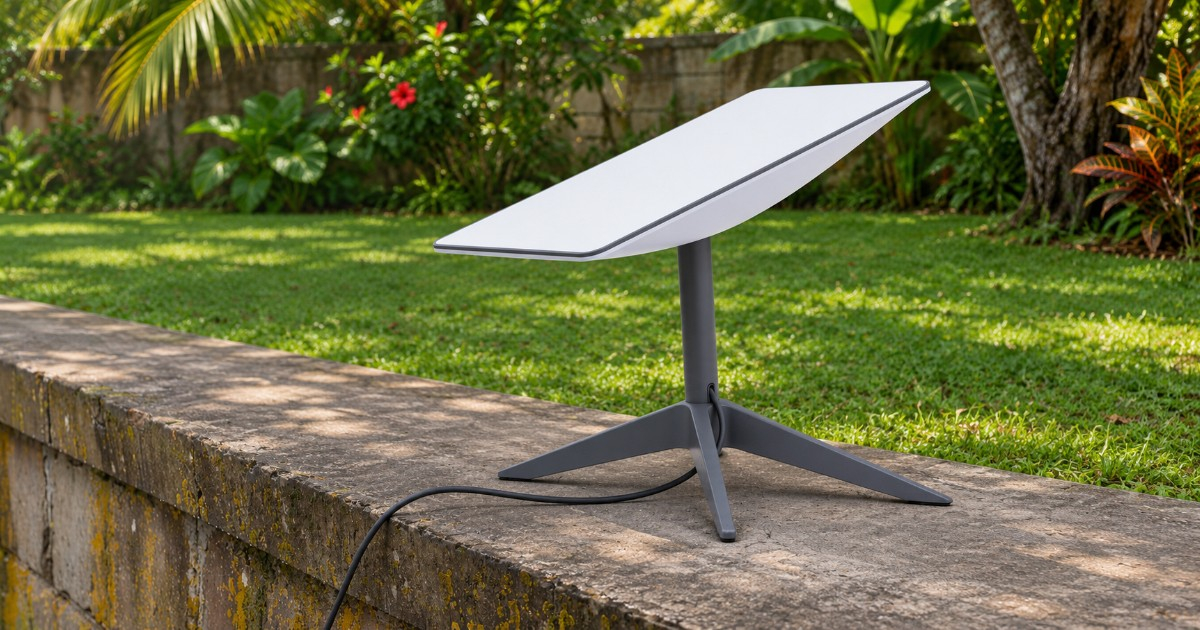
The Ministry of Foreign Affairs of Cuba notified all embassies and international organization representatives accredited in Havana on Monday that they are prohibited from importing and using Starlink satellite internet equipment, according to an investigation by 14ymedio confirmed by Martí Noticias with at least two diplomatic sources.
The note, signed by the Cuban Foreign Ministry, recalls a previous provision—the Verbal Note number 2372, dated January 6, 2025—and extends to the diplomatic realm a prohibition that authorities were already enforcing on citizens and national companies. The document does not distinguish between equipment for personal use and that intended for official communications of a diplomatic mission.
The text is categorical: "The import and use in the national territory of Cuba of Internet satellite communication terminals of the 'Starlink' brand is not authorized."
To justify the measure, the Foreign Ministry invokes the sovereignty of the state over the radio spectrum, which it qualifies as an inalienable resource protected by the Constitution. However, the note does not specify penalties for missions that fail to comply nor does it provide alternatives for connectivity in the event that state networks fail.
The underlying reason is control. In May 2026, the official media outlet Razones de Cuba openly admitted that Starlink creates a "parallel and uncontrollable" network for the State, "inherently resistant to physical attacks or governmental interdiction." The official text itself listed the uses that the regime fears: coordinating protests, disseminating information, connecting activists with the outside world, and evading state surveillance systems. If all communications pass through ETECSA, the State can monitor them; if embassies use Starlink, they escape that control.
Diplomatic sources consulted by Martí Noticias did not hide their displeasure. One of them, linked to a European mission in Havana, was direct: "ETECSA's service is terrible. Those who can afford a Starlink do so and maintain their connection even during power outages. And that's not to mention privacy, as we already know that everything that goes through ETECSA is monitored by them."
Another source pointed to the hypocrisy of the measure: "It would be interesting if they removed them from their homes first," he said, referring to regime officials who, as he indicated, also use these devices in their residences.
According to a source cited by 14ymedio, several embassies and numerous small and medium-sized private enterprises were already operating with Starlink at the time of the notification, a situation that explains why the Foreign Ministry felt the need to issue the warning.
The context of the collapse of state telecommunications makes the ban even more striking. The total blackout in September left more than 80% of the base stations out of service and caused a 58% drop in internet traffic. Cuba recorded an average speed of only 7.21 Mbps in May 2026, the lowest in Latin America.
The crackdown on Starlink has had tangible consequences for everyday Cubans. On October 24, several satellite antenna sellers in Santa Clara were sentenced to prison terms ranging from four to five years; authorities confiscated 37 devices and the buyers received fines of 100,000 pesos. Months earlier, Customs had seized shipments of Starlink antennas hidden in boxes of monitors and audio equipment at the airport.
Elon Musk acknowledged in March 2026 that the technology works in Cuban territory, although it cannot be sold officially there. Currently, no specific actions have been reported against any embassy for using the service.
Related videos:
Filed under: