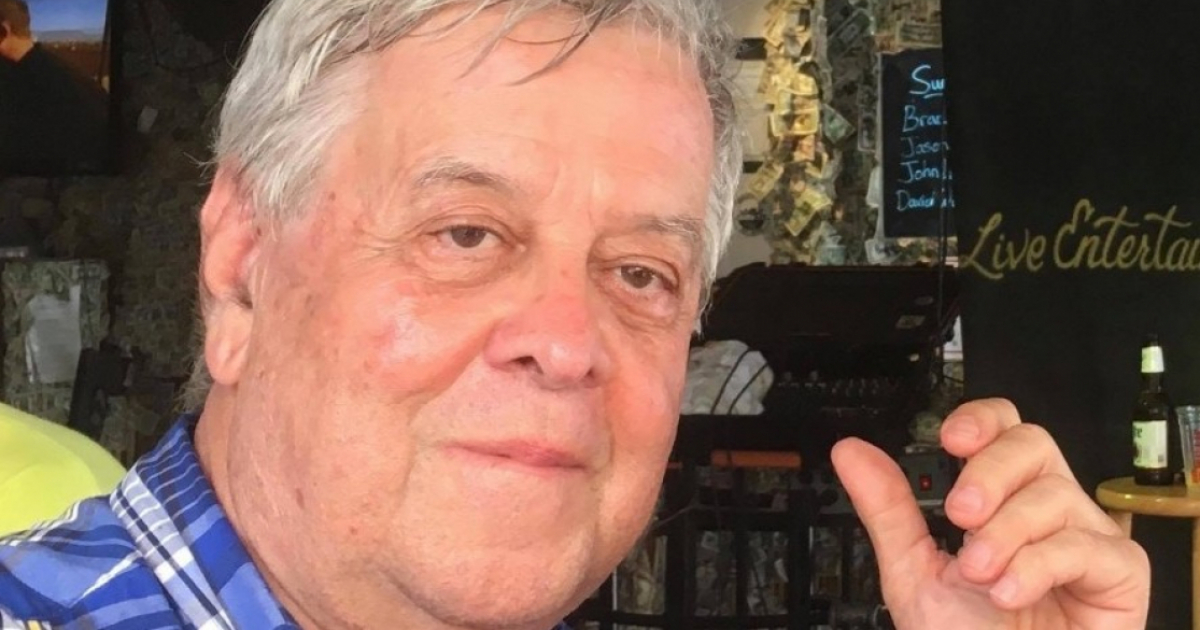
The Cuban ex-ambassador Carlos Alzugaray, 83 years old, revealed in an interview with El País from Mexico City that Washington had reportedly offered the Castro family to relocate to Moscow with their money in exchange for Miguel Díaz-Canel stepping down, and that the chosen interlocutor by the Trump administration was Raúl Guillermo Rodríguez Castro, grandson of Raúl Castro, known as "El Cangrejo."
Alzugaray, who joined the Ministry of Foreign Affairs in 1961 as part of the first generation of diplomats of the Revolution, is regarded as an analyst closely tied to the regime's institutions, although he has expressed internal criticisms in recent years. His statements regarding the negotiations represent his personal perspective, and he himself acknowledges that he lacks certainty about the details.
"Rubio comes with his Miami mindset. In Miami, Cuba is not a country; it's the Castro's estate. So, one has to negotiate with a Castro," explained the former diplomat to justify the choice of the grandson as an interlocutor.
According to Alzugaray, Washington's logic eliminated options: Fidel died, Raúl is retired, and his son Alejandro —who negotiated with Obama in 2014— was "out of the game."
Thus, the role fell to "Raulito," who in July 2026 declared to that he could "negotiate with anyone designated by the United States" and that he would go if called.
"The offer was for the Castro family to go to Moscow with their money and they could do whatever they wanted. They also asked Díaz-Canel to resign. It didn't work, because no one from the Castro family is going to hand over the country," the former ambassador stated.
Alzugaray admits that the operation was shrouded in opacity: "Everything has been opaque. For me, it's not clear whether Raulito went to those meetings alone. I was told recently that he did not, that he was with a brother of his father."
The father referred to is the late general Luis Alberto Rodríguez López-Calleja, who led GAESA —the military-business conglomerate that controls strategic sectors of the Cuban economy— until his death in July 2022.
For Alzugaray, his disappearance was a turning point: "When López-Calleja died, Raúl felt that the structure he had built collapsed. Because he was Díaz-Canel's successor and the most important member of the family. Fidel's children have no influence."
The former diplomat indicates that GAESA reported directly to Raúl Castro —not to the Armed Forces— due to López-Calleja's maneuvers supported by his family ties, which, in his opinion, "disrupts the structure of the Army."
Raúl Guillermo, on the other hand, was a colonel in the Ministry of the Interior with a position in the personal security of his grandfather, without a formal position at the top of power. Alzugaray openly questions: "If Raúl dies tomorrow, what support does he have?"
This maneuver to position the grandson contrasts with the institutional profile that always distinguished Raúl Castro from his brother Fidel. Placing a family member above generals and Díaz-Canel himself creates internal tensions that, according to the former ambassador, are accumulating without anyone daring to openly challenge them yet.
Regarding the future of the regime, Alzugaray is categorical: “After Raúl dies, Díaz-Canel won’t last much longer”. He anticipates that a political reform could be initiated, but warns that “I don’t see any group with a genuinely democratic inclination. But that will begin to undermine the system.”
His words come at a time of peak American pressure: Trump declared this month that he would "definitely consider" a brief military campaign against Cuba, while Díaz-Canel demands any approach to be "without pressure, without conditioning, and without questioning our political system."
Related videos:
Filed under: