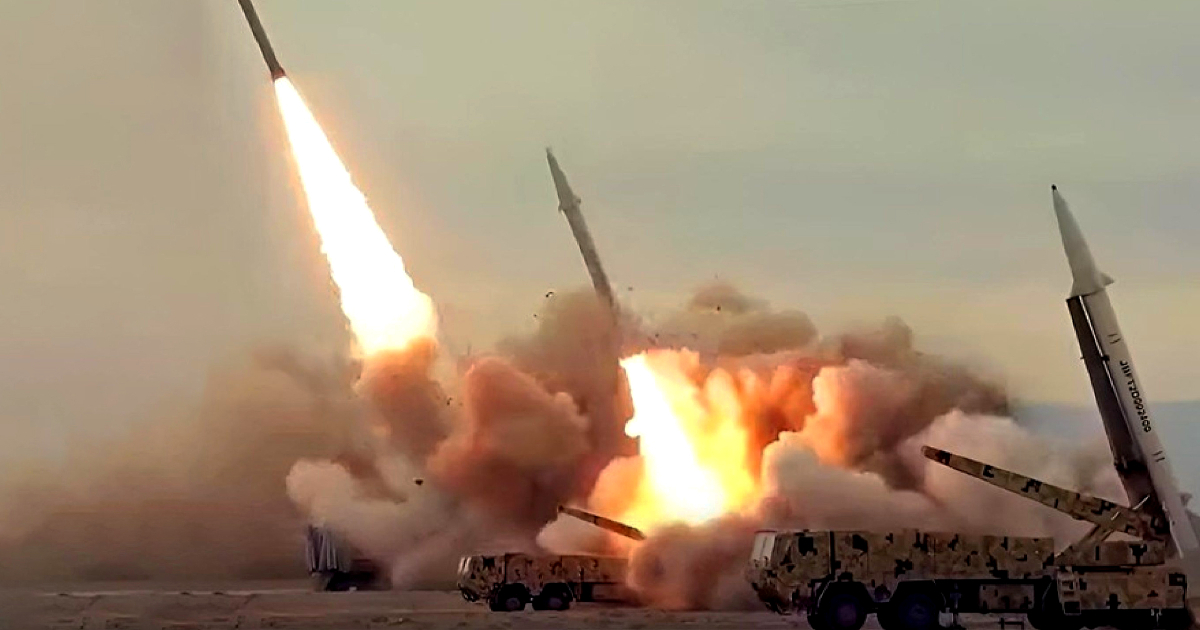
The regime of Iran used the satellite internet network Starlink, owned by American billionaire Elon Musk, to support its military operations against U.S. forces in the Middle East, according to an investigation published this Saturday by The Washington Post.
Four sources familiar with the operations confirmed to the newspaper that Tehran has been exploiting SpaceX technology for military purposes since the early days of the war that began at the end of February, launched by the United States and Israel against Iran.
The discovery provoked Musk's outrage, as he also learned that the Pentagon was using Starshield, the military variant of Starlink, under contractual conditions that did not align with how it was being utilized by U.S. forces.
According to one of the sources consulted, at least two company executives were dismissed following the revelation of these irregularities.
The investigation, also reported by Reuters, indicates that SpaceX did not respond to requests for comments. The Pentagon also did not confirm the alleged use of the technology by Iranian forces.
The precedent of Russia in Ukraine
Iran is not the first adversary of the United States to leverage Musk's communication infrastructure for its military operations.
Russia has also used Starlink terminals during its invasion of Ukraine, despite the trade and technological restrictions imposed against Moscow. In early 2026, Ukrainian authorities requested SpaceX's intervention to prevent this exploitation.
The company implemented additional controls and collaborated with Kiev to restrict access to unauthorized devices. However, SpaceX's decisions have also sparked controversy due to their impact on Ukraine's defensive capabilities.
On November 16, the president Volodimir Zelenski publicly requested Musk and the U.S. government to lift the restrictions on Starshield, warning about its effects on the protection of the population and Ukraine's energy infrastructures against Russian attacks.
Weeks earlier, the Secretary of State, Marco Rubio, had assured that decisions regarding access to the service belonged to SpaceX and not to the White House.
The dependence on private infrastructure for national security operations raises questions about the limits of Musk's power and Washington's ability to ensure that American technology does not ultimately benefit its adversaries.
Between military security and the freedom of information
The Iranian case presents an additional challenge. Starlink also serves as a tool for citizens trying to escape the censorship and internet blackouts imposed by the authorities in Tehran.
In January, during the massive protests against the ayatollahs' regime, Iranian authorities left the country practically cut off while intensifying their crackdown on the demonstrators.
The possibility of preventing the military use of Starlink without depriving the civilian population of an independent communication channel is one of the main challenges for SpaceX and the administration of Donald Trump.
Starlink in Cuba: A Battle for Control of Communications
The dilemma is particularly relevant for Cuba, where access to satellite internet has become one of the points of friction between Washington and Havana.
In March, Musk himself confirmed that Starlink works in Cuban territory, although it cannot be officially marketed on the island.
The Trump administration subsequently proposed to provide free satellite internet access to Cubans, an offer that the regime rejected and which would have represented a break of the state monopoly held by ETECSA over telecommunications.
The official response did not take long to arrive. In May, the portal Razones de Cuba described Starlink as a tool of hybrid warfare and acknowledged that its operation creates a «parallel and uncontrollable» communication network for the Cuban authorities.
The government's offensive against this technology has intensified in November. The Cuban Ministry of Foreign Affairs has even notified the embassies and international organizations accredited in Havana that they are prohibited from importing and using Starlink terminals.
Days later, official sources reported police records in homes and seizures of antennas in Placetas, Villa Clara.
Unlike the Iranian case, there is no public evidence that the Cuban armed forces are using Starlink for military purposes. The documented persecution on the island is directed against those who seek to connect outside of state networks.
The investigation by The Washington Post raises two distinct security issues: the military exploitation of a commercial technology by governments opposed to the United States and the need to preserve independent access to information for citizens subjected to those same authoritarian regimes.
Related videos:
Filed under: