
Related videos:
The Cuban regime admitted that the drought has led to an increase in water-related crimes, such as theft and diversion of this resource, affecting entire communities.
The revelation came through recent posts on Facebook from the official spokesperson profile called "Claridad Tunera", which detailed inspections in the locality of Omaja, in Las Tunas, where illegal connections to the supply network were detected in private homes, irregular supply to state livestock, ponds, and even to the UBPC "Waldemar Díaz."
According to those sources, inspectors from the Water Supply, along with government authorities and the Ministry of the Interior, imposed fines and initiated processes to restore "legality."
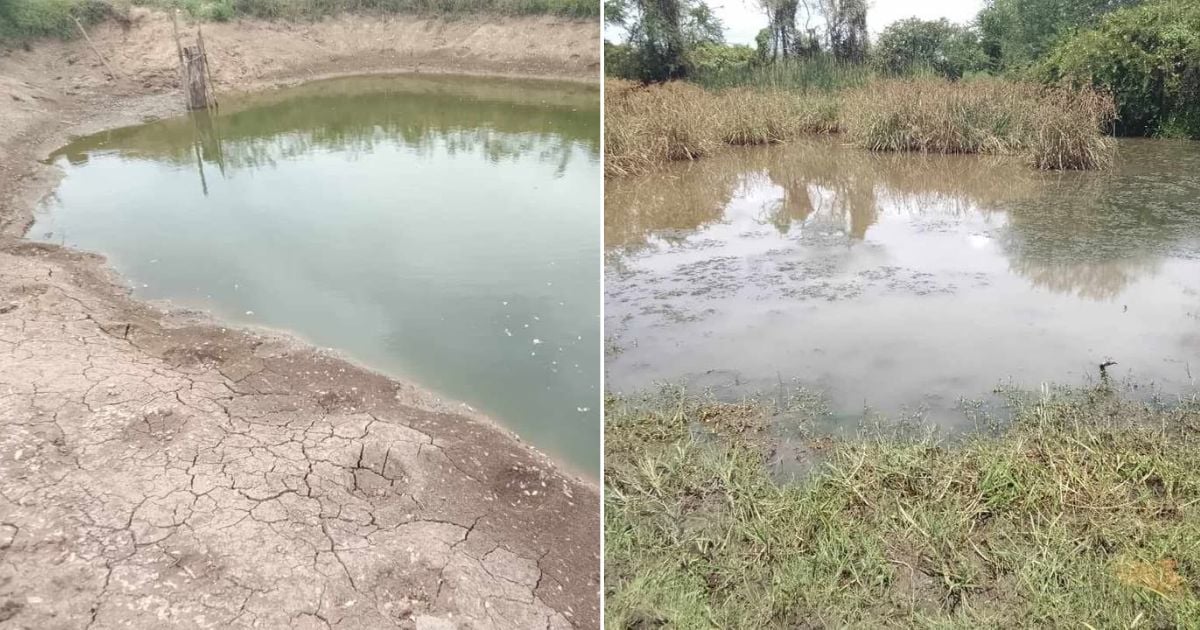
The official text also acknowledged that the prolonged drought has created “an increasing number of communities with very dry soils and little rainfall,” necessitating urgent measures to ensure supply.
The regime's own spokesperson profile reminded in another post that the current Penal Code (Law 151 of 2022) classifies the theft of electricity, gas, water, or energy as a crime, with penalties of up to one year of imprisonment or fines ranging from 100 to 300 units, depending on the social harm caused.
"These may range from 2 to 20 depending on the social impact or damage caused," he emphasized.
While the official narrative insists on individual responsibility and on "conserving" the liquid, the water crisis reflects the authorities' inability to ensure a stable service amid a prolonged drought and a network system in serious disrepair.
Water scarcity has become a constant issue in various Cuban provinces, where the conditions of the supply system further worsen the situation.
In Sancti Spíritus, for example, neighbors reported that the water supply arrived with larvae, forcing them to filter the liquid to avoid health issues. Complaints are piling up due to the lack of effective solutions.
Similarly, amid the extreme drought, the water supply system in Santiago de Cuba exhibits a widespread technical collapse, unable to meet the basic demands of the population.
The deterioration of hydraulic networks, water loss due to leaks, and constant interruptions have turned access to water into a limited privilege.
On the other hand, the situation in Guantánamo is no better. The drought has left the main reservoir at critical levels, jeopardizing the water supply for thousands of people.
Authorities recognize that many supply sources are depleted and that relief measures are insufficient to reverse the situation.
The province of Holguín is suffering from the combined impact of drought and power outages, which have severely disrupted pumping. Power outages prevent hydraulic systems from operating, leaving many communities without regular access to water.
The reliance on a collapsed energy system only exacerbates the problem of shortages.
Frequently Asked Questions about the Water Crisis and Regime Management in Cuba
Why has water theft increased in Cuba?
The theft of water in Cuba has increased due to the prolonged drought, which has caused shortages and forced people to resort to illegal means to obtain this basic resource. The lack of a stable water service and the deterioration of infrastructure have also contributed to this problem.
How does the energy crisis affect the water supply in Cuba?
The energy crisis in Cuba directly impacts the water supply because power outages and voltage drops hinder the pumping of the liquid, leaving many communities without service. The infrastructure relies on an unstable electrical system, worsening the water shortage on the island.
What penalties does water theft face in Cuba according to the law?
According to the current Penal Code in Cuba, the theft of water is considered a crime and can be punished with up to one year of imprisonment or fines ranging from 100 to 300 units, depending on the social harm caused.
What measures has the Cuban regime taken to address the water crisis?
The Cuban regime has implemented measures such as the installation of solar-powered pumping systems and the repair of distribution systems to mitigate the water crisis. However, these measures are insufficient in light of the magnitude of the problem, reflecting an inability to guarantee a stable service.
Filed under: