
Related videos:
The city of Guantánamo is facing a critical situation of drought that has led to the partial collapse of the water supply system, especially in the southern area of the municipality.
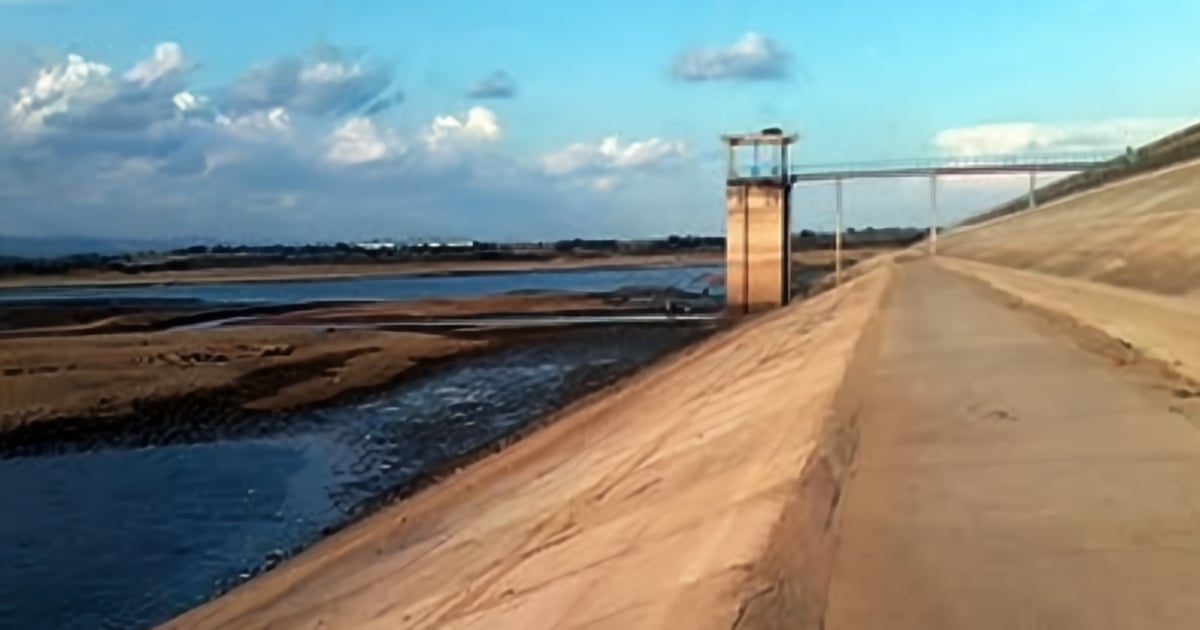
The main reservoir in the province, La Yaya, is hardly at 9% of its total capacity, as reported by the Guantánamo government on its social media.
With a storage capacity of 160 million cubic meters, currently La Yaya has only 15.04 million, of which 14 million belong to what is known as the "dead volume," meaning water that is not suitable for use. In practice, barely one million cubic meters is usable to supply the population.
The severe water shortage compelled local authorities to implement emergency measures. The flow of the Guanta canal has decreased to just 487 liters per second, allowing only one of the pumps at the pumping station to operate, as long as the water level permits.
This situation has particularly impacted the communities of Carreterita, La Jabilla, and other areas in the southern part of the city.
Actions to alleviate the crisis
The government decided to connect the Bano-Sur Express on Pintó Street (between 8 and 9 Oeste) to transfer water from the Reparto Caribe to the southern part of the city. A second connection is also planned at the intersection of 9 Sur and 8 Oeste, which would allow water to be transported by gravity to the Ho Chi Minh neighborhood.
Furthermore, in the coming hours, the Guanta divertor will be cleaned using a backhoe, which could increase the available flow to 500 liters per second, allowing both pumping motors to operate and thereby improving pressure in the network.
Meanwhile, the water delivery cycles have been extended throughout the city, with longer delays in the southern area. Authorities are urging the public to conserve the resource and stay informed about future actions.
The impact of power outages on the hydraulic system
The situation regarding the water supply in Cuba is worsening due to power outages and voltage drops affecting the national electrical system, which directly impacts the operation of the hydraulic system. This was recently acknowledged by Junior González Núñez, the first vice president of OSDE Water and Sanitation, in statements made to official television.
“Approximately 70% of the service disruptions are related to issues in the electricity system,” the official stated. He added that water is a natural resource, but its purification in Cuba depends on a highly electricity-dependent industrial process.
After the restoration of the electrical service, it may take between six and eight hours for water to reach homes, leaving entire neighborhoods without supplies for days. This reality hits particularly hard in vulnerable areas, highlighting the fragility of the system.
In light of the severity of the crisis, the government has begun to install solar-powered pumping systems. They have imported 866 photovoltaic systems intended for rural areas in ten provinces.
However, these solutions are insufficient given the magnitude of the problem and highlight the lack of foresight to diversify the national energy matrix in past decades.
Frequently Asked Questions about the Water Crisis in Guantánamo and Other Cuban Provinces
What is the current situation of the La Yaya reservoir in Guantánamo?
The La Yaya reservoir in Guantánamo is at 9% of its total capacity, holding only 15.04 million cubic meters of water, of which only 1 million is usable for supplying the population.
How does the electricity crisis affect the water supply in Cuba?
70% of the water service disruptions in Cuba are linked to problems in the energy system. Power outages and voltage drops halt water pumping, severely affecting supply in various regions of the country.
What measures has the Cuban government taken to address the water crisis?
The government has begun installing pumping systems powered by solar energy and has imported 866 photovoltaic systems for rural areas. However, these measures are insufficient given the magnitude of the problem.
What is the impact of drought on the water supply in different Cuban provinces?
The drought has severely affected several Cuban provinces, such as Guantánamo, Las Tunas, Santiago de Cuba, and Sancti Spíritus, reducing reservoir levels and extending water distribution cycles, leaving many families without regular access to the service.
Filed under: