
Related videos:
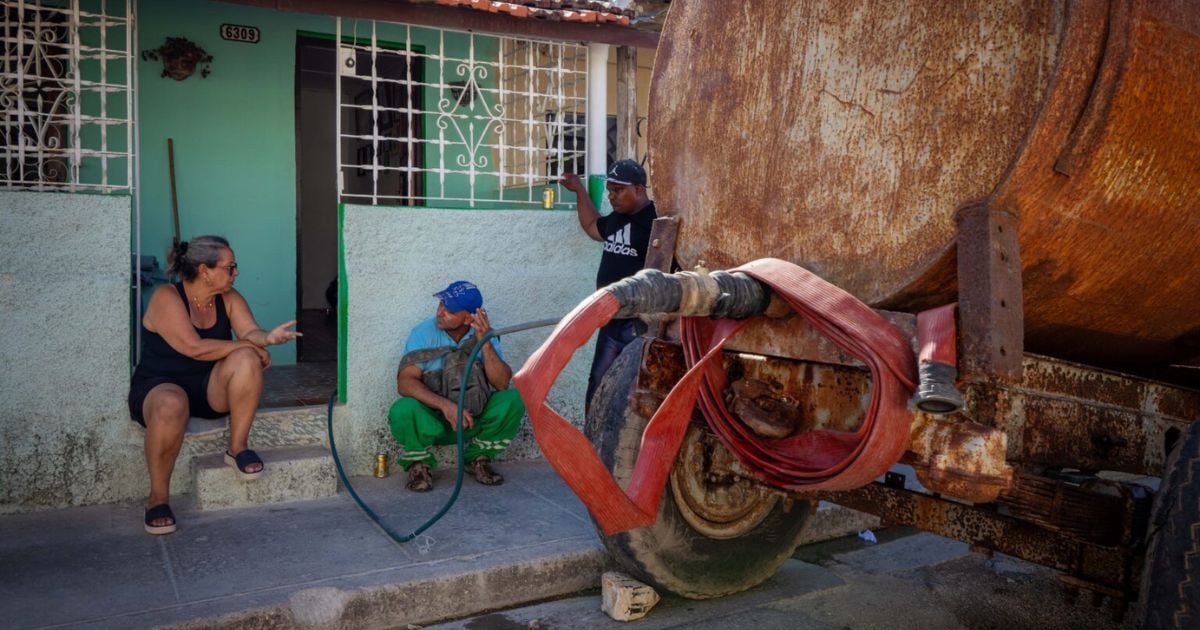
The province of Santiago de Cuba is experiencing one of the worst droughts in recent years, with serious impacts on the water supply, particularly in the capital municipality, where large areas have gone over two months without receiving the vital liquid.
The situation was reported by the official newspaper Sierra Maestra, which included statements from Ludmila Rodríguez Barroso, general director of Aguas Santiago, who acknowledged that “there is no water and no forecast” for when the service might stabilize.
According to the explanation, the Quintero system —responsible for supplying over 80% of the city— has significantly reduced its capacity due to the decrease in flow from the main sources, including Gota Blanca and Gilbert.
Since July 7, the Gota Blanca station has completely ceased operations, and the Gilbert has reduced its delivery, resulting in only one of the five drivers in the Quintero system being operational.
This has restricted the water inflow to only 900 or 1,000 liters per second, far below what is needed to maintain a stable distribution cycle.
Sectors such as Altamira, Van Van, Versalles, El Caney, Boniato, and El Cristo are among the most affected.
Some areas have gone more than 60 days without receiving water through pipes, relying exclusively on tanker trucks.
Rodríguez Barroso stated that even with these reinforcements, it is not possible to guarantee regular access for the entire population: “We are over 20 days, and the most critical areas have surpassed 60 days.”
The authorities have implemented measures such as cutting off non-essential connections, reducing irrigation, and limiting usage in animal breeding.
Work is also being done on the repair of pumping stations and the incorporation of additional equipment from other provinces, but evidently, the results are still insufficient.
As the reservoirs remain low and the country's energy situation restricts the use of generators, the outlook remains uncertain.
In the words of the official herself: "With this situation, a forecast cannot be made."
The water crisis in Cuba continues to worsen, with alarming situations in several provinces. In Guantánamo, the main reservoir in the area is practically dry, leaving the population without reliable access to water and creating an emergency scenario in the midst of summer.
Nationally, the figures are striking: more than half a million Cubans are suffering from the effects of drought, with provinces like Santiago de Cuba, Las Tunas, and Holguín experiencing prolonged supply shortages.
Access to water has become a luxury and has sparked criticism, even in official media.
In Matanzas, a state-run newspaper surprised many by openly addressing the seriousness of the issue, highlighting the inaction of local authorities in the face of citizens' desperation.
This type of denunciation, unusual in state discourse, reveals the extent of social discontent accumulated over years of neglect.
In the capital, the water shortage has been worsened by electrical instability, which directly impacts the pumping and distribution in the most populated neighborhoods.
The combination of drought and outdated infrastructure has plunged Havana into a health crisis that threatens to worsen further if urgent measures are not taken.
Frequently Asked Questions about Drought in Santiago de Cuba
What is the current situation of the water supply in Santiago de Cuba?
The province of Santiago de Cuba is facing one of the worst droughts in recent years, with areas that have gone over two months without receiving water. The Gota Blanca station has ceased to function entirely, and the Gilbert operates at reduced capacity, severely limiting the water supply to the city.
What measures have the authorities taken to address the water crisis?
The authorities have implemented measures such as the elimination of non-essential connections, reduction of irrigation, and limitation of use in livestock farming. Efforts are underway to repair pumping stations and to bring in additional equipment from other provinces, although the results remain inadequate.
How many people are affected by the lack of water in Santiago de Cuba?
In Santiago de Cuba, more than 300,000 people are affected by the lack of drinking water due to the intense drought and issues with the pumping system. This situation has forced many to rely on tanker trucks to meet their basic needs.
What is the future outlook for water supply in the region?
The general director of Aguas Santiago stated that "there is no forecast" for when the service will be stabilized. The situation is worsened by the limited energy capacity of the country, which impacts the use of generators necessary for water pumping.
What impact does the water crisis have on other provinces in Cuba?
The water crisis is not exclusive to Santiago de Cuba. Other provinces such as Holguín, Las Tunas, and Ciego de Ávila also face a shortage of drinking water. In total, around one million Cubans are dealing with water supply issues due to drought, equipment breakdowns, and energy crises.
Filed under: