
Related videos:
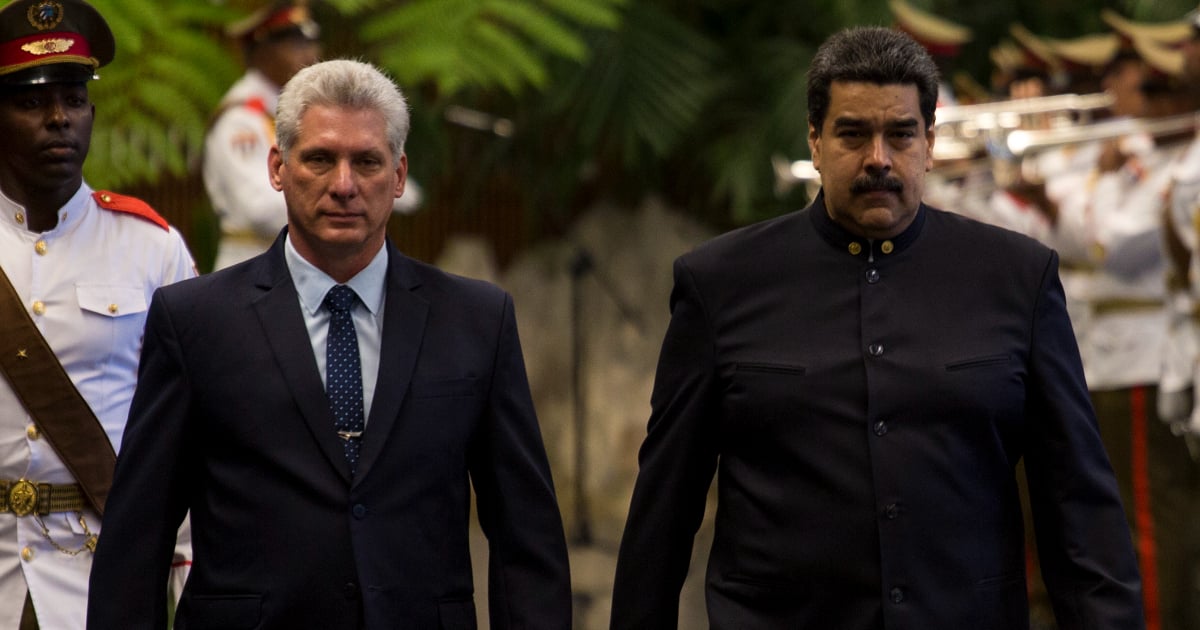
The Cuban leader Miguel Díaz-Canel defended Nicolás Maduro this Monday, pledging unconditional support to his Venezuelan ally, just as the United States strengthens its military presence in the Caribbean with destroyers and amphibious ships off the coast of Venezuela.
All the solidarity and support from Cuba for the Bolivarian and Chavista Revolution, led by President Nicolás Maduro, wrote Díaz-Canel on X, assuring that the “strength of the civic-military union in Venezuela will defeat imperialist threats.”
Havana aligns itself with Caracas at a time of heightened regional tension. Washington doubled the reward for the capture of Maduro, from 25 to 50 million dollars, and has deployed a naval force of over 4,000 personnel, including marines, capable of amphibious operations.
The Pentagon insists that the operation is a response to the fight against drug trafficking, but both Caracas and Havana denounce it as an interventionist maneuver.
Maduro, accused by the U.S. of leading the Cartel of the Suns and coordinating massive cocaine shipments, responded surrounded by military personnel and with a defiant tone: an attempt to capture him, he warned, could mean “the end of the American empire”. Meanwhile, he activated the mobilization of millions of militiamen to “defend seas, skies, and lands.”
With the U.S. deployment in front of Venezuela, Cuba is reinforcing its role as the political shield of chavismo. According to Díaz-Canel, Washington's military threat is an opportunity to demonstrate that the fate of Caracas and Havana remains intertwined, despite the deep internal crisis that the island is experiencing.
Frequently Asked Questions about Cuba's Support for Venezuela and Tensions with the United States
What is Cuba's stance regarding the situation in Venezuela?
Cuba has promised unconditional support to Venezuela amid tensions with the United States, reaffirming its alliance with the regime of Nicolás Maduro. Miguel Díaz-Canel has asserted that the "strength of the civic-military union in Venezuela" will defeat what he views as imperialist threats. This stance reflects a continuity in the strategic relationship between both governments, despite international sanctions and pressures.
Why has the United States increased the reward for the capture of Nicolás Maduro?
The United States has increased the reward for the capture of Nicolás Maduro from 25 to 50 million dollars due to accusations that Maduro leads the Cartel of the Suns, linked to drug trafficking and terrorism. Washington views Maduro as a fugitive who must be brought to justice for his actions related to drug trafficking to the United States. This increase in the reward is part of a broader strategy to exert pressure on the Venezuelan regime and its allies, such as Cuba.
What actions has the United States taken in the Caribbean in response to the situation in Venezuela?
The United States has deployed a significant naval force in the Caribbean, including destroyers and amphibious ships, as part of an operation that, according to the Pentagon, is intended to combat drug trafficking. However, both Caracas and Havana have denounced this deployment as an interventionist maneuver and a threat to the sovereignty of the countries in the region, thus intensifying the geopolitical tension in the area.
What does the relationship between Cuba and Venezuela imply for regional stability?
The alliance between Cuba and Venezuela represents a pillar of resistance against U.S. policies in the region. This relationship strengthens the position of both countries in their confrontation with Washington, although it also contributes to instability and tension in the Caribbean. The mutual support between these regimes, accused of authoritarian practices, reinforces their political and military structures, which in turn intensifies divisions and diplomatic challenges in Latin America.
Filed under: