
Related videos:
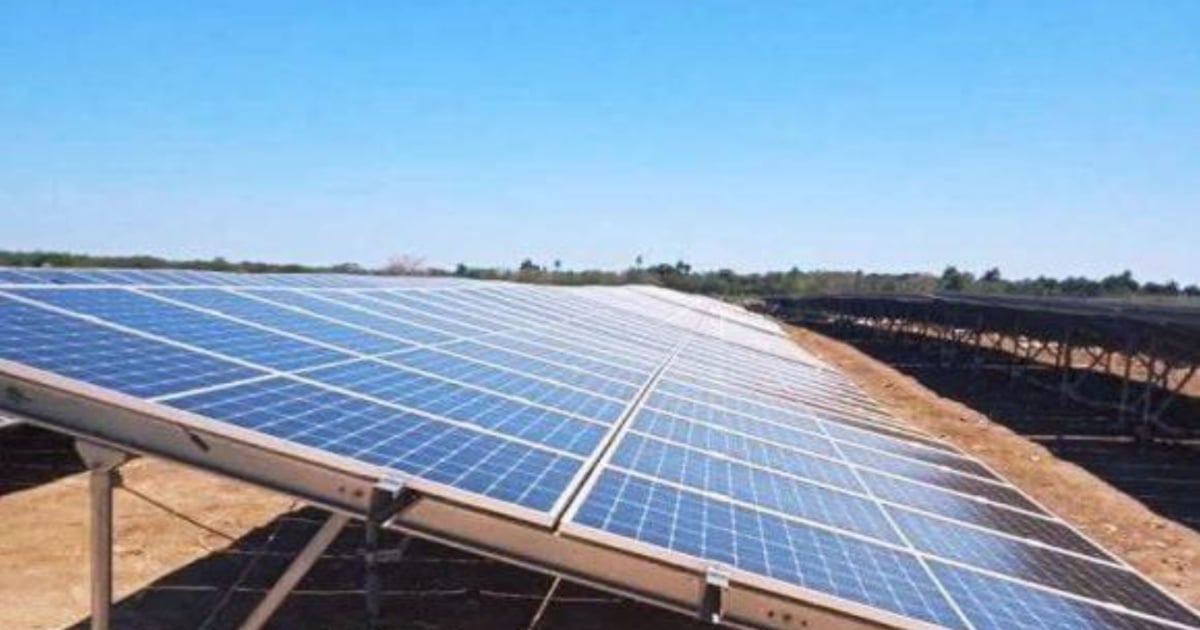
The Ministry of Energy and Mines (MINEM) reported that to date 27 photovoltaic solar parks are synchronized out of the 51 planned for this year, which represents 53% of the projected plan.
The institution of the regime stated on the social network X that these advancements are part of the National Electric System Recovery Program, which aims to "reduce" blackout hours and "move towards the country's energy sovereignty" with greater use of renewable sources.
The 27 operational parks contribute over 580 megawatts during midday, which, according to authorities, helps reduce disruptions during this peak demand period.
Among the most recently added, both in the province of Mayabeque, is the one in La Sabana, which includes a weather station dedicated to monitoring climate variables, a technology that helps optimize the performance of generation.
Although the government insists on showcasing these advancements as a step towards energy diversification, the population continues to face prolonged blackouts exceeding 12 hours a day in several provinces, which raises skepticism about the true impact of these projects on daily life.
With 47% of the parks still pending installation, the challenge for the government will be to ensure that these investments truly contribute to alleviating the energy crisis affecting the island.
Amid the energy crisis, an executive from the Electric Union (UNE) reported that solar parks regularly contribute more energy than anticipated.
In Ciego de Ávila, for example, solar plants generated over 16,500 MWh between July and August, avoiding the consumption of 4,290 tons of fuel and the emission of 140,000 tons of carbon dioxide, according to official figures.
However, the relief is minimal compared to the depth of the national energy crisis. This Friday, the UNE reported a capacity deficit exceeding 1,635 MW, which means that a large part of the country will be left in the dark for several consecutive hours.
Frequently Asked Questions about Solar Parks in Cuba
How many solar parks has the Cuban government installed so far?
To date, the Cuban government has synchronized 27 photovoltaic solar parks out of the 51 planned for this year, which represents 53% of the projected plan. These advances are part of the National Electric System Recovery Program.
What is the impact of solar parks on the energy crisis in Cuba?
Solar parks contribute over 580 megawatts at noon, which helps reduce the strain during peak demand periods. However, the energy crisis persists, with prolonged blackouts in several provinces. The lack of storage batteries limits the impact of solar energy, which can only be used during the day.
Why is solar energy not enough to resolve the energy crisis in Cuba?
Although it is considered a breakthrough, solar energy cannot resolve the energy crisis in Cuba on its own due to multiple factors. The country faces a structural deficit in generation capacity, exacerbated by outdated thermoelectric plants, lack of maintenance, and an insufficient storage system that prevents meeting nighttime demand.
What plans does the Cuban government have to improve the electrical system?
The Cuban government plans to install a total of 92 solar parks by 2026, with a projected capacity of 1,200 MW of photovoltaic generation before the end of 2025. Additionally, measures are being implemented to recover thermal and distributed generation, and the arrival of energy storage systems is expected to stabilize the service.
Filed under: