
Related videos:
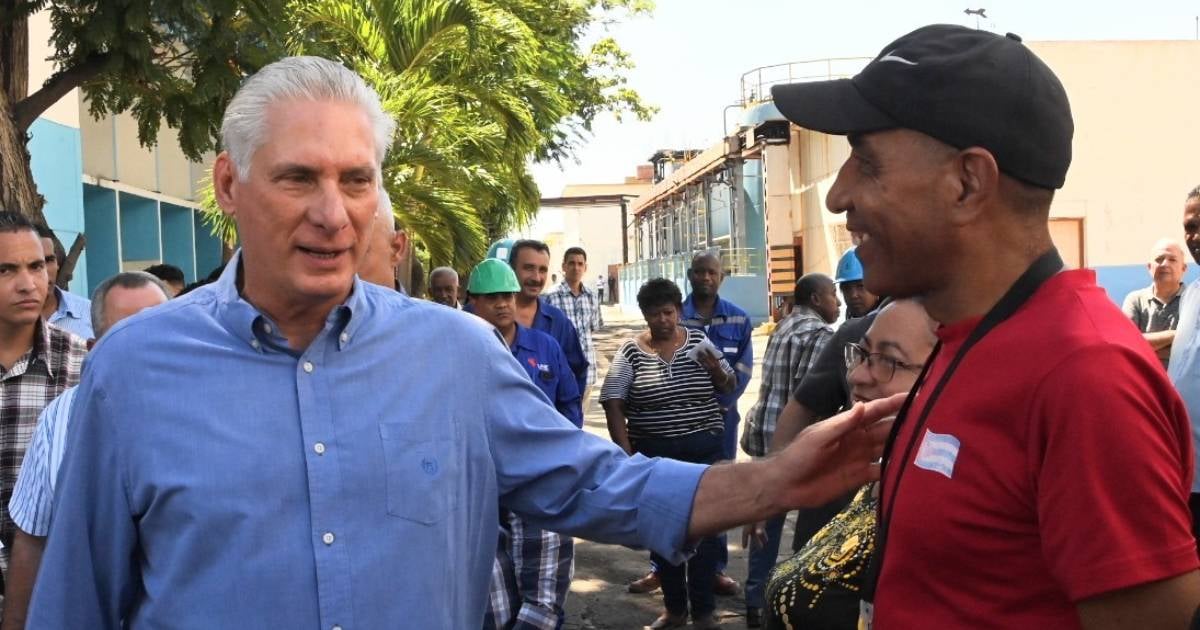
The Cuban leader Miguel Díaz-Canel assured this Thursday that the Antonio Maceo Thermoelectric Power Plant (Renté), in Santiago de Cuba, will reach “stability” conditions before the end of 2025, despite the fact that the plant has become a symbol of the deterioration of the National Electric System (SEN).
During a visit to the facility, the leader emphasized the need to ensure the quality of maintenance for units 3, 5, and 6, and to "continue recovering power" in order to have more electricity available at the end of the year.
He also acknowledged the efforts of the electrical workers and defended his government's strategy, which combines repairs with the construction of new solar parks.
However, the promise of stability contrasts with the recent reality of Renté, marked by blackouts, breakdowns, and human tragedies.
A plant in permanent crisis
Unit 5 of Renté went out of service on September 24 due to a water leak at the station, just days after it had resumed generation following another failure in the furnace. That same week, a fire in the fuel oil generator sets prompted fire brigades to respond and jeopardized the safety of the auxiliary facilities.
Previously, at the end of August, the plant was the scene of a serious workplace accident: the young operator Carlos Rafael López Ibarra, aged 33, suffered burns on 89% of his body during the startup of unit 5 and died days later in the hospital, amid the shock of his colleagues and neighbors.
The official reports have also confirmed the repeated disconnection of unit 3 due to technical failures of "low vacuum," which has left one of the most important thermal power plants in eastern Cuba with virtually no stable input.
Uninterrupted blackouts
While Díaz-Canel promises recovery, the Electric Union acknowledges generation deficits exceeding 1,700 megawatts during peak hours, with outages lasting 24 hours in several provinces and power cuts exceeding 20 hours daily.
The intermittent return of units like Renté 5 hardly alleviates the crisis momentarily, but it does not resolve what experts describe as an obsolete system, lacking spare parts and with over four decades of exploitation.
Díaz-Canel's visit to Renté aims to convey confidence in a sector that bears the weight of public discontent and the government's loss of credibility. However, the daily experience of Cubans involves disconnected refrigerators, dark hospitals, children studying by candlelight, and entire neighborhoods without electricity for almost the entire day.
Promising stability from a thermoelectric plant that has seen fires, breakdowns, and workplace fatalities is not only difficult to uphold but also strengthens the gap between official rhetoric and a population that lives trapped in the uncertainty of blackouts.
Filed under: