
Related videos:
The authorities in Villa Clara activated this Thursday the temporary response teams for arboviral diseases in all 13 municipalities of the province, following the confirmation of an increase in cases of dengue, chikungunya, and oropouche.
During the provincial group's meeting, chaired by Governor Milaxy Yanet Sánchez Armas, a plan of measures was agreed upon that includes fumigating the blocks with identified hotspots, mobilizing personnel from various sectors, and opening homes that remain closed without conducting self-assessments, reported the provincial broadcaster CMHW.
Dr. Neil Reyes Miranda, director of the Provincial Center for Hygiene, Epidemiology, and Microbiology, explained that only with the participation of the population and collaborative efforts between the state and non-state sectors can the increase in viruses be reduced.
As of now, he specified, 14 serious cases have been reported, although without any fatalities.
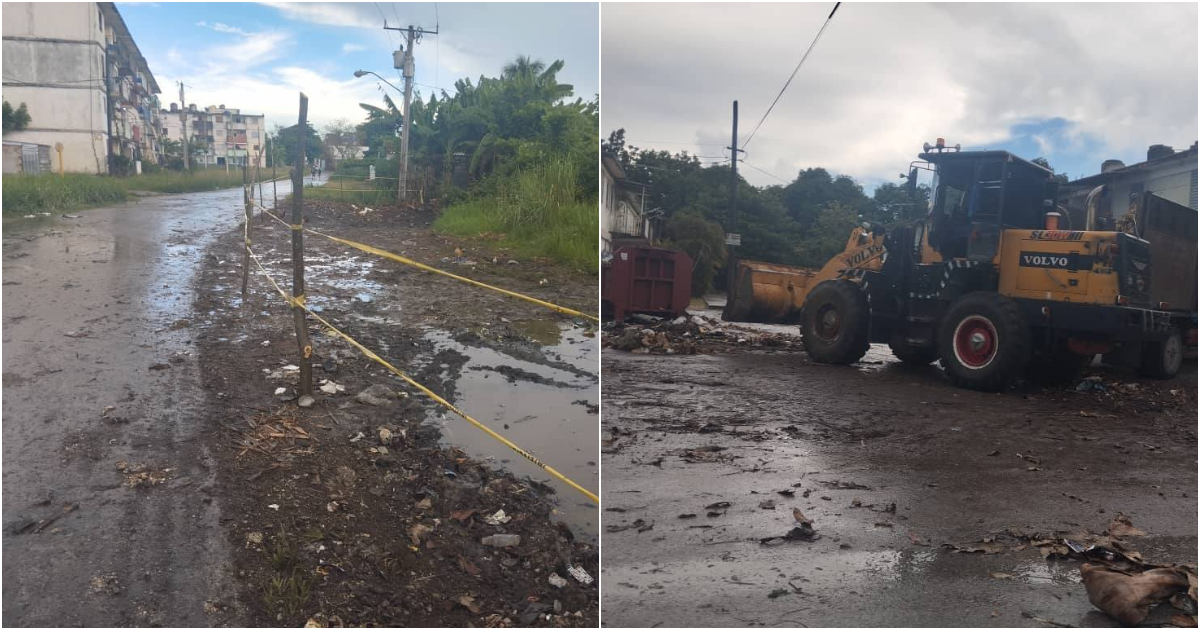
Authorities announced cleaning days for Saturday and Sunday, with support from the agricultural sector, which will provide fumigation equipment.
However, the new operation takes place in a context marked by repeated health campaigns that have not succeeded in eradicating the breeding grounds of the Aedes aegypti mosquito, which continue to persist throughout the country.
The doctor Francisco Durán García stated that no deaths have been reported associated with the viral events affecting the country, and refuted claims that there were “11 deaths in one night” in Matanzas.
In his weekly update on the epidemiological situation, Durán specified that, although there is a high demand for health services in that province, they have not collapsed.
Durán confirmed the circulation of three arboviruses: dengue (with sustained presence), chikungunya (initially detected in Matanzas and expanding within the province), and Oropouche (on the decline).
The Minister of Public Health, José Ángel Portal Miranda, reinforced that version in a meeting in Matanzas with authorities from the Communist Party.
"There are no deaths in Matanzas from this disease. There are neither severe nor critical cases. No one can hide an epidemic or the dead," he stated.
However, the official statements have sparked a wave of critical reactions among citizens, who refute the claim that no deaths are occurring as a result of these diseases.
Experts have warned about a crisis of “combined arbovirosis” that the Cuban regime does not officially acknowledge, which limits the healthcare system's ability to tackle multiple and simultaneous outbreaks of mosquito-borne diseases.
The Cuban historian and activist Alina Bárbara López Hernández denounced that the national and provincial authorities are manipulating information about the epidemic sweeping through the province of Matanzas.
According to López, there is an explicit order to deny deaths from arboviral diseases. "The order to deny deaths from arboviral diseases has been given. This is assured by Dr. Durán, the Minister of Health, and the authorities in Matanzas."
The Matanzas journalist Yirmara Torres Hernández, former president of the Union of Journalists of Cuba (UPEC) in Matanzas, also broke her silence.
“There are no dead, but there are,” recounting the death of a neighbor from chikungunya and denouncing that “we live in constant stress, we are poorly nourished, immunocompromised… Nights belong to the mosquitoes, the rats, the cockroaches... What vector control is there going to be like this?”.
The Salvador Allende Clinical Surgical Hospital, popularly known as La Covadonga, may partially close its usual services due to the increase in dengue and chikungunya cases in Havana.
Internal sources from the center confirmed to CiberCuba that a provincial commission visited the hospital on Tuesday, October 7, to assess the possibility of converting several of its wards into admission units for patients infected with arboviruses, due to an increasingly tense epidemiological situation in the Cuban capital.
In Ciego de Ávila, the Provincial Directorate of Communal Services has intensified hygiene efforts in municipalities with the highest solid waste generation, as part of actions to eliminate breeding grounds for the mosquito Aedes aegypti, the primary vector for dengue, chikungunya, and the Oropouche virus.
These sanitation measures are intensifying in a context where the province has reported over 5,000 cases of fever syndromes so far this year, with confirmed circulation of dengue, chikungunya, and Oropouche.
Recently, health authorities declared active transmission of arbovirus in specific areas of Ciego de Ávila and Morón, in response to the increase in fever cases and the proliferation of the vector mosquito.
Frequently Asked Questions about the Arbovirus Outbreak in Cuba
Why has the Villa Clara government activated an emergency plan?
The government of Villa Clara has activated an emergency plan due to an increase in cases of dengue, chikungunya, and oropouche in the province. 14 severe cases have been reported, although there have been no fatalities, and the authorities are seeking to control the spread through fumigation and the mobilization of personnel.
What arboviruses are currently affecting Cuba?
Cuba is facing an outbreak of arbovirus infections that includes dengue, chikungunya, and the Oropouche virus. Dengue has a sustained presence, while chikungunya and Oropouche have shown expansion in several provinces.
What measures are being taken to control the spread of these diseases?
Cuban authorities are implementing measures such as fumigation, sanitation, and epidemiological surveillance. Fumigation teams and health personnel are being mobilized to eliminate mosquito breeding grounds, along with conducting cleaning campaigns and door-to-door surveys in affected areas.
What is the current situation regarding arboviral diseases in Matanzas?
In Matanzas, the situation is critical due to the outbreak of arboviral diseases. Authorities deny any fatalities, but citizen reports suggest otherwise. Efforts for fumigation and vector control have been intensified, although resources are limited.
What challenges does the Cuban healthcare system face in light of this crisis?
The Cuban health system faces several challenges, including a lack of medical resources, shortages of insecticides and personnel, and a health crisis that is exacerbated by the lack of official recognition of the severity of the problem. The lack of proper diagnosis and treatment limits the effective response to the combined arboviral crisis.
Filed under: