
Related videos:
The U.S. Department of State announced on November 16 its intention to designate the Cartel de los Soles as a foreign terrorist organization (FTO), effective Monday, November 24, 2025.
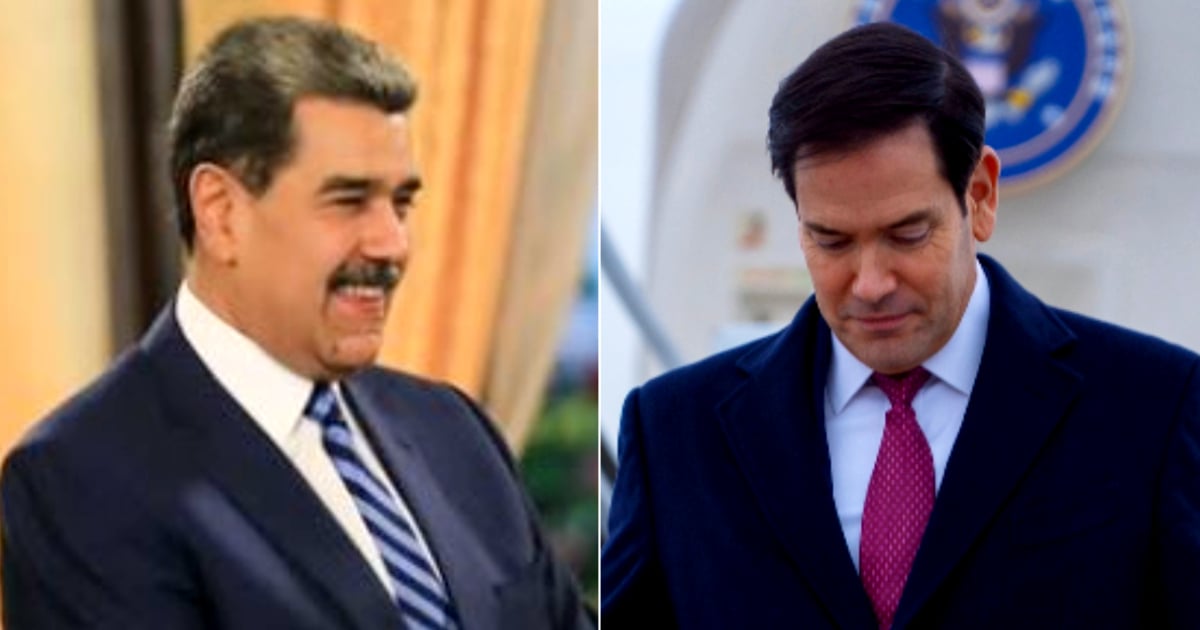
According to the statement signed by Secretary of State Marco Rubio, the organization is led by Nicolás Maduro and high-ranking officials of the Chavista regime, accused of turning the structures of the Venezuelan state —from the military to the judiciary— into instruments of drug trafficking and corruption.
"The Cartel of the Suns, along with other foreign terrorist organizations such as the Tren de Aragua and the Sinaloa Cartel, is responsible for terrorist violence throughout our hemisphere, as well as drug trafficking to the United States and Europe," the official statement noted.
The measure marks a new step in Washington's diplomatic, judicial, and military offensive against chavismo, at a time of heightened regional tension, with the U.S. carrying out a broad military deployment in the Caribbean—which includes warships and amphibious operations—as part of its strategy to combat drug trafficking and “contain” the governments of Caracas and Havana.
A category change with immediate effects
Experts explained that the prior designation of the Cartel de los Soles corresponded to the SDGT category (specially designated global terrorists) of the Treasury Department, which focuses on financial sanctions.
The new designation FTO, however, marks a fundamental difference, as it formally identifies this Cartel as a direct threat to the national security of the United States.
The new designation significantly expands the legal framework for the United States to undertake operations, actions, and direct measures against the organization and its members once the measure goes into effect.
From that moment on, any engagement with the Maduro regime will be legally equivalent to interacting with a terrorist organization, with all the legal and political implications that this entails.
This means that companies, governments, or intermediaries that maintain ties with officials of the Chavista regime—such as in financial, commercial, or diplomatic operations—could face sanctions under U.S. anti-terrorism laws.
Escalation of pressure and regional risk
The decision is part of a growing U.S. military mobilization in the Caribbean and the South Atlantic, which includes landing exercises and naval interdiction operations against drug trafficking.
Washington considers Venezuela one of the main corridors for cocaine to North America and Europe, in alliance with organized crime networks.
Defense sources cited by U.S. media report that the Pentagon is considering expanding its presence in strategic areas of the eastern Caribbean and strengthening cooperation with Colombia and English-speaking Caribbean countries to block routes used by the Cartel de los Soles and the Tren de Aragua.
In response, the Maduro regime has intensified military maneuvers on the northern coast of Venezuela and on the island of La Orchila, where it has also received logistical support from Russia and Iran.
Political repercussions
Analysts agree that this designation complicates any attempt at negotiation or lifting of sanctions, and places Caracas in a status similar to that of hostile countries or entities classified as terrorists.
In practical terms, Washington breaks any possibility of direct dialogue with Maduro and opens the door to more aggressive intelligence operations and military cooperation in the region.
In the words of a U.S. official quoted by Reuters, the measure aims to "cut off the head of state-sponsored drug trafficking and send a clear message to its allies, especially Cuba and Nicaragua."
Filed under: