
Related videos:
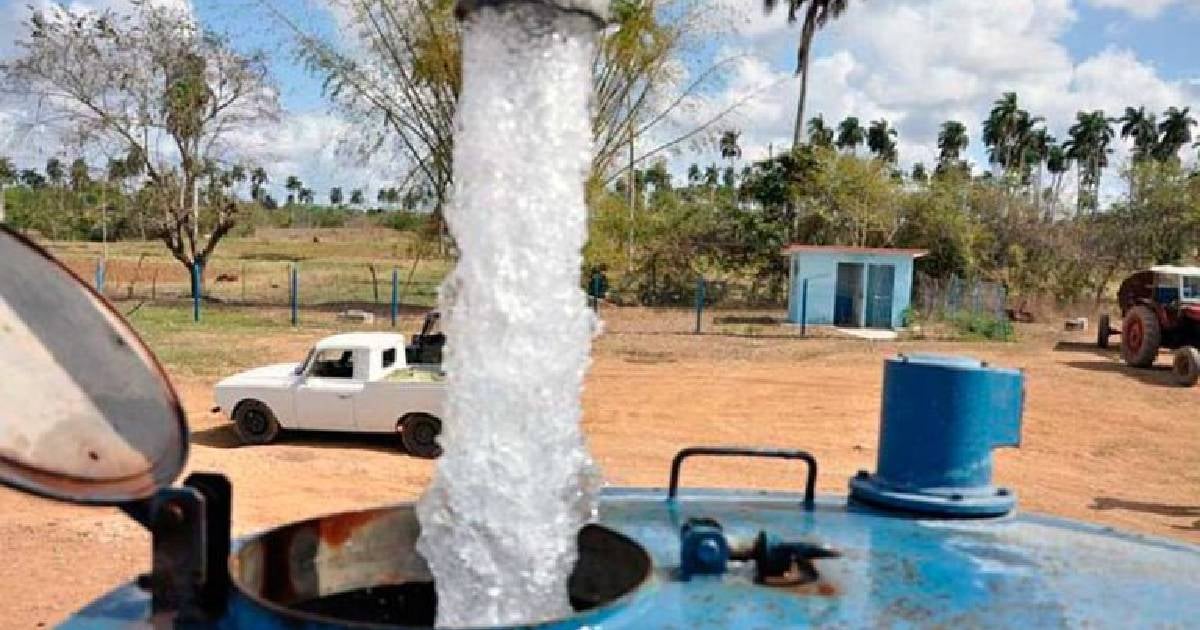
More than 90,000 people in the city of Las Tunas have difficulties regularly obtaining water in their homes, especially in the higher areas of the urban landscape, where the pressure never reaches the households.
The director of the Water and Sewer Company in the capital municipality, David Legrá Hernández, acknowledged that the limitations extend beyond circuit monitoring, as many pumping stations are left without electricity for long hours, which further delays the arrival of water to the population.
He explained that the water takes up to three hours to reach the city from the Piedra Hueca dam, and if there is a disruption in the flow for four hours, the residents end up going seven hours without supply.
In the case of the Cayojo dam, just filling the cistern takes about two hours, an additional delay that leaves the pipelines empty during the pumping intervals, reported the official newspaper 26.
The official assured that they are trying to protect the distribution cycles, but insisted that they are forced to reduce the service to maintain a minimum level of reserves in the reservoirs.
He warned that, if all the pumps of that reservoir were activated at the same time, not a single drop of water would be left available.
Some areas, like El Rincón, have a backup generator, although the situation remains more critical in places like Bartle, where two circuits—one from Camagüey and another from Las Tunas—never manage to synchronize.
In addition to the fragility of the infrastructure, issues such as the lack of storage tanks in homes, water waste, and social indiscipline create a situation that further complicates distribution, the source noted.
Authorities acknowledge that the situation, far from improving, may worsen in the coming months, due to the lack of rainfall in key basins such as La Cana and the accumulated deterioration of the pipes, whose repair has been pending for years in a city that has already exceeded the capacity of its sources and supply systems.
The truth is that water continues to be unavailable in a stable manner for tens of thousands of residents of Tuners, trapped in a collapsed system that does not provide immediate solutions to a vital crisis.
Meanwhile, in Holguín, the situation is no more promising. The Deputy Prime Minister Inés María Chapman confirmed this week the actions taken to address the drought in that province, where 66 communities are facing difficulties with the water supply and July was reported as the driest month in the last decade.
In the Holguin territory, only nine of the 18 available pumping units are operational, which barely provides 630 liters per second for a growing population. Among the 14 municipalities, those most affected are Holguín, Calixto García, Rafael Freyre, and Urbano Noris, reported the provincial newspaper ¡Ahora!
In this regard, it was pointed out that Holguín has the highest water distribution cycle in the country. The declared priorities focus on work at the Güirabo and Cacoyugüin dams - which supply the provincial capital - the construction of new wells, and the extraction of 500 liters per second from the Güirabo reservoir.
However, the measures come too late in the face of a persistent drought and a hydraulic infrastructure incapable of sustaining stable service amid the worst water crisis the eastern part of Cuba has experienced in years.
In Ciego de Ávila, 30% of the pumped water is lost due to damaged pipelines, which complicates the supply.
Local authorities have imposed a cycle of 24-hour water distribution every nine days in all the popular councils of the municipal capital, with very negative impacts on economic, social, and agricultural entities.
Despite the fact that the country is in the rainy season, several Cuban provinces are being ravaged by drought, with major water sources in critical condition, complicating the supply of this vital resource. Additionally, power outages worsen the pumping situation.
In Guantánamo, the main reservoir in the region is practically dry, leaving the population without guarantees of supply and creating an emergency situation in the midst of summer.
Similarly, the city of Santiago de Cuba is facing one of the worst water crises in years, with key reservoirs below 20% and a population largely dependent on a collapsed system that can barely sustain supply amid a prolonged drought affecting the southeast of the province since early 2025.
About 35,686 residents of the province of Sancti Spíritus are anxiously waiting for a water truck to meet their basic needs, with supply cycles ranging from 10 to 15 days, due to the drought that keeps rivers and wells dry, along with breakdowns in pumping equipment that further prolong delivery times.
The prolonged water shortage in Matanzas has fueled a growing black market for tank trucks. For a household of three, the monthly expense to meet basic needs could reach 9,000 pesos, the official newspaper Girón recently confirmed.
Frequently Asked Questions about the Water Crisis in Las Tunas and Other Provinces of Cuba
Why are more than 90,000 people in Las Tunas without a stable water supply?
The lack of water supply in Las Tunas is due to a combination of prolonged drought, failures in water infrastructure, and power outages. Water pressure is insufficient to reach many households, especially in higher areas and at the ends of circuits. Additionally, the pumping stations are without electricity for long hours, exacerbating the issue.
What are the main causes of the water crisis in Cuba?
The main causes of the water crisis in Cuba include persistent drought, the deterioration of hydraulic infrastructure, and prolonged blackouts. Many provinces, such as Las Tunas, Holguín, and Ciego de Ávila, have reported critical levels in their reservoirs and water systems, further complicating the supply of this vital resource.
How does the water crisis affect the daily lives of Cubans?
The water crisis affects the daily lives of Cubans by limiting access to drinking water and complicating hygiene and domestic activities. In some provinces, residents rely on tanker trucks to obtain water, and in areas such as Santiago de Cuba, the delivery cycle can extend up to 85 days, which negatively impacts health and quality of life.
What measures are the authorities taking to address the water crisis in Las Tunas?
The authorities are working on solutions such as the installation of floating pumps and the repair of water pumps. However, these measures are seen as temporary fixes that do not address the underlying issue of the collapsed infrastructure. The situation remains critical due to a lack of rainfall and the accumulated deterioration of the pipes.
How does the drought affect other Cuban provinces besides Las Tunas?
The drought severely affects provinces such as Holguín, Santiago de Cuba, and Ciego de Ávila, where reservoirs are below their critical levels. In these regions, the lack of rainfall and power outages have led to extremely long water distribution cycles, impacting both the population and local agriculture and industry.
Filed under: