
Related videos:
In the city of Ciego de Ávila, the water supply cycles reach up to nine days, and despite official commitments to reduce them to between three and four days, the reality shows an increasingly unstable service due to a combination of hydrological drought, pumping failures, and a hydraulic network that can no longer withstand further patches.
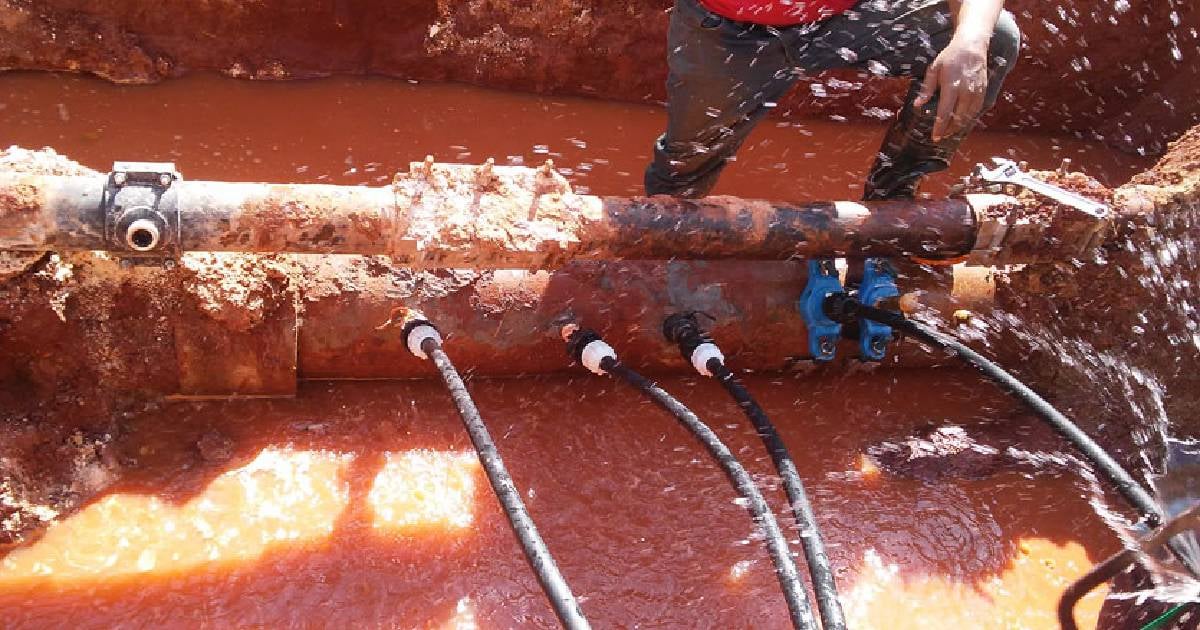
According to Yorgi Luis Gómez Solano, deputy director of the Water Supply and Sewerage Company, in the central city about 30% of the water is lost in the pipelines due to the poor condition of the network, which was built in the early last century and is also affected by sediment from the groundwater.
In June and July, about 300 leaks were eliminated, but the figures indicate that the problem is still far from being resolved, added Gómez, quoted by the official newspaper Invasor.
On her part, Miroslava Reyes González, the general director of the company, explained that the supply depends on three main sources —San Fernando, Silveira, and Vivero Café— that feed the southern support tank, which has a capacity of 5,400 cubic meters.
Reyes mentioned that a total of seven new pumping units will be installed, of which four are currently operational and the other three are expected to be added this month. Additionally, plans are underway for the repair of the tank, which could once again disrupt the cycles.
The goal of the project is to transport 400 liters per second from that tank to support the local councils in Avila. This figure would be similar to what the provincial capital used to receive when it was also supplied from the northern area, noted Pablo González Pérez, coordinator of Programs and Objectives in the provincial government.
The energy crisis further complicates the situation, as several pumping stations lack generators, making it difficult to maintain a stable supply amid the blackouts.
This is compounded by the lack of fuel, which limits the ability to reinforce the service with tanker trucks, the source added.
In Ciego de Ávila, due to the decrease in flow from the main supply sources and the decline in the performance of the pumping equipment, local authorities have imposed a cycle of 24-hour water distribution every nine days in all the popular councils of the municipal capital, with very negative impacts on economic, social, and agricultural entities.
Despite the fact that the country is in the rainy season, several Cuban provinces are suffering from drought, with major water sources in critical condition, complicating the supply of this vital resource. Additionally, power outages worsen the pumping situation.
In Guantánamo, the main reservoir in the region is almost dry, leaving the population without supply guarantees and creating an emergency situation in the midst of summer.
Furthermore, the city of Santiago de Cuba is facing one of the worst water crises in years, with key reservoirs below 20% and a population largely dependent on a collapsed system that can barely sustain supply amidst an extended drought affecting the southeast of the province since early 2025.
About 35,686 residents of the province of Sancti Spíritus are waiting for a water truck to meet their basic needs, with supply cycles ranging from 10 to 15 days due to the drought that keeps rivers and wells dry, as well as breakdowns in pumping equipment that further extend delivery times.
The prolonged water shortage in Matanzas has driven the rise of a burgeoning black market for water tankers. For a household of three, the monthly expense to meet basic needs could reach 9,000 pesos, as recently confirmed by the official newspaper Girón.
In Havana, the water scarcity has been worsened by electrical instability, which directly affects pumping and distribution in the most populated neighborhoods.
Nationally, the figures are staggering: over half a million Cubans are suffering from the effects of the drought, with provinces like Las Tunas and Holguín experiencing prolonged cuts in water supply.
Frequently Asked Questions about the Water Crisis in Ciego de Ávila
Why is a large amount of water being lost in Ciego de Ávila?
In Ciego de Ávila, around 30% of water is lost due to the poor condition of the piping network, which was built in the early last century. This deteriorated infrastructure and the accumulation of sediments from groundwater are the main causes of leaks, despite efforts to eliminate the loss of water.
What are the causes of the long water supply cycles in Ciego de Ávila?
The water supply cycles in Ciego de Ávila extend up to nine days due to a combination of hydrological drought, pumping failures, and the energy crisis affecting the country. The lack of generators at pumping stations and the shortage of fuel exacerbate the situation, limiting the capacity to supply water via tanker trucks.
What measures are being taken to improve the water supply in Ciego de Ávila?
To improve the water supply, new pumping equipment is being installed and the repair of storage tanks in Ciego de Ávila is being planned. The goal is to lead 400 liters per second from the southern support tank to the local councils in Avileño. However, the lack of imported parts and the energy crisis complicate the implementation of these solutions.
How does the energy crisis affect water supply in Cuba?
The energy crisis in Cuba severely affects the water supply by halting the pumping of water in much of the country. Power outages and voltage drops prevent the continuous operation of pumping stations, prolonging supply cycles and impacting millions of Cubans who rely on this essential service.
Filed under: