
Related videos:
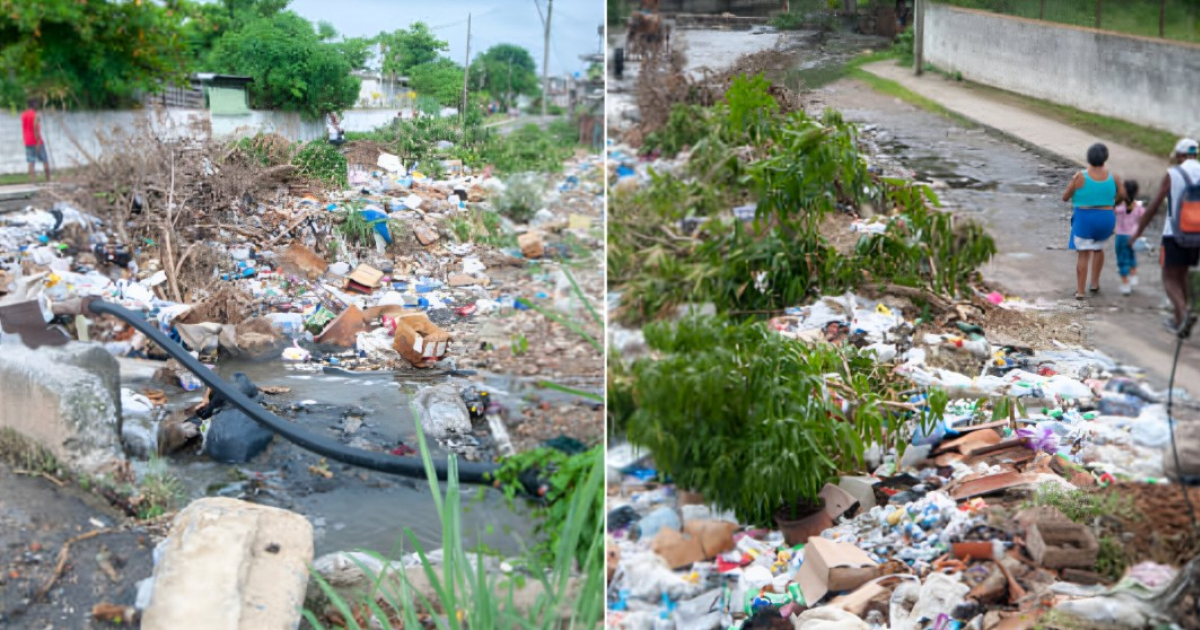
A Cuban photographer exposed on social media the unsanitary conditions in which he and his neighbors live in Reparto Cuba Libre, in the city of Pinar del Río, where garbage, stagnant water, and overflowing pits have become part of the daily landscape.
“The photos are from the area where I live. It looks like a pigsty. In that place, we lack even the minimum hygienic conditions to live”, wrote the artist on Facebook where he identifies himself as El guardián del aliento. He also shared shocking images of flooded streets, mountains of waste, and families forced to navigate through puddles of sewage and accumulated garbage.
The complainant claims that the collapsed septic tank, the leaking pipes, and a blocked stream are located at the entrance of a daycare center, a family medical clinic, and just a few blocks from a polyclinic. "I don't know how many people have fallen ill," he lamented, while also recalling that in his own home they have been without drinking water for six months.
Facebook/Elguardiandel Aliento
"I am dealing with the rainwater," she wrote, recalling that her family went an entire year without access to the service.
The images show children, women, and elderly people moving between contaminated puddles, while solid waste accumulates in vacant lots and along the edges of streets, creating a clear focal point for the transmission of diseases.
Facebook/Elguardiandel Aliento
Pinar del Río: a province under double threat
The complaint has gained increased significance amid the health crisis the province is experiencing, as Pinar del Río is currently facing a surge in dengue with active transmission in several municipalities and the simultaneous circulation of respiratory viruses such as Influenza and respiratory syncytial virus.
Health authorities confirmed the spread of serotypes three and four of dengue, the latter having a greater capacity for contagion.
Doctor Andrés Villar Bahamonde, director of the Provincial Center for Hygiene and Epidemiology, admitted that the increase in suspected cases calls into question the effectiveness of vector control measures.
Meanwhile, the lack of fuel and the precariousness of communal services hinder an effective response, worsening a situation where garbage and leaks have become a breeding ground for the transmitting mosquito.
But the situation in Pinar del Río reflects a crisis that is affecting the entire country. The Ministry of Public Health recently confirmed that four patients are in intensive care due to dengue, two in serious condition and two critical, with active transmission in seven provinces and the presence of chikungunya in Matanzas.
At the same time, reports an increase in cases of hepatitis A, a disease that spreads through contaminated water and food, precisely in a context where thousands of Cubans are reporting an unstable access to drinking water and are forced to consume rainwater or water from unsafe sources.
Experts warn that the combination of dengue, chikungunya, oropouche, and hepatitis A creates a dangerous epidemiological scenario in a country with a weakened healthcare system, shortages of medications, and increasing complaints from citizens regarding the lack of control over Aedes aegypti breeding sites.
Frequently Asked Questions about the Health and Environmental Crisis in Pinar del Río, Cuba
What is the current situation regarding unsanitary conditions in the Reparto Cuba Libre of Pinar del Río?
The Cuba Libre neighborhood in Pinar del Río faces extreme unsanitary conditions, with accumulated garbage, stagnant water, and overflowing septic tanks. These conditions have forced residents to live in a hazardous environment for their health, with elevated risks of diseases due to water and air contamination.
How does the health crisis affect the dengue outbreak in Pinar del Río?
The accumulation of garbage and stagnant water in Pinar del Río creates an ideal breeding ground for the Aedes aegypti mosquito, which transmits dengue. Despite vector control efforts, the lack of resources and fuel has hindered an effective response, worsening the health situation and facilitating the spread of the virus.
What role does the Cuban government play in the health and sanitation crisis in Pinar del Río?
The Cuban government has faced severe criticism for its inaction regarding the health and sanitation crisis in Pinar del Río. The lack of effective measures to manage waste and control infection hotspots has created a favorable environment for diseases and has increased discontent among citizens, who are demanding immediate and structural solutions.
What impact does the lack of drinking water have on the daily lives of residents in Pinar del Río?
The lack of access to potable water has forced residents to rely on rainwater or unsafe sources, which increases the risk of waterborne diseases such as hepatitis A. This shortage has also severely impacted personal hygiene and the ability of households to maintain basic sanitary conditions, exacerbating the public health crisis in the region.
Filed under: