
Related videos:
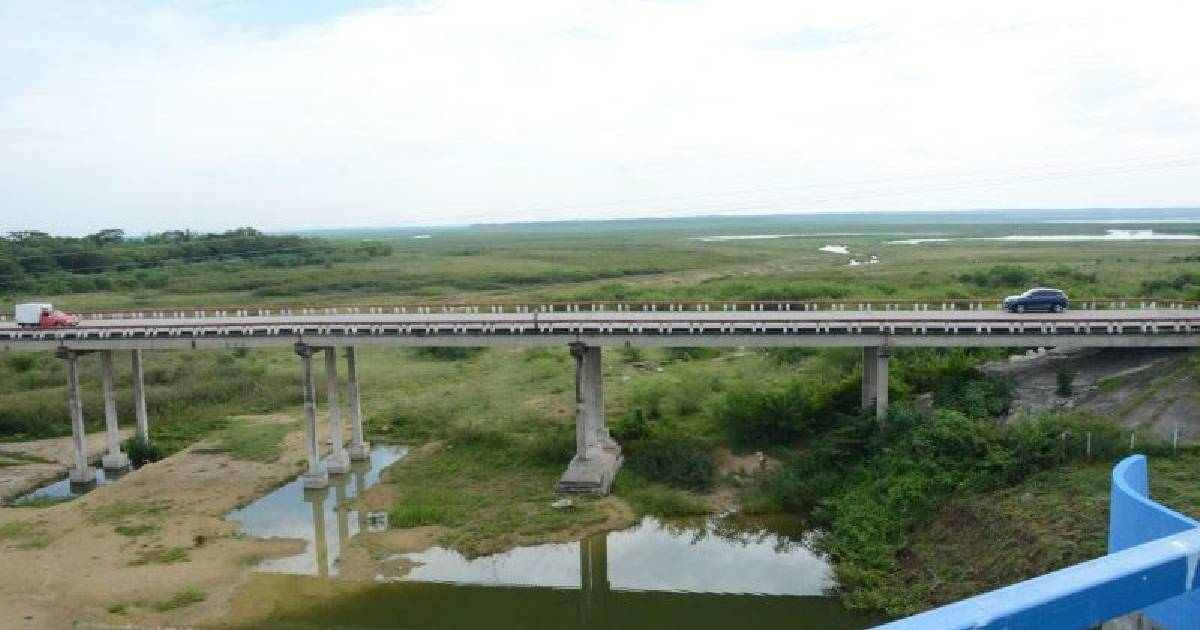
The Zaza dam, the largest reservoir in Cuba, holds only 106.4 million cubic meters of water, which represents just 12% of its designed capacity of 1,020 million cubic meters, placing it at the second lowest point in its history.
According to data from the Hydraulic Resources department in the province of Sancti Spíritus, the drought record in this reservoir was recorded in May 1976, when it dropped to 99.6 million cubic meters.
The current figures indicate the lowest level in 49 years, right in the middle of the rainy season, reported the official newspaper Escambray.
The reservoirs in Sancti Spíritus are also in a critical condition, with only an average of 17% capacity. Among the most affected, in addition to Zaza, are La Felicidad, Dignorah, and Aridanes, all impacted by the prolonged lack of rainfall.
The situation confirms that the country's largest water reservoir is on the verge of collapse, worsening the vulnerability of the population and exposing the official inability to tackle a drought that is becoming increasingly frequent.
The population of the main municipality of Sancti Spíritus receives cloudy water, with a bad smell and the presence of insects, a situation that the authorities acknowledge and attribute to the drought and issues in the supply sources, without any immediate solutions in sight.
On her part, the vice prime minister Inés María Chapman Waugh visited Consolación del Sur, in Pinar del Río, to review the hydraulic system and the prior agreements regarding water supply.
In the Herradura dam, the main source for rice cultivation in the Cuba-Vietnam project, it was confirmed that it is at 41% of its capacity.
He also toured the municipal well field, where he supervised repairs and advised on improving the maintenance of pumps and electrical structures, with the aim of "putting an end to the lengthy water cycles that currently threaten the quality of life of at least 25,000 residents in Consolación del Sur," noted the provincial newspaper Guerrillero.
The province of Santiago de Cuba is facing one of the worst droughts in decades. The main reservoirs that supply more than 80% of the provincial capital are storing only 23.3 million cubic meters of water, which represents 15.6% of their total capacity.
This deficit has extended the cycles of drinking water distribution in Santiago communities to أكثر من 30 days, turning the crisis into a daily ordeal.
The structural deterioration has also been highlighted in reports indicating that the hydraulic system is collapsed and lacks the capacity to ensure minimal distribution, even in cases where there are specific reserves.
Meanwhile, the situation in Holguín is not more encouraging. Chapman herself recently confirmed the actions taken to address the drought in that province, where 66 communities are experiencing service difficulties, and July was reported as the driest month in the last decade.
More than 90,000 people in the city of Las Tunas are facing difficulties in regularly supplying water to their homes especially in the higher areas of the urban landscape, where the pressure never reaches the households.
In this regard, the government admitted that the drought has led to an increase in water-related crimes, such as theft and diversion of this resource, which has affected entire communities.
Frequently Asked Questions about the Water Crisis in Cuba
What is the current situation of the Zaza Dam in Cuba?
The Zaza dam, the largest reservoir in Cuba, is in a critical situation. It holds only 12% of its normal capacity, marking one of the lowest levels in 49 years, which reflects an alarming water crisis amid the rainy season.
How does the drought affect the population of Sancti Spíritus?
The population of Sancti Spíritus is facing serious water supply problems, receiving murky water with an unpleasant odor and the presence of insects. The situation is attributed to drought and issues with the supply sources, with no immediate solutions in sight.
What measures is the Cuban government taking to address the drought?
The Cuban government is taking emergency measures, such as monitoring hydraulic systems and repairing pumps and electrical structures. However, the effectiveness of these measures is questionable given the magnitude of the crisis.
What is the situation of the drought in Santiago de Cuba?
Santiago de Cuba is facing one of the worst droughts in years, with reservoirs at 15.6% of their capacity. The cycles for distributing drinking water have extended to over 30 days, creating a daily struggle for the population.
Filed under: