
Related videos:
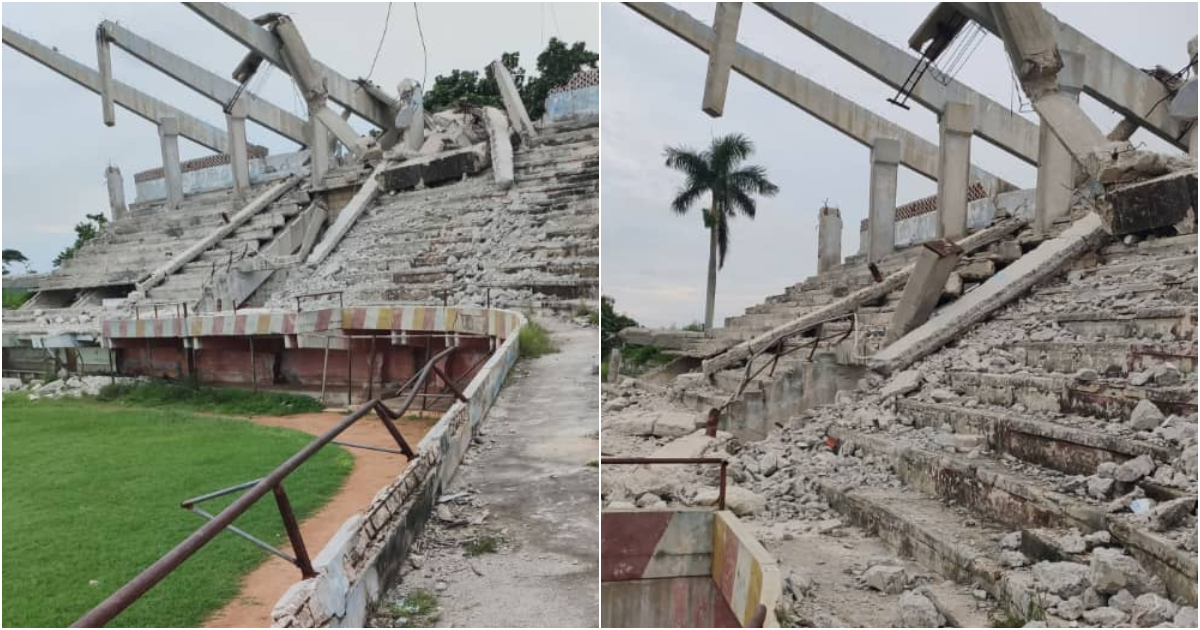
The Jesús Suárez Gayol stadium, a symbol of baseball in the municipality of Mariel, Artemisa province, and birthplace of talents like Jonder Martínez and Miguel Alfredo González, has been reduced to rubble after decades of neglect and the final blow from Hurricane Rafael.
Built between 1970 and 1982, the Suárez Gayol was one of the best-equipped stadiums in the former province of Havana (which was divided into Artemisa and Mayabeque in 2011), featuring artificial lighting and a capacity for national baseball series.
Throughout its history, prominent figures in Cuban sports have emerged, but proximity to the sea and a lack of maintenance have led to the deterioration of its infrastructure over time, lamented Cuban sports journalist Yasel Porto through his profile on Facebook.
He recalled that starting in 2012, attempts at restoration were made but did not succeed. In 2019, the structure still allowed for press softball events, but today the stands have disappeared, and the facility is unrecognizable.
Hurricane Rafael, three years ago, ended up worsening the situation.
The deterioration of the Suárez Gayol is not an isolated case. Other sports facilities that are on the same path, such as those in Baracoa (Guantánamo), Manzanillo (Granma), and Puerto Padre (Las Tunas), have also experienced neglect and a loss of infrastructure, highlighting a pattern that restricts the training and future of Cuban athletes.
According to Porto, "Cuban sports, in the majority of the elements that have shaped it, today is more past than present, and more present than future."
In his opinion, despite the dismal economy and the lack of resources, talents continue to emerge, although the structural neglect poses an inevitable limit to the development of sports in the province and the country.
It is alarming the number of public spaces, heritage sites, or iconic places in Cuba that are abandoned and condemned to disappear due to a system unable to preserve them, drowned in official indifference and citizen resignation, already accustomed to the deterioration amid the economic crisis.
The San Pedro camping site, located in Artemisa, is suffering from deterioration and institutional neglect, with only half of its cabins operational. The issues include vandalism, illegal occupations, and a lack of resources.
And in Guanajay, the Carlos Baliño Museum, declared a National Monument, has not managed to reopen its doors after six years of closure.
The San Rafael cemetery, in the city of Guantánamo, shows cracked graves, illegible or completely destroyed tombstones, as well as corroded marbles in the crypts where the remains of heroes of the Liberation Army rest, reflecting institutional neglect, citizen ignorance, and the systematic vandalism of a heritage site.
Another example is the El Arte printing house in Manzanillo, one of the most important cultural symbols of Eastern Cuba, which is languishing in neglect, while its historical and editorial legacy crumbles in the face of state indifference.
The Máximo Gómez Airport in Ciego de Ávila, built with over 100 million pesos, is now a ruin without flights or purpose, where a public investment was buried under the weight of negligence and absurdity.
In the municipality of Marianao, the former Oriental Park racetrack, a symbol of Havana's grandeur, ended up as a state warehouse among the rubble.
The once glorious Casino Español de La Habana, located in the Playa municipality; the iconic Teatro Musical de La Habana; and the former Hotel Venus in Santiago de Cuba, are just a few of the many examples of cultural and architectural treasures that have been destroyed.
Filed under: