
Related videos:
The state of Florida approved on Tuesday the transfer of a plot of land in the heart of Miami, next to the iconic Freedom Tower, for the construction of the future presidential library of Donald Trump, the current president of the United States.
The decision was made by Governor Ron DeSantis and members of his cabinet, who voted in favor of transferring the land rights, valued at over 66 million dollars, to the nonprofit organization Donald J. Trump Presidential Library Foundation, Inc., led by Eric Trump, Michael Boulos (husband of Tiffany Trump) and attorney James Kiley, reported the AP agency.
The donated property covers an area of 2.63 acres and is currently used as a parking lot by Miami Dade College.
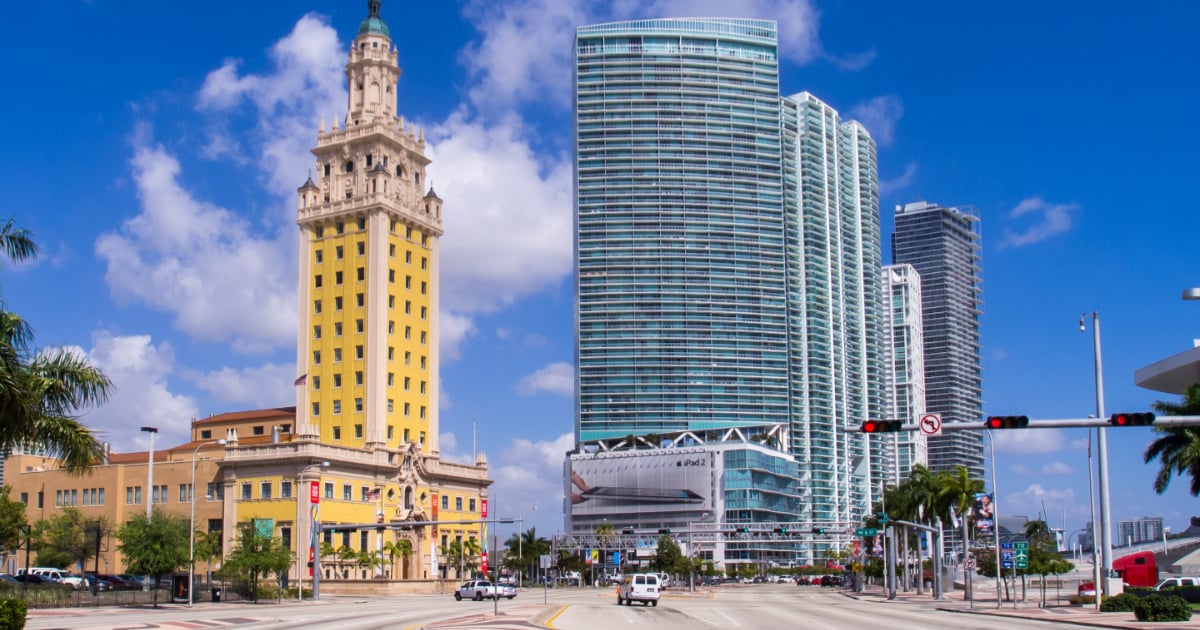
It is located across from the Kaseya Center —home of the Miami Heat basketball team— and in one of the most sought-after areas of the city, surrounded by skyscrapers and with a direct view of the waterfront of Biscayne Bay.
“Will be the best presidential library ever built, in honor of the best president,” wrote Eric Trump on social media following the vote.
The new center would be located right next to the Torre de la Libertad, a building in Spanish Renaissance style that served as a focal point for Cuban refugees between 1962 and 1974 and now functions as a museum of immigration. This proximity adds a symbolic weight to the project, which combines political legacy, migratory history, and tourism promotion.
However, the initiative is not without controversy. The Tower has been the site of protests against Trump's immigration policies, particularly his agenda of mass deportations, which is viewed by some segments of the Cuban-American community as a contradiction to his pro-immigrant rhetoric towards Cubans.
The state legislature, dominated by Republicans, approved a law this year that prevents local governments from blocking the construction of presidential libraries.
The law was driven by prior tensions between Trump and local authorities over regulations regarding patriotic symbols in Palm Beach.
Before choosing Miami as the permanent venue, other options were considered, such as Florida International University and Florida Atlantic University. However, the proximity to the sea and the migratory symbol represented by the Tower were key factors in the decision.
The project also includes the construction of an adjacent hotel, which would make Trump's library the first to feature a complementary tourism development.
The voting this Tuesday marks the first concrete step for downtown Miami to host this presidential project, in a city where the former president—and current leader—maintains strong support, particularly among Cuban-American voters.
Filed under: