
Related videos:
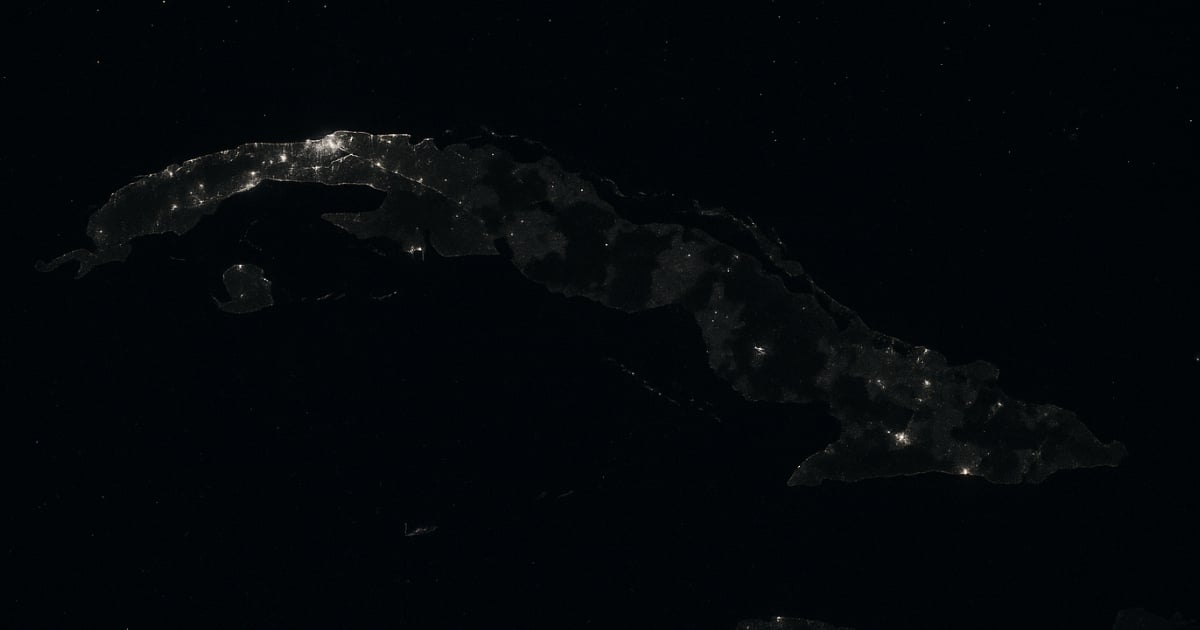
The National Electric System (SEN) began this Monday, October 6, 2025, with a capacity of 1,770 megawatts (MW) against a demand of 2,730 MW, resulting in an impact of 975 MW due to a generation capacity deficit, according to the official report from the Electric Union (UNE).
For midday, an impact of 1,200 MW is estimated, and during the nighttime peak, availability could rise to 1,820 MW, with a demand of 3,350 MW and a deficit of 1,530 MW, which would imply 1,600 MW affected if current conditions persist.
The report specifies that on Sunday the service was interrupted for 24 hours, and that the disruptions continued into the early hours of this Monday. The highest impact from the previous day was 1,636 MW, at 7:40 p.m., exceeding expectations due to the shutdown of unit 3 at the Santa Cruz del Norte Thermal Power Plant (CTE).
Among the main incidents, the UNE reports breakdowns in units 2 of Felton, 3 of Santa Cruz, 8 of Mariel, and 3, 5, and 6 of Renté, in addition to maintenance on units 1 and 2 of the Santa Cruz CTE and on unit 4 of the CTE Carlos Manuel de Céspedes in Cienfuegos. The thermal limitations keep 272 MW out of service, while the lack of fuel and lubricant affects 44 distributed generation plants (297 MW) and renders 227 MW additional unavailable, bringing the total affected to 524 MW.
Despite the addition of 32 new photovoltaic solar parks, which generated 3,145 MWh with a peak power of 497 MW, the contribution remains insufficient to meet national demand.
In Havana, the provincial Electric Company reported that on Sunday the service was interrupted for 10 hours and 23 minutes, with a maximum impact of 126 MW at 7:40 p.m., and complete restoration by 1:40 a.m. on Monday. The entity confirmed that, due to the new adjustment of the SEN, there will be blackouts in all sectors of the capital during Monday the 6th and the early morning of Tuesday the 7th of October, according to the system's requirements.
The energy deficit has slightly decreased compared to last week —when it was nearing 2,000 MW— but it remains high. A few days ago, the UNE reported a slight easing of the impact, although the unexpected shutdown of unit 3 at the Santa Cruz thermal power plant has worsened the situation again.
The crisis occurs amid a recognized fuel shortage, acknowledged by the Minister of Energy and Mines, Vicente de la O Levy, who stated that “the fuel will not last throughout October” and that the reserves would only last “for a few days.” More than 600 MW remain out of service due to a lack of diesel, which keeps the national electricity system weakened.
In parallel, the First Deputy Minister Inés María Chapman stirred controversy after suggesting, during a televised meeting, to take televisions to the street and connect them to generators so that the population could watch informational programs during power outages, a proposal that sparked criticism and mockery on social media.
Despite the repeated announcements of recovery, the structural deficit of the SEN and the dependency on imported fuel keep the island in a prolonged electrical crisis. Daily disruptions, scheduled blackouts, and constant breakdowns indicate that the stability of the system remains a distant goal.
Frequently Asked Questions about the Energy Crisis in Cuba
What is the main cause of power outages in Cuba?
The deficit in electricity generation capacity is the main cause of blackouts in Cuba. The National Electric System (SEN) faces a significant gap between the supply and demand for electricity, exacerbated by breakdowns in thermal power plants, prolonged maintenance, and a severe shortage of fuel.
How does the lack of fuel impact electricity generation in Cuba?
The shortage of fuel and lubricants has rendered numerous distributed generation plants inoperative, which has significantly reduced the country's electricity generation capacity. This lack of energy resources is a key factor in the current deficit and in the inability to meet the national electricity demand.
What impact do renewable energy sources have on Cuba's energy situation?
Although new photovoltaic solar parks have been incorporated, their contribution remains insufficient to cover Cuba's energy deficit. Renewable generation fails to meet demand due to the capacity limitations of these facilities and the significant existing electrical deficit.
What are the prospects for resolving the energy crisis in Cuba?
Short-term solutions seem unlikely, as the energy crisis is a structural problem that requires significant investments and improvements in the electricity generation and distribution system. The lack of a clear strategy and the dependence on imported fuels further complicate the way out of this critical situation.
Filed under: