
Related videos:
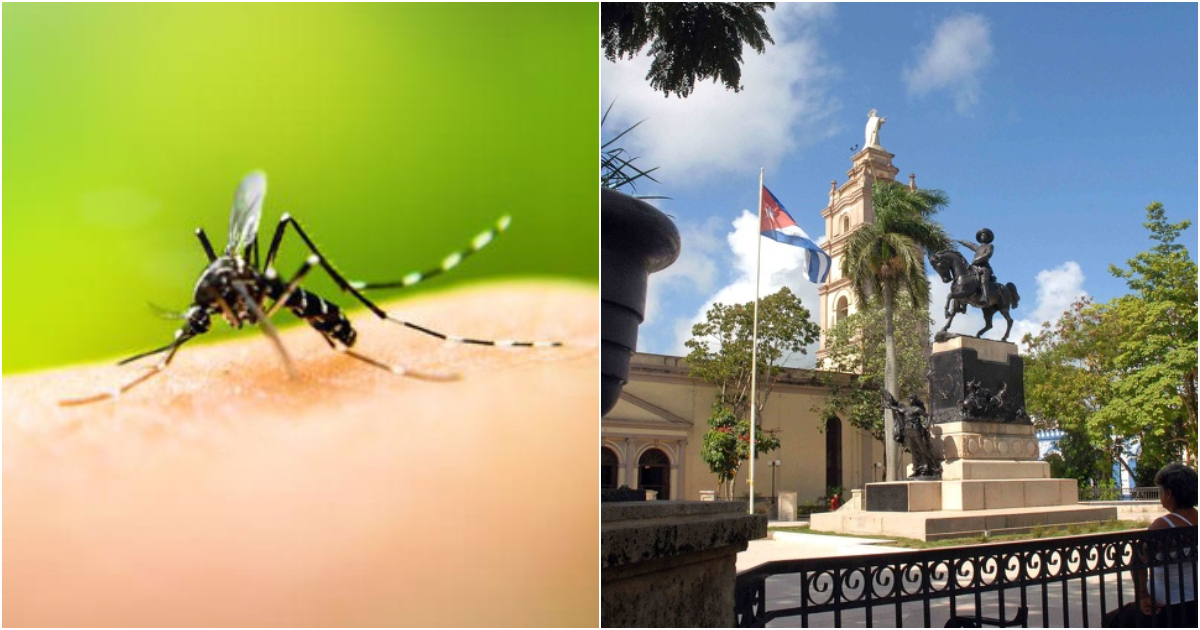
An internal message from the Municipal Health Directorate of Camagüey, directed exclusively to doctors, confirms the detection of chikungunya cases in patients treated in the Finlay and Pirre health areas, and warns about the possible circulation of the Oropouche virus.
The content of the document, accessed by the Cuban journalist José Luis Tan Estrada, and shared on his Facebook profile, calls for "utmost seriousness" in the active search for fever cases and epidemiological surveillance.
According to the information, "the febrile patient without positive IgM (Immunoglobulin M, a type of specific antibody) or with symptoms suggesting other arboviral diseases that are not dengue is of extreme importance."
Additionally, instruct professionals to report any suspicions immediately, strengthen health education, and implement vector control actions.
It also mentions that, in areas where fever and diarrhea are prevalent, other viruses that require urgent differential diagnosis may be circulating.
So far, health authorities have not issued a public alert, despite the increase in febrile cases and the confirmation of new mosquito-borne diseases.
The internal memo concludes with an unusual warning: “I don’t want anyone to be complacent. Let’s stay alert to what is happening and, please, without fear, report any potential outbreaks.”
On social media, people from Camagüey expressed concern about the shortage of medical supplies, reagents, and medications.
Several comments indicate that the accumulation of garbage, leaks, and the lack of fumigation have contributed to the spread of the Aedes aegypti mosquito.
"They try to hide diseases that are impossible not to detect, but the people know the real reasons," wrote a user.
Others pointed out that "Cuba is a garbage dump" and that "there's no stopping the mosquito-borne diseases" while the cities remain unsanitary and the hospitals lack basic resources.
The official silence regarding the outbreak reinforces the perception of health secrecy in a country where information about epidemics is often handled with opacity, even when infections are already affecting several provinces, the most dramatic example being Matanzas.
Authorities from the Ministry of Public Health (Minsap) in Matanzas warned that “dengue kills,” although they ruled out any deaths from this disease or the chikungunya virus in the province, which has been facing a surge in febrile cases and increasing pressure on the healthcare system for weeks.
In a similar vein, on Thursday, Cuba's Minister of Public Health, José Ángel Portal Miranda, stated that no deaths from dengue or chikungunya have been reported in Matanzas, despite the reports of health system collapse and an increase in febrile cases in the province.
In this regard, Cubans are harshly questioning recent statements made by doctor Francisco Durán García, who asserted that "no deaths have been reported" due to arboviral diseases in Matanzas and that "there is no collapse in health services" in the country.
The insistence that "there are no fatalities" stands in stark contrast to citizen reports and unofficial medical statements pointing to a much more serious situation, in a province where the healthcare collapse is already evident.
The shortage of reagents, fuel for fumigation, and laboratory equipment exacerbates the deficiencies of the Cuban healthcare system.
In this context, the institutional refusal to acknowledge viral coinfection and the associated deaths is more politically motivated than scientifically.
Recognizing the combined circulation of various viruses would be interpreted as an admission of failure in epidemiological control and public health management.
Consequently, the official discourse carefully avoids the label of "combined arboviruses" and chooses to attribute the deaths to "comorbidities," a strategy that dilutes the state's responsibility amid a clear healthcare crisis.
On the citizen front, thousands of Cubans are dealing with fever, joint pain and exhausting waits in healthcare centers, often without access to proper diagnostics or therapies.
According to science, the denial of epidemiological evidence has a perverse effect: it makes viruses invisible without halting their progress.
Given that Aedes aegypti circulates freely and health resources are limited, allowing this invisibility amounts to a negligent act by the institutions.
Frequently Asked Questions about the Health Crisis in Cuba Due to Mosquito-Borne Viruses
What viruses are currently circulating in Cuba?
Currently, dengue, chikungunya, and the Oropouche virus are circulating in Cuba, all transmitted by mosquitoes. This simultaneous co-circulation of viruses, known as "combined arboviral infections," is a phenomenon that the Cuban government has not officially acknowledged, exacerbating the health situation on the island.
Why doesn’t the Cuban government acknowledge the epidemiological crisis?
The Cuban government avoids acknowledging the epidemiological crisis due to "combined arboviruses" because admitting the simultaneous circulation of multiple viruses would mean acknowledging a failure in epidemiological control and public health management. This denial results in a lack of adequate protocols for diagnosis and treatment, exposing the population to a more severe health crisis.
What is the impact of the lack of resources on controlling the epidemic in Cuba?
The lack of resources in Cuba significantly exacerbates the health crisis. The shortage of reagents, insecticides, fuel for fumigation, and medications limits the response capacity to the outbreak of arboviruses. This situation is reflected in overwhelmed hospitals, lack of proper diagnostics, and a population that must cope with illnesses without necessary support.
How is the Cuban population reacting to the health crisis caused by arboviruses?
The Cuban population is expressing significant concern and discontent regarding the health crisis. Reports on social media reflect the healthcare collapse, the lack of trust in institutions and the unsanitary conditions that favor the proliferation of mosquitoes. Citizens are demanding greater transparency and effective actions from the government to alleviate the crisis.
Filed under: