
Related videos:
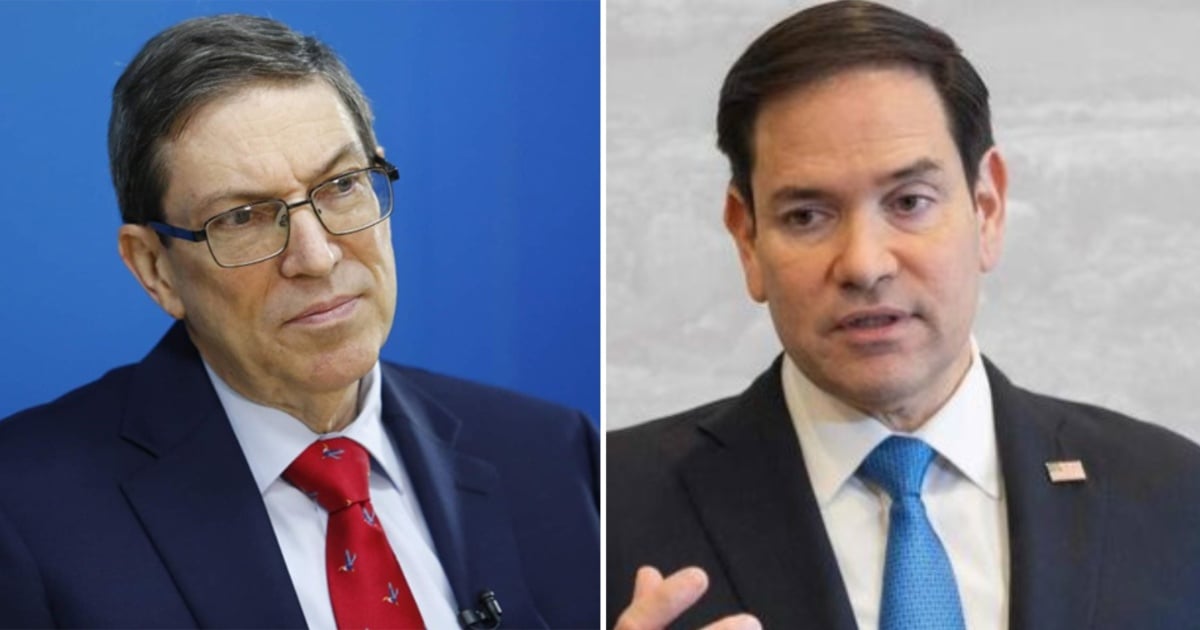
The Cuban regime's chancellor, Bruno Rodríguez, accused U.S. Secretary of State Marco Rubio of promoting a "personal and corrupt" agenda that "betrays" the supposed mandate for peace from President Donald Trump and of being responsible for Washington's recent escalations in the Caribbean.
The statements were made this Tuesday in an interview with The Associated Press, where the Cuban official stated that Rubio promotes “extremist” policies that do not align with the public stance of the U.S. president.
Rodríguez stated that, after Trump's return to the White House, Havana saw an opportunity to change the dynamics with Washington, but Rubio has pushed a "maximum pressure" campaign against the island.
"The current Secretary of State was not born in Cuba, has never been to Cuba, and knows nothing about Cuba," said the regime's representative to AP.
Rodríguez also attributed the "bipolar" confrontation with Venezuela to the State Department: he denounced the deployment of U.S. ships off his coast and the attacks against vessels identified as drug boats.
He also warned that the speculation that the U.S. might attempt to overthrow Nicolás Maduro “could have unpredictable and catastrophic consequences.”
Cuba, he said, acts in "total solidarity" with Caracas. When asked about potential Cuban military support, he avoided answering: "We do not know what the future may hold for us."
Cuba and the U.S. Amid Tensions
Even amidst the political clash, the official assured that cooperation channels with Washington persist in migration and the fight against terrorism, and he reiterated Cuba's willingness to commence a "serious and responsible" dialogue with the current U.S. government "right now."
On his part, the Secretary of State has argued that the U.S. will continue to defend human rights and freedoms in Cuba, stating that no "illegitimate and dictatorial" regime is welcome in the hemisphere.
For the Havana dictatorship, however, Rubio's speech and measures "sacrifice" U.S. national interests and normalize the use or the threat of using force as a commonplace tool.
The Cuban government has maintained a cautious profile with Trump—avoiding direct criticism— while continuing to blame the embargo for blackouts, shortages, and inflation.
Meanwhile, Bruno Rodríguez continues to accuse Marco Rubio of being the main promoter of the mass deportations of Cubans from the United States.
According to Rodríguez, Rubio orchestrates a persecution against Cuban migrants, despite the fact that many of them entered legally and are awaiting to benefit from the Cuban Adjustment Act.
Frequently Asked Questions about Cuba-U.S. Tensions and the Role of Marco Rubio
Why does Bruno Rodríguez accuse Marco Rubio of betraying Trump's mandate for peace?
Bruno Rodríguez accuses Rubio of promoting a personal and corrupt agenda that betrays Trump's mandate for peace, holding him responsible for the recent escalations from Washington in the Caribbean. According to Rodríguez, Rubio advocates for extremist policies that do not align with Trump's public stance and has pushed for a maximum pressure campaign against Cuba.
What is Cuba's stance on the military presence of the U.S. in the Caribbean?
The Cuban government characterizes the presence of U.S. military ships in the Caribbean as a direct threat to regional peace. Bruno Rodríguez denounces that the U.S. military deployment poses a serious danger to regional peace and considers it part of a policy of domination over Latin America. Cuba also reaffirms its support for Venezuela in the face of these threats.
What role does Marco Rubio play in U.S. policy toward Cuba?
Marco Rubio, as Secretary of State, is one of the key architects of the U.S.'s maximum pressure policy against Cuba. He defends military offensives and sanctions as part of a strategy to promote accountability for the Cuban regime for oppressing its people and exploiting medical professionals under forced labor conditions.
How does the Cuban regime respond to U.S. sanctions?
The Cuban regime characterizes the U.S. sanctions as aggression and imposition, but asserts that Cuba will continue to send medical brigades abroad. These missions are framed as solidarity programs, although various reports indicate coercive working conditions. Despite the criticisms, the Cuban government will not abandon these programs, which are crucial for its international standing and foreign currency income.
Filed under: