
Related videos:
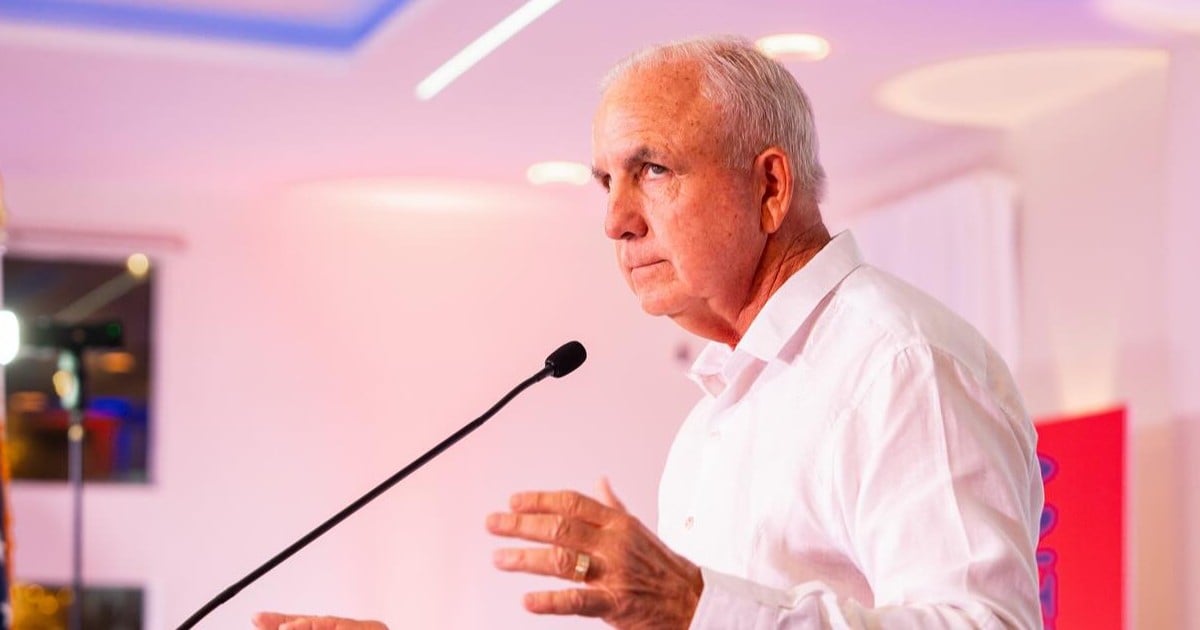
The Cuban-American congressman Carlos A. Giménez issued a stern warning to the governments that supported the Cuban regime in the recent vote by the United Nations General Assembly, which approved a resolution calling for the end of the U.S. embargo against Cuba.
"The countries that support the murderous dictatorship in Cuba shouldn't come begging at the U.S. Congress. Let the murderous tyranny in Cuba help them, because they can't count on us. Complicity and indifference have perpetuated the misery of our people. Enough already!" wrote Giménez on X.
His message reflects Washington's dissatisfaction with the double talk of certain allied governments.
The representative for South Florida thanked the countries that rejected the resolution from Havana against the embargo; he praised the leadership of President Donald Trump and the growing solidarity with the oppressed people of Cuba.
Giménez, a Republican lawmaker born in Havana, questioned the hypocrisy of countries that, while seeking cooperation, economic aid, or military support from the United States, vote in the UN in favor of a regime that represses, censors, and systematically violates human rights.
A declining support for Havana
The warning from Giménez comes right after a vote that, although favorable to the Cuban resolution, left the regime with its lowest level of support in over a decade: 165 votes in favor, seven against, and 12 abstentions.
The chancellor Bruno Rodríguez attempted to present the outcome as a victory, but the reality shows an unprecedented diplomatic rift.
Several countries in Latin America and Europe that have traditionally aligned with Havana's narrative have now abstained or voted against the text.
For the first time, Argentina and Paraguay opposed the resolution, while Ecuador and Costa Rica chose to abstain.
This reflects a political shift in the region and a distancing of democratic governments from Cuban authoritarianism.
In contrast, countries such as Spain, France, Italy, and Germany maintained their vote in favor of the resolution, despite the evidence of the Castro regime's ties to Russia, China, and Iran, and its role in the recruitment of Cubans sent as mercenaries to the war in Ukraine.
A murderous dictatorship sustained by international complicity
Giménez's words resonate particularly in Miami, where the exiled Cuban community views the UN vote as yet another episode of diplomatic impunity.
For the congressman, the complicity and indifference of a significant part of the free world are factors that help Castroism maintain power after six decades, despite the misery that suffocates the Island.
The frustration of many in exile stems from the international narrative, which continues to blame the U.S. embargo—rather than internal repression or government corruption—for the crisis facing Cuba.
Recent investigations revealed that GAESA, the business group controlled by the Armed Forces, manages over $18 billion in assets, while hospitals are collapsing, Cubans are standing in endless lines to obtain food, and emigration is reaching record numbers.
Europe and Latin America: the Contrast of Democracies
Giménez's message indirectly targeted European and Latin American governments that, despite presenting themselves as defenders of freedom and human rights, diplomatically support the Cuban dictatorship, ignoring Ukraine's reports of the presence of Cuban mercenaries on its battlefield.
Giménez's warning—"don't come begging afterward"—was not only a political statement but also a strategic one. The politician hinted that countries that legitimize the Cuban dictatorship should not expect favors, cooperation, or financial support from the U.S. Congress.
In an international context where Cuba once again relies on the rhetoric of the "blockade" to justify its ruin, Giménez's voice embodies a perspective increasingly shared in Washington: there is no embargo that oppresses the Cuban people more than that of their own government.
Filed under: