
Related videos:
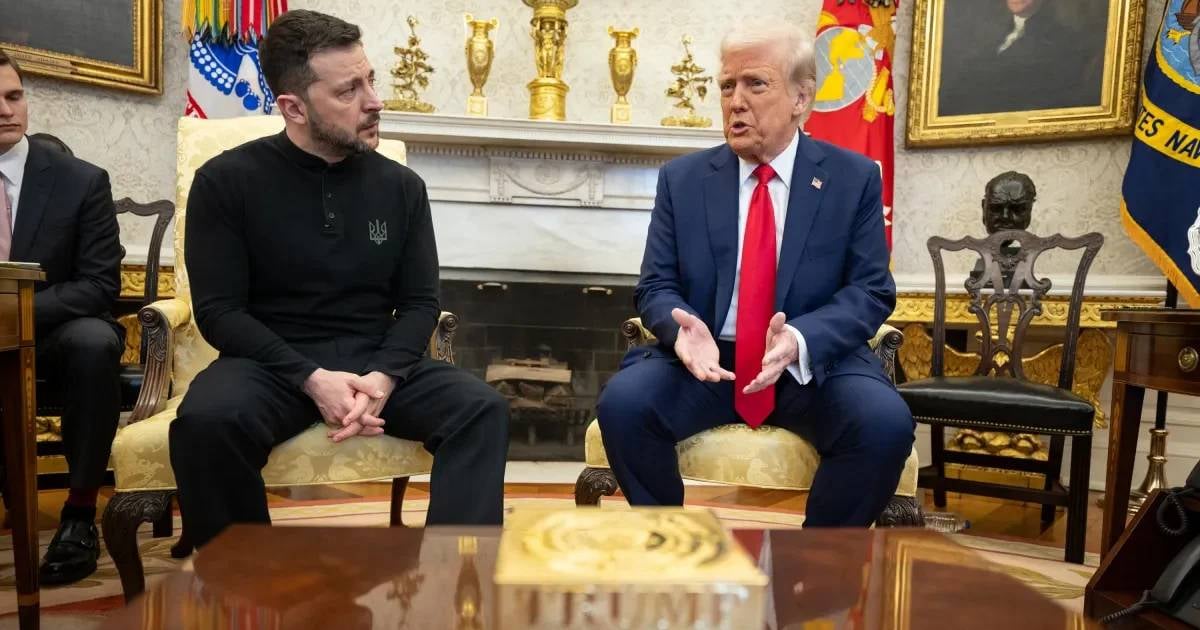
The U.S. president Donald Trump gave Ukraine less than a week to accept his peace plan, which is widely seen as a document that favors Moscow, while Zelensky and Putin reacted this Friday with completely opposing views.
In an interview with the television network Fox News, the head of the White House stated that Ukraine has until Thursday, November 27, to accept its peace plan, the details of which CNN has obtained, requiring territorial concessions, military limitations, and a commitment not to join the North Atlantic Treaty Organization (NATO).
Trump stated that he could extend deadlines "if things go well.", but he insisted that Thursday would be the deadline. The White House did not respond to requests for comments, the television station reported.
In a message to the nation via videoconference, Ukrainian President Volodymyr Zelensky stated that the country is going through “one of the most difficult moments” in its history, pointing out that the U.S. plan would entail losing dignity or a strategic ally.
Zelensky stated that his government will work calmly and quickly with the United States and its partners, but ruled out accepting conditions that would betray national interests. “I did not betray Ukraine in February 2022, and I will not do so now,” he wrote through the social network X.
The 28-point plan presented by the Trump administration proposes that Kiev relinquish territories occupied by Russia, including Crimea, Luhansk, and Donetsk, limit its armed forces to 600,000 soldiers, hold elections within 100 days, and maintain a demilitarized buffer zone recognized as part of the Russian Federation.
It also proposes the return of Moscow to the global economy and the former G8, the group of the most industrialized countries.
Several European leaders expressed their opposition to any agreement that excludes Ukraine from decisions regarding its future.
António Costa, President of the European Council, stated that the European Union (EU) has not received official documentation.
In a call with Zelensky, the leaders of Germany, France, and the United Kingdom committed to preserving European and Ukrainian interests, insisting that the contact line must be the starting point for any negotiations.
From Moscow, President Vladimir Putin confirmed that he has received the plan through existing channels with Washington and stated that the document could serve as a basis for a "definitive" settlement, emphasized a report from the EFE agency.
Putin assured that he had already discussed a previous version with Trump during their meeting in Alaska in August and that Russia is willing to show “flexibility.”
The head of the Kremlin, however, accused Ukraine of effectively rejecting the proposal and warned that if it continues in this stance, it will replicate the recent gains achieved on other fronts, such as the capture of Kúpiansk.
The Kremlin spokesperson, Dmitri Peskov, stated that continuing the war is “dangerous” for the Ukrainian government and that “it is better to reach an agreement now than later.” Peskov insisted that Washington has not officially informed about the new plan and refused to publicly comment on its content, stating that Russia will not negotiate “with a megaphone.”
Meanwhile, the President of the European Commission, Ursula von der Leyen, announced that EU leaders will discuss the plan during the G20 in South Africa, although she reiterated that any initiative must involve the direct participation of Ukraine.
The Norwegian Foreign Minister called it "unfair" to demand that Kiev cede territory, and British Prime Minister Keir Starmer reiterated that Ukraine must determine its own future.
Pressure on Kiev is intensifying as international diplomacy tries to decipher how much of Trump's plan is a negotiable proposal or an ultimatum aimed at forcing territorial concessions.
Zelensky made it clear on X: “We choose dignity.”
Filed under: