
Related videos:
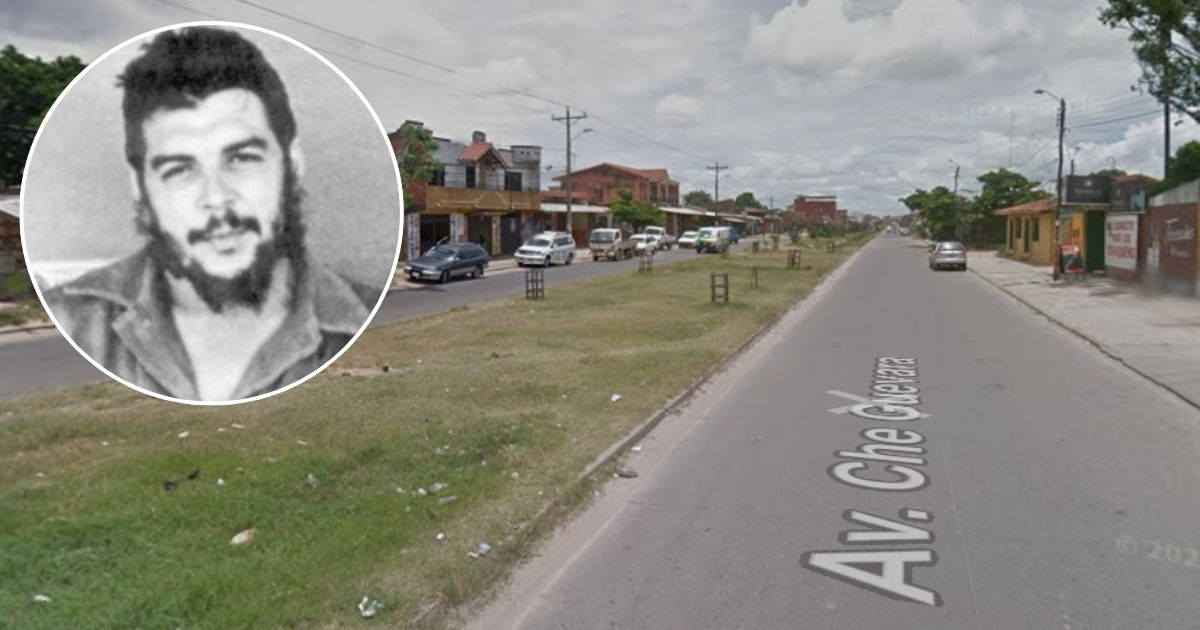
Bolivia took a symbolic step by removing the name of Ernesto “Che” Guevara, the "Heroic Killer", from one of its most well-known avenues in Santa Cruz de la Sierra, a decision that distances itself from the legacy of the Argentine-Cuban guerrilla.
According to EjuTV Noticias, citing El Deber, the Municipal Council of Santa Cruz has approved, by majority vote, a law that changes the name of Avenida Che Guevara to Monsignor Nicolás Castellanos, a Spanish missionary who passed away this year and is widely remembered for his social work in the country.
The measure was approved with seven votes from the municipal legislature and replaces the name of the communist revolutionary with that of a religious figure who dedicated more than three decades to caring for the poorest sectors of the city.
Castellanos, the founder of the Project Hombres Nuevos, arrived in Bolivia in 1992 with a group of laypeople and Spanish priests.
From the Plan Tres Mil neighborhood, one of the most underprivileged areas of Santa Cruz, he initiated programs in education, health, housing, and nutrition for thousands of families.
The social initiative, conceived under the motto "for and with the poor," has gradually established itself as a model for community action and received support from volunteers and benefactors from Bolivia and Spain.
The priest passed away on February 19, 2025, at the age of 90, and was buried in the same neighborhood where he carried out his work.
The name change was interpreted by some local analysts as a gesture of historical reevaluation in a country where the memory of Che Guevara remains a topic of debate.
In 1967, the guerrilla fighter was captured and executed in the Bolivian region of Vallegrande during his failed attempt to spread the Castro-led revolution in South America.
While the Cuban regime continues to exalt its figure, in Bolivia there is growing recognition of humanitarian and religious leaders who made a real impact on the most vulnerable communities.
The avenue will now be renamed Avenida Monseñor Nicolás Castellanos, a change that symbolizes, for many Bolivians, a preference for services over ideological violence.
The decision to replace the name of Avenida Che Guevara with that of Monsignor Nicolás Castellanos in Santa Cruz de la Sierra is part of a series of symbolic and structural measures implemented following the rise to power of the new Bolivian president Rodrigo Paz.
His administration has promoted a break with the ideological legacy of the Movement for Socialism and has prioritized figures linked to social and community service, such as Castellanos, over icons of the communist armed struggle like Che.
This political reorientation is also reflected in decisions such as the removal of the visa requirement for tourists from the United States, Israel, South Korea, and other countries, in an effort to boost tourism and reverse measures that the new government deems uneconomic and ideological.
President Paz has stated that Bolivia needs to open up to the world and move beyond the isolation imposed by past political agendas.
Moreover, following its electoral victory, the United States expressed its intention to support Bolivia's economic recovery process, marking a significant shift in the foreign relations of the Andean nation and highlighting the new direction taken by the Paz administration.
In this new context, actions such as the removal of Che Guevara's name from public spaces respond both to an ideological shift and to a redefinition of the political and institutional alliances of the Bolivian state.
Filed under: