
Related videos:
In a reflection posted on social media, the Cuban Sandy Hechavarría Gutiérrez asserts that the deepest tragedy of Cuba is not economic or migratory, but the daily acceptance of humiliation, lies, and obedience as norms of life.
The text, written from the personal experience of a citizen on the island, is not presented as a political slogan or as a distant academic analysis, but rather as an internal reflection on the current state of the country and the accumulated effects of decades of totalitarian power on daily life, public morality, and individual consciousness.
Hechavarría asserts that what Cuba is experiencing cannot be reduced to a temporary crisis. In his view, it is a structural moral decay, where not only an economic model has collapsed, but also the ethical framework that upholds a civilized society.
In this regard, he rejects the idea of a "failure of the system" and suggests that it fulfilled its essential purpose: to subordinate the citizen, not to emancipate them.
According to his reflection, power did not seek to elevate the individual but to tame him. Consciousness was replaced by slogans, ethics by political loyalty, and dignity by functional obedience.
The country that emerges from that process would not be a deviation from the original project, but rather its logical outcome.
The author argues that the Cuban totalitarianism was upheld not only through visible repression but also through a silent engineering of subjectivity.
Colonization also affected thought and behavior, turning society into a laboratory where individual consciousness was progressively reconfigured.
From that perspective, the educational system ceased to cultivate critical thinking and instead trained reflexes, shifting from teaching how to think to demanding repetition. The classroom transformed into a space of control where the fear of dissent replaced moral education.
Corruption, she asserts, is not an anomaly, but the circulatory system of the model. Scarcity was not accidental, but rather designed as a tool of domination, and misery, far from being an unwanted consequence, functioned as a political technology.
The citizen who steals to survive is not an isolated criminal, but rather the product of a system that drives them to degradation.
In his reflection, history also appears as a victim of power: kidnapped, rewritten, and used as a tool of submission. The impoverishment was not only material but also memorial, mutilating the country's ability to understand itself.
The result, as Hechavarría describes, is a fragmented individual, forced to live in a permanent theater, where they must say what they do not believe, applaud what they despise, and remain silent about what consumes them from within.
That unfolding would not be individual cowardice, but a survival strategy imposed by structural violence.
Applause for Incompetent Leaders, he notes, does not express political faith, but fear and calculation. They are gestures of self-preservation in an environment where the truth comes at a cost.
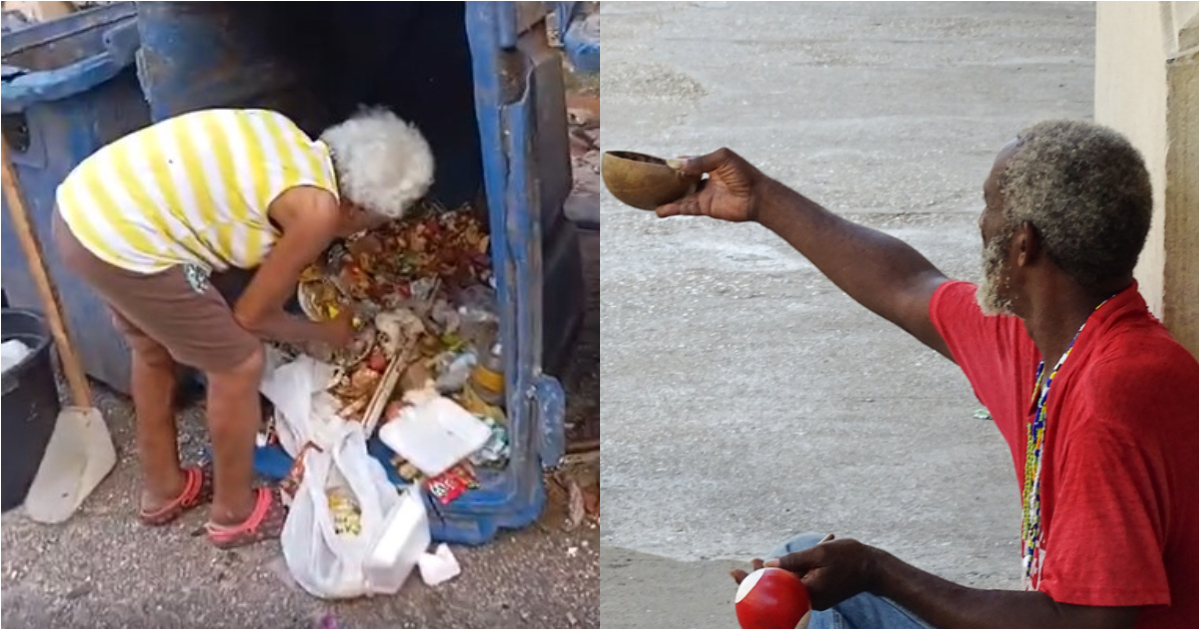
For this reason, he concludes, the greatest tragedy of Cuba is not poverty or the mass exodus, but the normalization of human degradation. A people that learns to live without truth, without trust, and without dignity exists in a state of spiritual mutilation.
In his view, there is no technical solution for a moral crisis. No economic reform can heal an ethically devastated nation.
The only real possibility lies in an inner rupture: naming the damage, dismantling the lie, and reclaiming the right to think without permission.
In a regime built on falsehood, he argues, every truth is, by nature, an act of moral rebellion.
Filed under: