
Related videos:
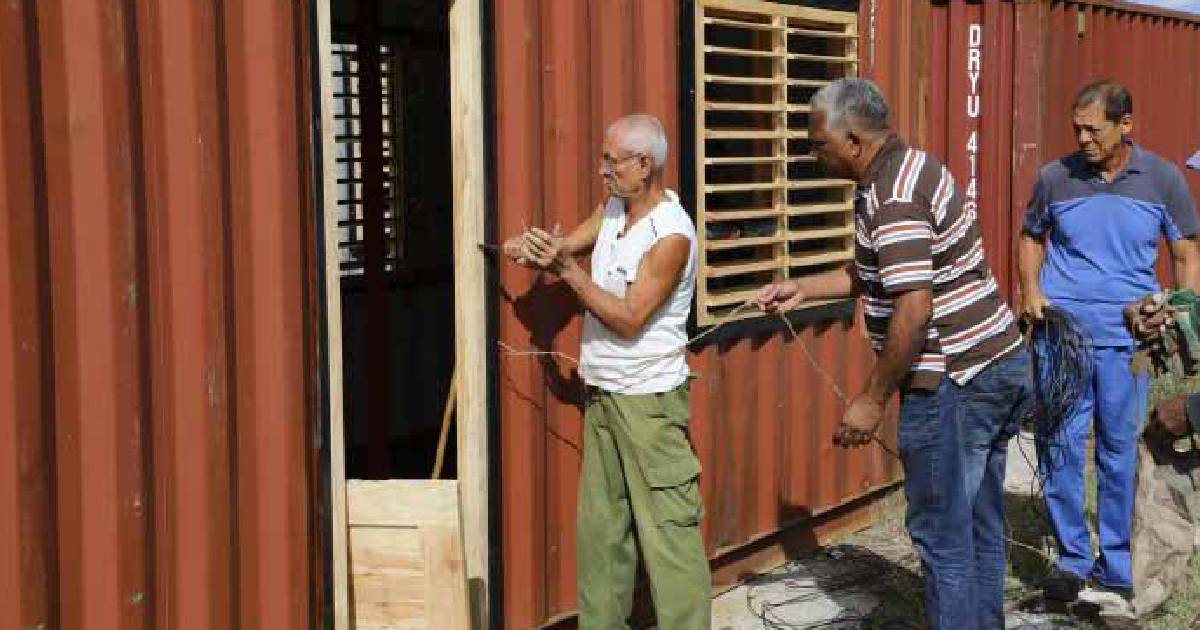
More than 3,500 unused shipping containers will be transformed into modular homes intended for various municipalities in Havana as part of a government strategy to mitigate the housing deficit in light of the scarcity of resources and construction materials.
The initiative is presented as an alternative in light of the country's inability to sustain traditional construction.
The initial adaptations are taking place at the Base Business Unit of Metal Productions in Guanabacoa, where 29 square meter modules are being prepared with spaces for a living room, kitchen-dining area, bathroom, and two bedrooms, in addition to doors, windows, interior finishes, and anti-corrosive paint, reported the Cuban News Agency on Wednesday.
According to Delilah Díaz Fernández, director of the Housing Program, these houses will be allocated to workers from photovoltaic solar parks, individuals affected by total collapses, and families in vulnerable situations, through local governments and municipal and provincial housing authorities.
The funding comes from the State Budget, although beneficiaries will be required to make a bank payment, the amount of which varies depending on the materials used and the level of completion.
The producing entity acknowledged that the lack of fuel and electricity has slowed down the progress of the first 35 houses designated for the La Solita neighborhood in Arroyo Naranjo.
The use of containers as a housing solution is not limited to Havana. In Villa Clara, the local Electromechanical Company is progressing on a project to manufacture 20 homes using recycled metal modules, with 90% of the necessary resources already available, according to the official newspaper Granma.
Authorities and workers in the sector have presented these initiatives as part of a broader strategy for constructive innovation based on recycled materials and prefabricated solutions.
However, the very approach highlights the structural limitations of the country in addressing the housing deficit through conventional and large-scale methods.
Authorities in Santiago de Cuba confirmed that they will accelerate the conversion of shipping containers into emergency housing in response to the worsening housing crisis that leaves thousands of families at risk, especially following the passage of Hurricane Melissa.
Additionally, the Prime Minister Manuel Marrero Cruz urged the promotion and acceleration of this housing model in the province of Granma at a time when thousands of families continue to live among collapsed structures, overcrowding, and temporary shelters turned permanent, especially after the passage of Hurricane Melissa.
The conversion of containers into permanent housing is also progressing in Guantánamo, in response to the damage caused by Óscar and Melissa. However, far from being a comprehensive or free solution, it involves indebtedness, reduced living space, and expectations adjusted to scarcity.
The shortage of construction materials and the deficit of over 800,000 homes have prompted the government to seek alternative solutions such as converting shipping containers into housing.
Such a decision has been criticized for its lack of planning and structural preparation.
The main criticisms focus on the lack of thermal insulation and adequate ventilation in the containers. In Cuba's hot climate, these structures can turn into "solar ovens," making the homes uninhabitable.
In addition, the lack of adequate infrastructure and insecurity in the face of climate events have generated rejection among the population.
Filed under: