
Related videos:
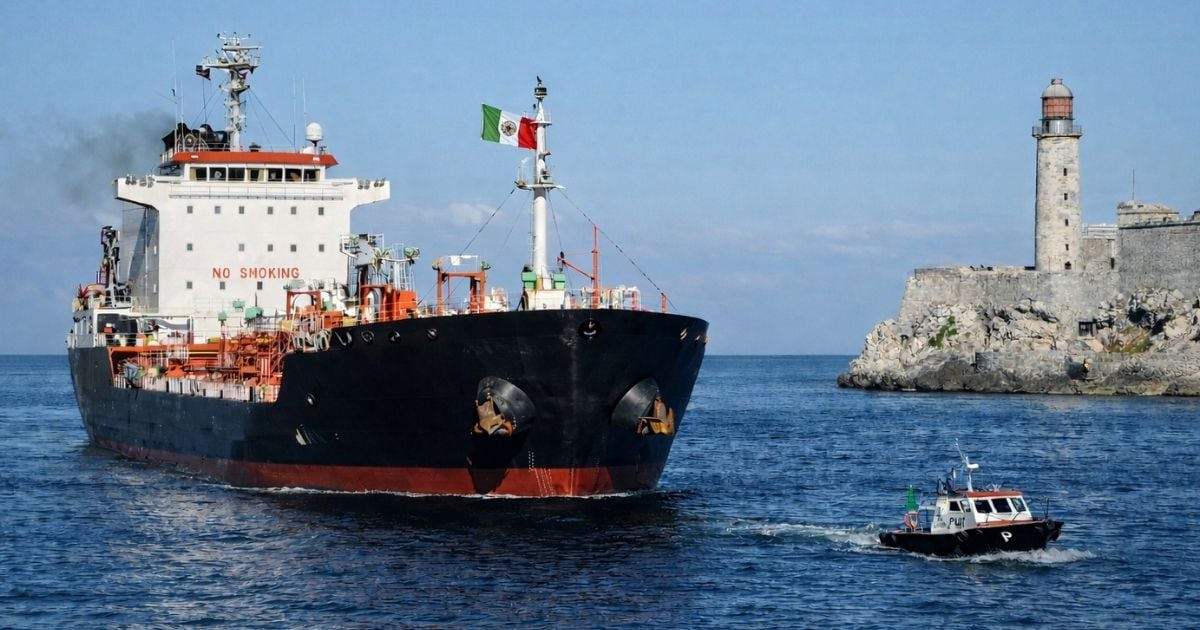
Mexico sent petroleum products to Cuba worth approximately 10 billion pesos (about 560 million dollars) during 2025, the highest amount recorded in the last 25 years, according to data from the Bank of Mexico cited by Animal Político.
The volume exported is four times greater than all that was sent during the six-year term of Enrique Peña Nieto, when accumulated sales to the island amounted to around 2.5 billion pesos.
In annual terms, the leap is historic: between 2013 and 2018, Mexico exported an average of 23 million dollars per year, whereas in 2025 alone, the figure exceeded 550 million dollars.
President Claudia Sheinbaum denied that her government has increased crude oil shipments, although she acknowledged the existence of a "particular shipment" within what she described as contracts and "humanitarian aid."
"For many years, barrels have been sent to Cuba for various reasons. Some are contracts, while others are humanitarian aid," he said at a press conference on January 7.
According to Animal Político, official data contradicts the presidential narrative: the historical series of oil exports from the Bank of Mexico shows a sharp increase in 2025, coinciding with the drastic reduction of crude shipments from Venezuela at the end of that year and the deployment of U.S. vessels in the Caribbean.
The source also cited the Financial Times, which reported on January 6 that Mexico surpassed Venezuela as the primary supplier of crude oil to the island, while the White House watches the new energy relationship with caution.
The U.S. Secretary of Energy, Chris Wright, assured CBS News (cited by Animal Político) that the administration of Donald Trump “has not asked Mexico to stop the oil supply to Cuba,” although the matter “remains under review.”
The shipments include crude oil, natural gas, and various derivatives such as gasoline, diesel, jet fuel, LPG, and heavy fuel oil, as well as industrial oils, according to records from the Bank of Mexico.
Since late 2023, Mexico began to supply Cuba's energy deficit through Gasolinas Bienestar, a subsidiary of Petróleos Mexicanos (Pemex), sending approximately 17,000 barrels of crude oil daily along with another 2,000 barrels of derivatives, reported AFP.
After the fall of Nicolás Maduro's regime, Venezuelan ships stopped arriving at the island.
Maritime traces analyzed by the agency reveal that the tanker Ocean Mariner, loaded with Mexican oil, became one of the few vessels that continued to sporadically arrive at the ports of Havana and Matanzas.
Experts warn that Sheinbaum's decision places Mexico in a delicate position with respect to Washington.
The former chancellor Jorge Castañeda stated to AFP that the president “is poisoning the relationship with the United States over an issue of low economic impact, but of high strategic importance like the T-MEC.”
Although Sheinbaum has insisted that "Mexico is a sovereign country and makes its own decisions," Animal Político points out that the series from the Bank of Mexico does not break down whether the shipments to Cuba were sales or donations.
Analysts like Gerardo Arreola, cited by AFP, warn that the Cuban energy crisis could lead to a serious humanitarian situation and a new wave of migration that would directly impact Mexico. "We must not forget that Cuba has maritime borders with Mexico," he emphasized.
President Claudia Sheinbaum pledged that her government will make public the precise information regarding oil shipments to Cuba, and it is expected to do so this week, according to Animal Político.
Filed under: