
Related videos:
A joint operation by the operational agencies and the National Revolutionary Police (PNR) dismantled a drug trafficking point last week in the Plaza de la Revolución municipality in Havana, as confirmed by the pro-government profile Héroes de Azul, which shared details of the case.
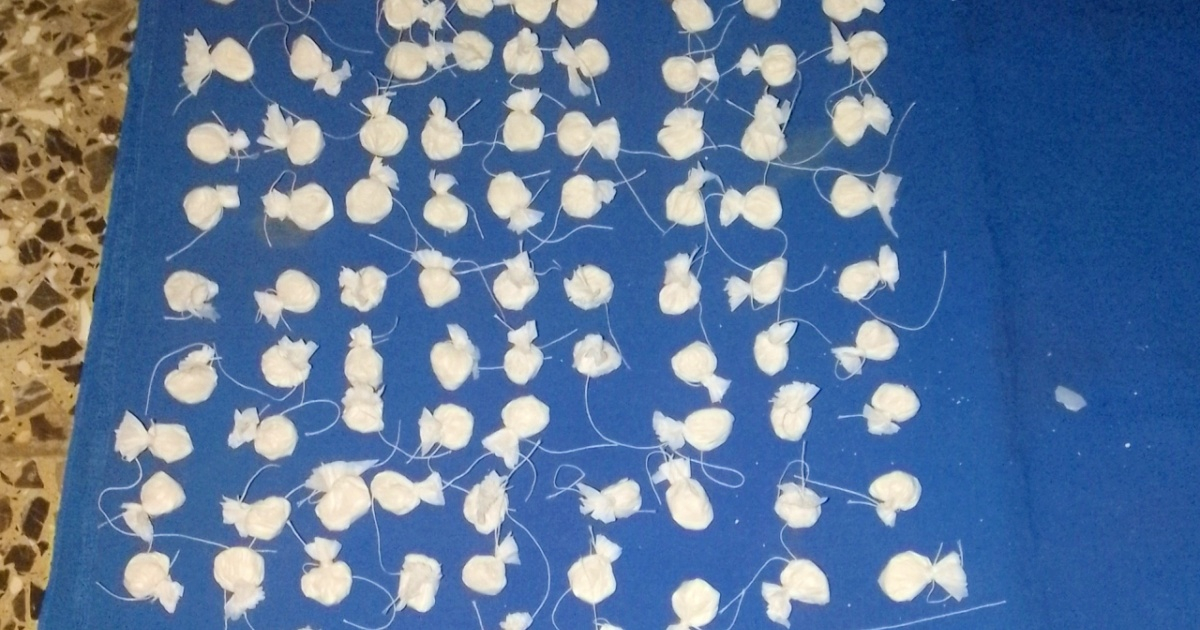
The authorities indicated that the home search concluded with the arrest of two individuals allegedly involved in the sale of illegal substances, as well as the seizure of cash, motorcycles, and a significant amount of cocaine.
During the procedure -described by the source as a coordinated action between the PNR and operational bodies- “more than 100 packages containing a substance classified as coc@ín@” were found, in addition to “more than 800,000 pesos in cash and two motorcycles, presumably linked to the illegal activity.”
The official source did not specify the exact weight of the seized drugs, a detail that is usually not disclosed in the police reports published by accounts linked to the regime.
The two involved were arrested, and a charge was filed for "Crime with Drugs or Similar Substances, as defined by Cuban legislation."
According to Héroes de Azul, investigations are ongoing with the aim of identifying "other possible lines of marketing and responsibilities."
The statement concluded in a propagandistic tone by asserting that "the actions are part of the continuous and systematic fight against these crimes, in fulfillment of the revolutionary duty to protect the family and the community."
The message added that the PNR and the operational bodies act "together with the people, on the front line of the fight against drugs."
Anti-drug operations in Cuba: A growing pattern of seizures
In recent months, official profiles linked to the Ministry of the Interior have increased the dissemination of anti-drug operations, presenting them as part of a national campaign to curb the rise of drug use and trafficking in urban areas.
Although the official discourse insists on "zero tolerance," reports of seizures indicate an increase in the circulation of cocaine, marijuana, and synthetic substances on the island.
Among the recent trends are:
-Operations in homes and local sales points
Several cases reported by Héroes de Azul and other institutional accounts reveal that home registrations have become a central tool.
In these procedures, packages of cocaine, combinations of synthetic drugs, and cash often appear, usually without specifying the final weight of the seized items.
-Increase in arrests for micro-trafficking
Although the government avoids publicly acknowledging an increase in domestic consumption, weekly reports from the PNR indicate a rise in arrests of individuals linked to small distribution networks.
The suspects are presented as resellers, carriers, or intermediaries in residential areas of Havana, Matanzas, Holguín, and Santiago de Cuba.
-Seizures in coastal areas and maritime routes
The island also reports findings of "suspicious packages" washed up by the sea, a result of regional drug trafficking.
Sometimes, these packages are found by civilians, who must turn them over to the PNR, according to official regulations.
Official narrative and absence of structural data
Despite the increased disclosure of operations, the Cuban state continues to avoid the systematic publication of annual figures on seizures, detected routes, profiles of those involved, or comparative statistics.
The communication strategy focuses on highlighting police effectiveness without placing the phenomenon within the context of the social and economic decline of the country.
-Another case within an expanding dynamic
The recent detention of two citizens in Plaza de la Revolución adds to a series of reports highlighting the increasing presence of micro-trafficking networks in residential areas of Havana.
Although the Government claims to act "systematically," the lack of transparent data makes it difficult to assess the true extent of the problem.
Meanwhile, pro-government profiles continue to spread images and statements as part of a media offensive aimed at reinforcing the narrative of control and extreme surveillance over drug consumption and sales in the country.
Filed under: