
Related videos:
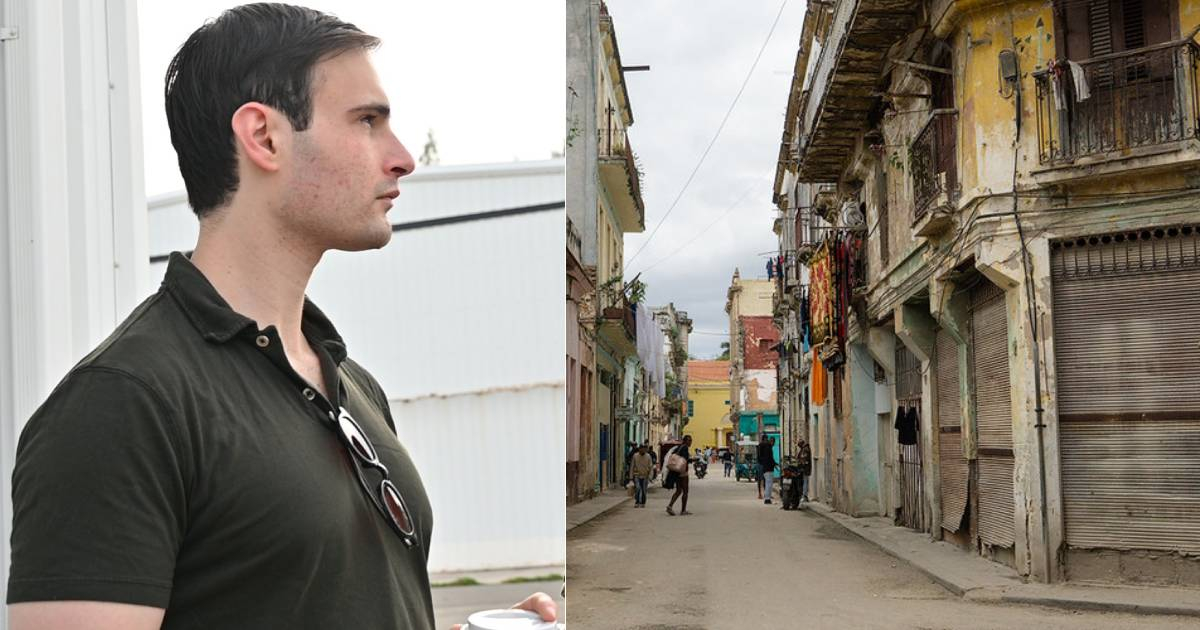
The Under Secretary for External Assistance, Humanitarian Affairs, and Religious Freedom of the United States, Jeremy Lewin, spoke out about the Cuban regime on X.
" For 70 years, the Cuban people have suffered under a brutal regime that has stripped them not only of their political and civil rights but also of any economic opportunity. The regime has intentionally kept the country in misery to maintain its total control," Lewin wrote on his official account.
Lewin is one of the high-ranking officials of the State Department involved in the United States' foreign assistance policy. He also serves as the senior advisor to Secretary Marco Rubio and the Director of Foreign Assistance. From his position, he is involved in overseeing international aid programs and implementing strategies aimed at countries in crisis.
His statement on Cuba was not spontaneous: it is part of a rhetorical line that has intensified in tone towards Havana in recent months, especially regarding human rights and economic freedoms.
In his publication, the official also referred to the recent humanitarian work carried out on the island with U.S. support. He publicly thanked the Cuban-American singer Camila Cabello for highlighting the work of Caritas and emphasized that, in recent weeks, that organization has been a partner in what he described as the largest direct humanitarian response from the United States to Cuba in decades. “The United States will continue to support and stand by the Cuban people,” he stated.
Lewin's emphasis on "economic freedom" as the only path for the country's advancement points to a clear narrative: the solution to Cuba's structural crisis does not lie solely in partial reforms but rather in a profound change in the model of state control. By citing previous statements from the Secretary of State, he reinforced the stance that the central issue lies in the lack of economic autonomy for citizens.
For many Cubans facing prolonged blackouts, food shortages, and inflation that erodes salaries, the assertion that misery is part of a power strategy resonates strongly. Others, within the island, might interpret these words as part of the ongoing political struggle between Washington and Havana.
The fact is that by naming the accusation and directly linking it to the daily suffering of the population, Jeremy Lewin joins the group of U.S. officials who openly speak about the internal responsibility of the regime in the Cuban crisis. He does so at a time when the social and economic situation in the country is experiencing one of its most critical points in decades.
Filed under: