
Related videos:
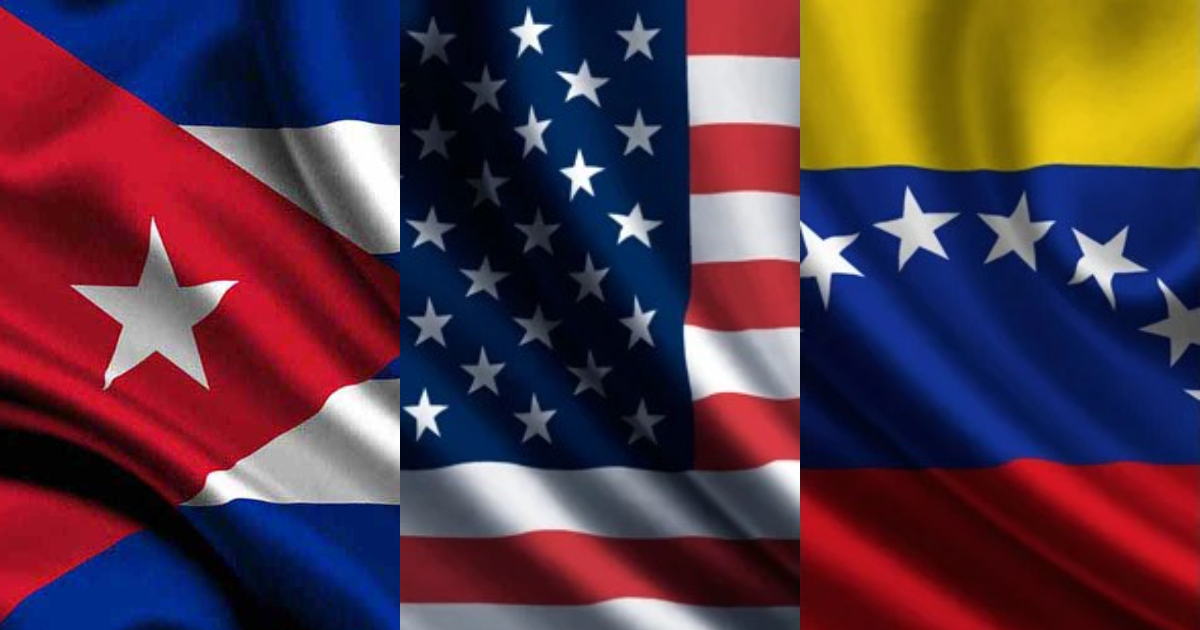
The pragmatic shift of Caracas towards the United States—following the capture of Nicolás Maduro—begins to emerge as a possible reference framework for Cuba amid escalating geopolitical tensions. Isolated by internal paralysis and the tightening of the embargo, Havana might look towards the "Venezuelan laboratory," which presents a nearby example of gradual concessions in exchange for relief from sanctions and international reintegration.
In recent months, Venezuela has implemented a phased strategy: selective releases of political prisoners, opening of the oil sector and signs of regulatory relaxation, in exchange for a partial reduction of sanctions, greater market access, and a nascent diplomatic normalization.
This "Venezuelan model" has already allowed for the restoration of commercial flights, partially stabilized the domestic foreign exchange market, and improved, albeit in a preliminary manner, the channels of political and economic dialogue with Washington and other international actors, within a context where serious challenges for democratic consolidation still persist.
Facing an unprecedented humanitarian crisis and under intense pressure for reforms, Havana may replicate a series of gradual liberalizing measures—on political, economic, and legal fronts—such as visible gestures like the unilateral release of political prisoners and increased openness to the private sector, in exchange for the gradual removal of restrictive designations and a phased access to external financing.
The success of this type of negotiation would undoubtedly depend on genuine mutual willingness. The administration of Donald Trump has tied any significant relief to the achievement of verifiable progress in human rights and political openness, while the Cuban regime prioritizes economic and financial relief without relinquishing internal political control.
In this delicate balance, both President Trump and Secretary of State Marco Rubio seem to favor a "carrot and stick" approach towards Caracas and Havana: sustained pressure combined with calibrated incentives, with the stated goal of avoiding civil conflict or a humanitarian disaster in both scenarios.
What would a possible Roadmap for a Cuba-United States negotiation look like, based on the model implemented by the Trump Administration in Venezuela?
Here are some coordinates:
PHASE 1: INITIAL MEASURES FOR BUILDING TRUST
POLITICAL MEASURES (First Phase)
What Venezuela did
- Unilateral release of hundreds of political prisoners as part of a national reconciliation process
- Implementation of measures to control political violence
- Promotion of a General Amnesty Law for political events (1999–present) and closure of the infamous El Helicoide prison
- Cabinet reshuffle, removing key figures associated with Nicolás Maduro (for example: Alex Saab)
- Establishment of a timeline for comprehensive bilateral negotiations
What Cuba could do
- Unilateral release of hundreds of political prisoners as an initial symbolic step towards a Republic “With Everyone and for the Good of Everyone”
- Consideration of an amnesty for non-violent political crimes, including Cubans and Cuban Americans
- Re-retirement or retirement of Raúl Castro and other historical figures from the founding generation
- Establishment of a timeline for broad bilateral negotiations
MEDIDAS MIGRATORIAS Y DE SEGURIDAD
What Venezuela Did
- Continuation of the acceptance of deportation flights from the U.S.
- Strengthening bilateral cooperation against drug trafficking, human trafficking, and transnational organized crime
What Cuba Could Do
- Continuation -and potential expansion- of deportation flights from the U.S., including the repatriation of individuals with a criminal history
- Strengthening bilateral cooperation against drug trafficking, human trafficking, and transnational organized crime
ECONOMIC MEASURES
What Venezuela did
- Coordination with the U.S. for the export of crude oil previously stranded by the naval blockade
- Flexibility in the system of oil royalties and greater openness to foreign investment in this and other key economic sectors
What Venezuela obtained
- Partial relief in the energy sector through the extension of general and specific licenses from the U.S.
- Stabilization of the internal exchange market
- Restoration of direct commercial flights between the two countries
- Initial improvement in diplomatic and economic relations, creating a climate of trust
What Cuba could do
- Expansion of the legal framework for the national private sector, in accordance with international standards
- Transparent economic opening to foreign investment, aligned with international legal standards, in priority sectors:
- Tourism
- Telecommunications
- Agroindustry
- Logistics
- Real estate
- Full legal guarantees for investments and businesses of Cuban-Americans in Cuba, with the same rights and obligations as Cuban nationals
What Cuba could achieve
- Progressive relief of financial and commercial sanctions, including the expansion of specific licenses (energy, telecommunications, food, medicine)
- Access under verification to the international financial system for civil operations (correspondent banks, trade payments)
- Protection of remittances, expansion of authorized travel categories (family, educational, humanitarian), with prospects for future lifting of restrictions on American tourism
LEGAL MEASURES
What Venezuela did
- Acceptance of mediations, independent arbitrations, and access to ordinary courts for resolving disputes with American companies and those from other countries
What Cuba could do
- Acceptance of bilateral negotiations for compensation—based on precedents and international formulas—for approximately 6,000 American companies and individuals whose properties were confiscated after 1959
- Acceptance of bilateral negotiations for the resolution of cases involving U.S. citizens in Cuba who are fugitives from U.S. justice.
What Cuba could obtain
- Removal from the List of State Sponsors of Terrorism
- Suspension of Title III of the Helms-Burton Act
- Gradual release of Cuban funds frozen in the U.S.
PHASE 2: DEMOCRATIC CONSOLIDATION
POLITICAL MEASURES
What would be appropriate in Venezuela
- Dismantling of key elements of the repressive apparatus
- Consolidation of democratic institutions and additional measures for National Reconciliation
- Establishment of a defined timeline (1½–2 years) for:
a. Deepening of the political reform
b. Call for general elections
What would follow in Cuba
- Significant political evolution:
a. Strengthening of civil society and citizens' procedural guarantees
b. Progressive depoliticization of the armed forces and the security apparatus
c. Legal reforms that guarantee freedoms of the press, association, and assembly
d. Transitional Justice measures, National Reconciliation, and effective protection of Human Rights
e. Timeline for a plural and effective democratic transition.
Filed under:
Opinion piece: Las declaraciones y opiniones expresadas en este artículo son de exclusiva responsabilidad de su autor y no representan necesariamente el punto de vista de CiberCuba.