
Related videos:
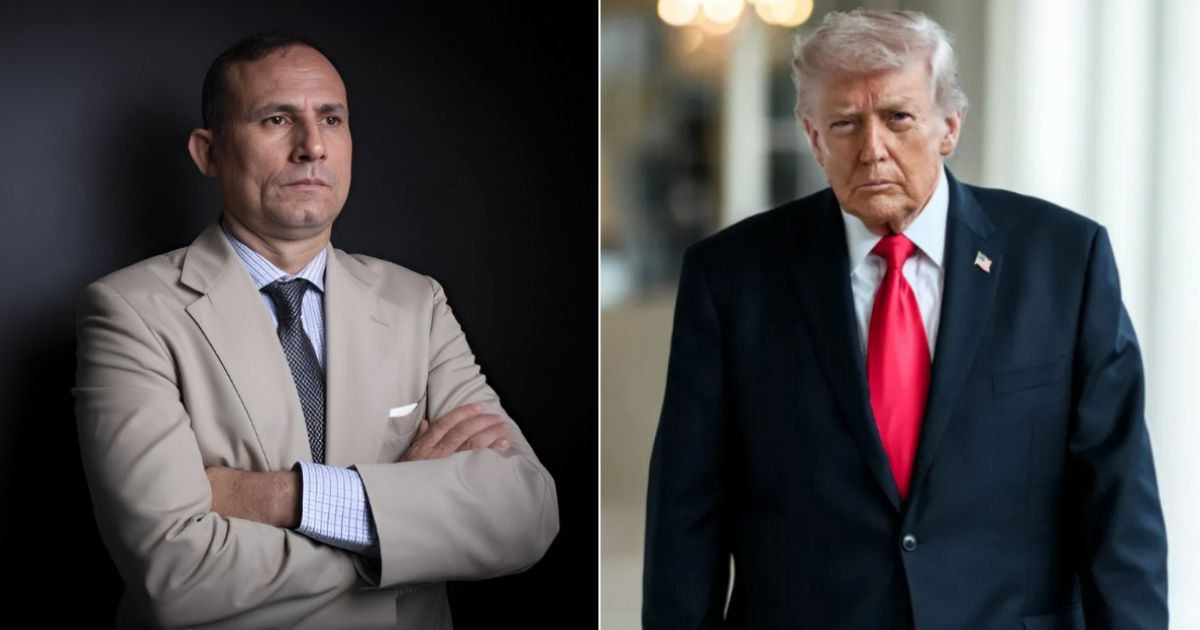
José Daniel Ferrer, leader of the Cuban Patriotic Union (UNPACU), published this Saturday a direct message to President Donald Trump urging that any negotiations with the Cuban regime go beyond economic opening and lead to the end of the dictatorship and an immediate transition to democracy.
“@POTUS is our friend, but even the best friends need to be told what we want for Cuba: #Freedom!!!,” wrote Ferrer. “We do not want negotiations that only lead to economic openings; we want the end of tyranny and an immediate transition to democracy,” he added, calling for people to express this “on social media and in the streets and squares of Cuba, the U.S., Latin America, Europe, and around the world.”
The message arrives a day after Díaz-Canel publicly confirmed the existence of high-level talks between Cuba and the U.S., driven, according to his own words, by Raúl Castro. This confirmation broke weeks of official denials from the regime, prompting Ferrer to label the Cuban government as "pathological liars" the day before.
Negotiations between the Trump administration and Havana have been leaking since early March. On March 7, Trump revealed that Marco Rubio "is talking to Cuba right now" and that a deal could be closed "in an hour." According to Bloomberg, the U.S. plan aims to make Cuba a country financially dependent on the U.S. —a sort of "Cubastroika"— without military intervention, with relief from sanctions, opening up to tourism, and agreements on ports and energy, along with a possible negotiated exit for Díaz-Canel that would keep the Castro family in power.
This scenario alarms the Cuban dissidence, who fear a similar agreement to the Obama-Castro thaw of 2014-2016, which eased sanctions without producing any real political changes. Ferrer, who was
On March 9, Ferrer had already directly warned Trump and Rubio against negotiating without specific democratic conditions. In February, he described the Cuban crisis as "the deepest in its contemporary history" and proposed two paths: a non-violent democratic transition or a "surgical international action" led by the U.S.
Ferrer's stance aligns with that of other sectors of the exile community. In March, opposition representatives signed the so-called "Agreement for Liberation" in Miami, which outlines three phases—liberation, stabilization, and democratization—with a plural provisional government and supervised elections. The campaign "Get Out!", launched in February, also demands a transition to multiparty democracy and the release of over one thousand political prisoners.
Trump, for his part, has summarized his reading of the situation with a straightforward phrase: "Cuba is at the end of the line. They have no money. They want to negotiate." For Ferrer and the dissenters, this show of strength from Washington is precisely the reason why the outcome of the conversations cannot be limited to an economic agreement.
Filed under: