
Related videos:
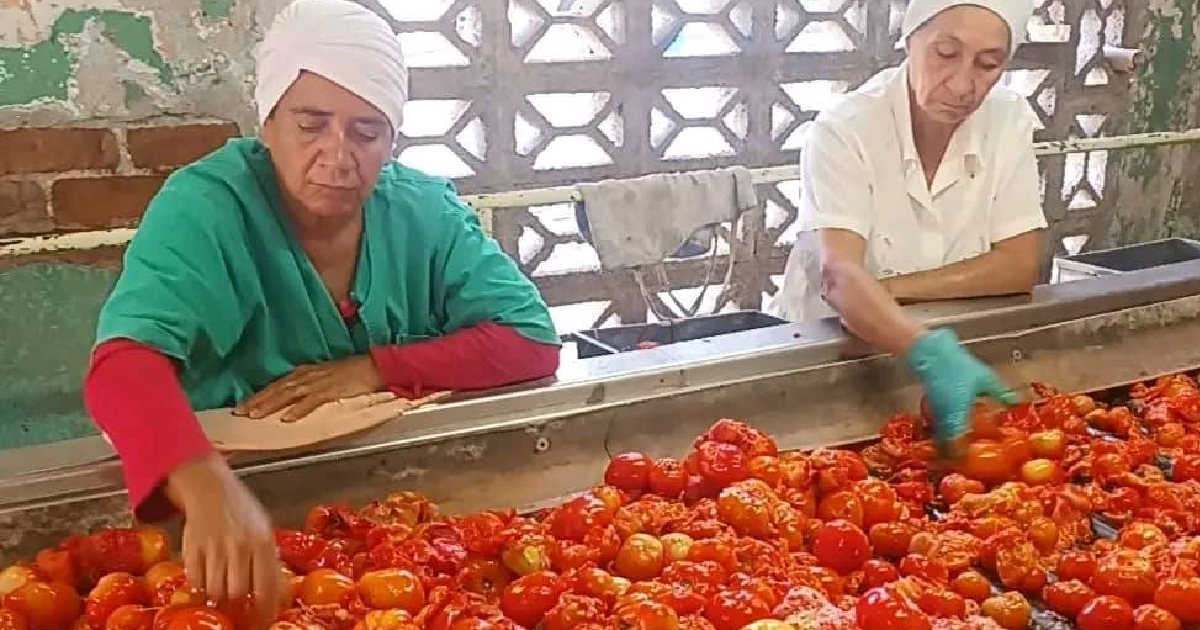
A report released by the official Cuban press about tomato processing to produce puree in the province of Granma sparked reactions of mockery and skepticism, as many internet users believe it is unlikely that the product will reach the people.
The information, published by CMKX Radio Bayamo, highlighted the work of the Yara Canning Factory, currently dedicated to processing large volumes of a fruit that is highly cherished in salads throughout the country, but which has seen very high prices in recent years.
According to the report, so far the industry has received 687.86 tons of tomatoes and is currently awaiting another 151 tons of raw materials ready to enter the production process, reported Yudelkis Ortiz Barceló, the first secretary of the Communist Party in the province.
According to the official source, the cumulative production of puree has reached 535,247 tons despite the energy contingency that the nation is experiencing. Efforts are being made in the region to prevent the loss of tomatoes amid fuel shortages, Ortiz Barceló emphasized, as reported by the station.
In the usual propagandist tone of the Cuban political bureaucracy, Ortiz Barceló emphasized that "together, and with unity, we seek alternatives" and that "united, we will move forward" in the task at hand. The leader also mentioned that she had discussions with producers and workers involved in the activity.
The post, accompanied by photographs of the industrial process, generated dozens of comments on Facebook, where numerous users reacted with disbelief or sarcasm to the announcement.
One of the most repeated messages joked about the possible commercial fate of the product. "Now we package it and sell it in stores for USD," wrote the user Sabiel Batista, referring to the practice of selling food in establishments that operate in foreign currency, at astronomical prices for ordinary workers on the Island.
Other comments questioned whether the production will actually reach the population. “And where is that puree?” asked Carlos David Molina Ramírez, while someone else stated that “the Cuban doesn’t even see the seed of that.”
There were also messages expressing concerns about the final price of the product. "Very good, we hope that as supply and demand changes, the price will drop," wrote Julio César Vidal Pavón, while several internet users wondered if the puree would be sold in stores or if it would end up in other commercial circuits inaccessible to the average Cuban.
Reactions are occurring amidst growing discomfort and repeated protests over the multidimensional crisis that the country is experiencing, where the production of food and access to it, as well as other basic products, has turned into a daily odyssey.
The prohibitive prices in stores pricing in USD, while others in Cuban pesos (CUP) or in MLC (that phantom currency invented by the regime) lie in eternal slumber with their empty shelves, have long been a source of anger and continuous sarcasm from the people.
In recent weeks, journalistic reports have revealed that some products sent to the island as humanitarian aid end up being sold in stores that operate in dollars, making them inaccessible to the majority of the population who earn their salaries in CUP.
The Cuban government has consistently denied this diversion. However, due to its usual practice of obscuring or denying data and information until it has no choice but to admit them, many tend to not believe it.
Filed under: