
Related videos:
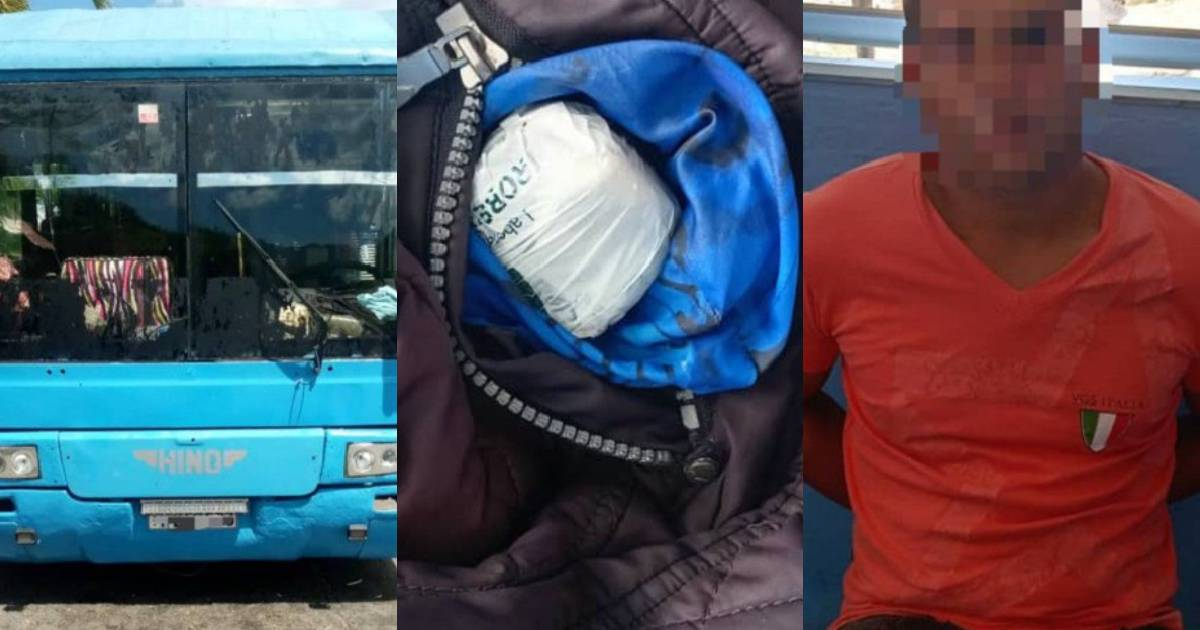
A man identified as Karel was arrested at the Cristo Checkpoint in the province of Santiago de Cuba while transporting cocaine hidden in his luggage on a bus coming from Bayamo.
According to the version shared this Thursday on Facebook by the official Héroes del Moncada profile, associated with the Ministry of Interior (Minint), the arrest was made possible due to reports from citizens who alerted the police about the individual's intentions, who allegedly intended to sell the substance on the black market within the city.
The message emphasizes that this type of action demonstrates the effectiveness of "community support" in the fight against drugs, reinforcing the "zero tolerance" discourse promoted by the State.
However, this case adds to a recent series of operations that point in a direction less convenient for the official narrative.
At the end of February, Cuban Customs reported the seizure of cocaine at José Martí International Airport in Havana, concealed in three jars and a bottle of rum inside the luggage of two passengers traveling together.
The information declined to provide details about the origin of the flight, the identity of those involved, or the weight of the drugs.
A month earlier, another operation at the same airport detected nearly a kilogram of cocaine hidden in containers of products like creams, coffee, and food on a flight from Panama, also without revealing key details about the individuals responsible or the shipment's destination.
These methods demonstrate a growing level of sophistication in trafficking to the island.
Internally, the situation also does not seem to align with the narrative of absolute control. In the Plaza de la Revolución municipality in Havana, authorities recently dismantled a drug sales point, seizing over 100 packages of cocaine, more than 800,000 pesos in cash, and two motorcycles linked to the illegal activity.
Then the total weight of the seized substance was not specified.
The repetition of these cases, along with the systematic absence of official statistics, suggests an expansion of micro-trafficking in urban areas of the country.
Although the government avoids acknowledging an increase in domestic consumption, reports circulated by institutional channels reveal a sustained pattern of arrests, seizures, and the dismantling of local networks.
At the same time, authorities continue to prioritize a communication strategy focused on showcasing specific results and reinforcing the image of control, without providing data that would allow for a comprehensive understanding of the problem.
The insistence on the role of citizenship as an active collaborator also shifts the focus away from a phenomenon that seems to be growing amid the economic and social deterioration the country is experiencing.
Filed under: