
Related videos:
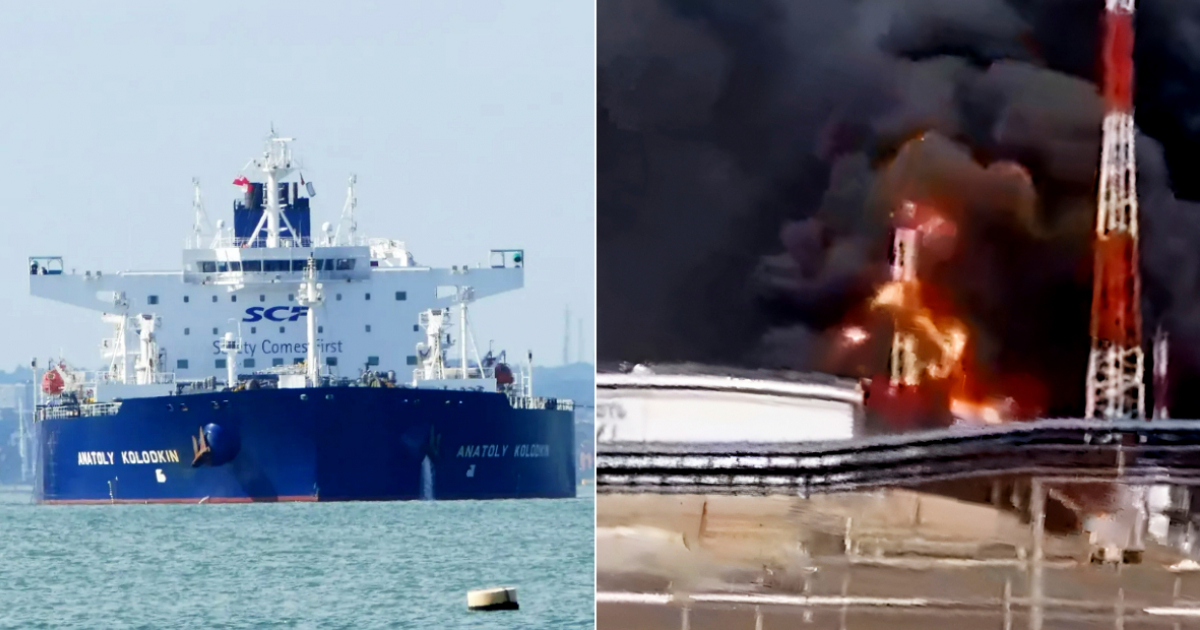
The arrival of the Russian tanker Anatoli Kolodkin in Cuba occurs in a context that is much more complex than it appears: the crude oil was loaded at the port of Primorsk, one of Russia's main energy infrastructures that has recently been targeted by Ukrainian drone attacks.
In recent days, Ukraine has intensified its offensives against the Baltic oil corridor, striking facilities in Primorsk and Ust-Luga, two key nodes for the export of Russian crude oil.
According to El Mundo, these attacks have caused fires, damage to storage tanks, and a partial suspension of operations, directly affecting Moscow's ability to maintain its shipments abroad.
The objective is clear: to reduce the Kremlin's revenue amid the war. Russia, the second largest oil exporter in the world, heavily relies on these sales, while Kyiv seeks to weaken this source of funding. Various analyses suggest that these operations would have the backing of Western intelligence.
In this scenario, the shipment of 730,000 barrels to Cuba takes on a different dimension. Although the administration of Donald Trump allowed the tanker to arrive —presented as a humanitarian gesture— Washington maintains effective control over the energy flow to the island, authorizing specific shipments while restricting the regime's stable access to fuel.
The result is a strategic paradox: the United States allows oil to arrive, but at the same time contributes —directly or indirectly— to weakening the infrastructure that makes those shipments possible. Russia manages to deliver shipments like that of the Anatoli Kolodkin, but under increasing pressure on its export capacity.
For Cuba, this translates into an even more fragile dependency. The shipment barely covers about a week of consumption in a country that needs around 100,000 barrels daily to sustain its electric system and its economy. Each shipment thus becomes a temporary respite within an increasingly uncertain supply chain.
In practice, this scenario reinforces an emerging trend: the United States is not only putting pressure on the Cuban regime but is also starting to position itself as the actor that, directly or indirectly, decides which oil reaches the island.
More than an energy relief, the case of Anatoli Kolodkin reflects how the Cuban crisis is trapped in a geopolitical game where Havana depends on external decisions to maintain its power or not.
Filed under: