
Related videos:
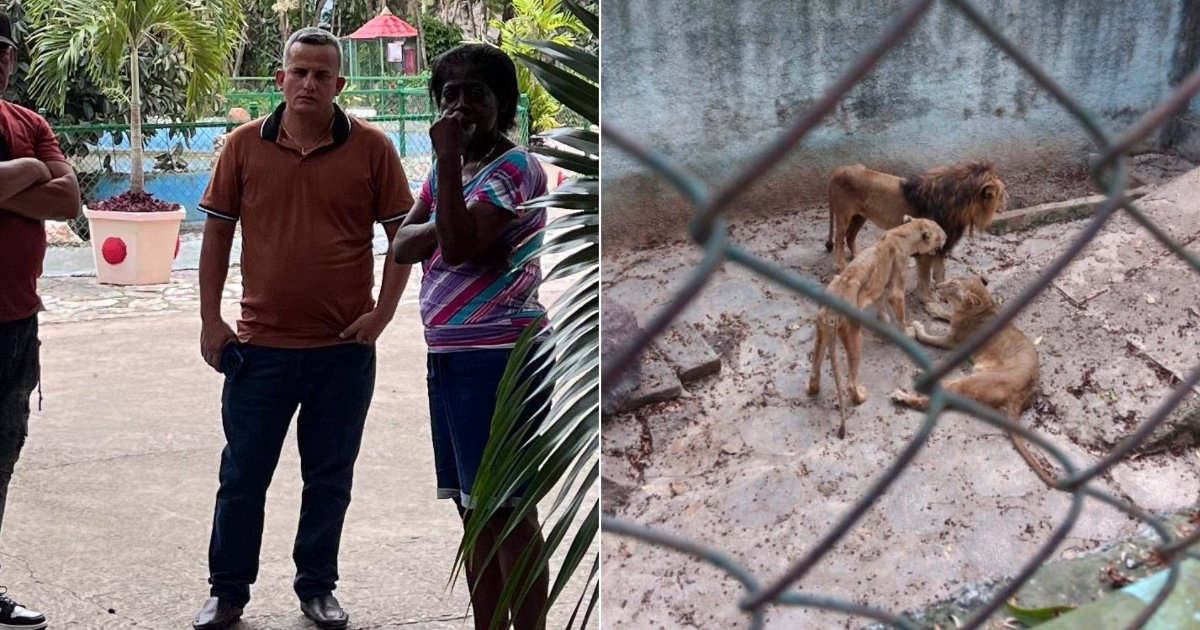
The director of the Casino Campestre zoo in Camagüey prohibited a group of citizens from directly feeding the animals in the enclosure, despite the visible signs of malnutrition they exhibited, and called the police when visitors questioned his behavior.
According to the testimony shared by the user Pedro González in the Facebook group Revolico Camagüey, he and other neighbors purchased products such as meat, guava, banana, and corn with their own resources to feed some animals, whose deplorable conditions had been reported days earlier on social media.
When they began distributing the food, a worker at the facility informed them that it was prohibited and called the director, who confirmed the ban with what González described as a "completely indifferent" attitude.
The director told them that "animals have a diet and do not go hungry," a statement that González immediately rebutted: "Where is that diet when animals are dying of hunger? Where is the care when the water is dirty and the environment is unhealthy?"
The group offered to provide their personal information and take full responsibility in order to feed the animals directly, but the director did not accept the proposal.
Paradoxically, the official offered them the alternative of donating the food to the zoo so that the staff could give it to the animals, an option that the citizens rejected. González explained the reason: "We all know what usually happens with donations: they don't always reach those who really need them."
In response to the criticism directed at the director, he called the police. According to González, the officers "understood the situation and there was no mistreatment," but stated they could not intervene.
The images accompanying the post show large blocks of frozen meat stored in black garbage bags alongside tropical fruits, the food that the group had gathered with their own resources for the animals.
The complaint comes just two days after the Cuban Yanaris Álvarez posted on Facebook images of severely malnourished lions in that same zoo, with ribs and bones visibly protruding.
The zoo at Casino Campestre is the largest in Cuba, with , and it is managed by the National Company of Zoos and Aquariums of Cuba.
The episode is part of a documented pattern of animal abandonment in zoos across the island. In December 2025, a lion at the zoo in the municipality of Florida had been without food for eight days, also in Camagüey.
In February 2026, the organization Bienestar Animal Cuba (BAC) reported abandonment and hunger at the Puerto Padre zoo, in Las Tunas.
In January 2026, the felines at the Santiago de Cuba zoo were being fed leftovers and were sleeping on their own waste.
Cuban authorities have not issued public statements in response to any of these complaints. Cuba approved an Animal Welfare Decree-Law in 2021, with fines ranging from 500 to 4,000 Cuban pesos, but institutions rarely take action against such allegations.
González summed up the contradiction with a phrase that encapsulates the outrage of those who attempted to help: "It is prohibited to feed the animals, but it does not seem to be prohibited for them to go hungry; it is prohibited to help, but not to abandon; it is prohibited to act, but not to turn a blind eye."
Filed under: