
Related videos:
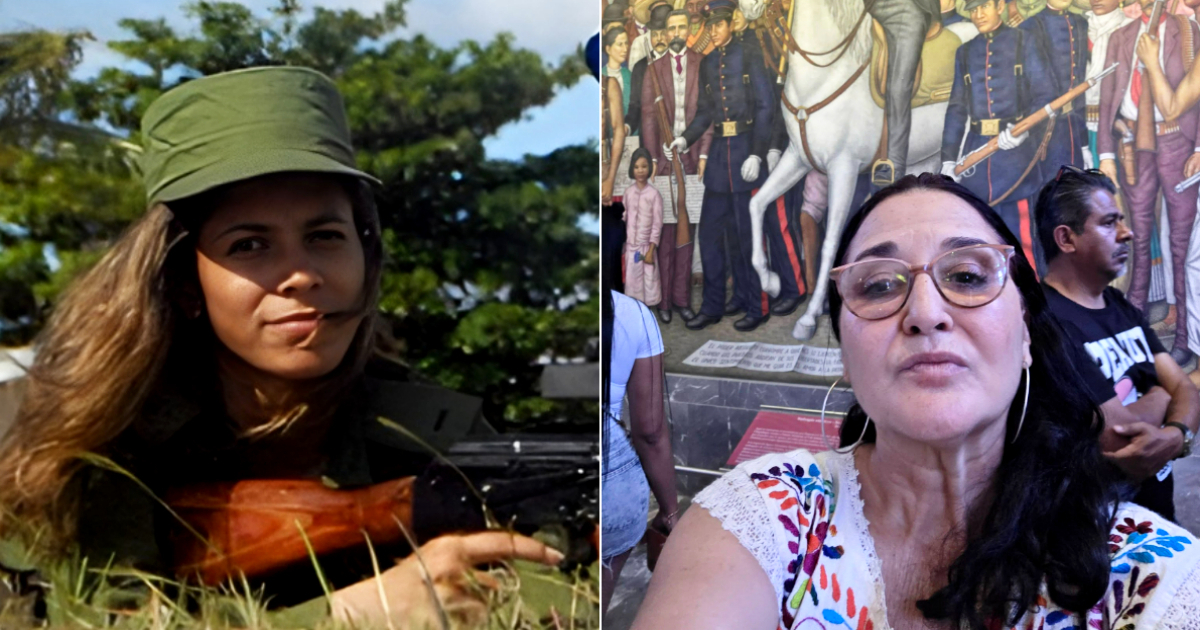
The recent statements made by Cuban diplomat Johana Tablada de la Torre have once again brought to light the belligerent rhetoric of the regime in the face of a potential conflict with the United States.
“It won't be a walk in the park for them, we are preparing”, the official told the newspaper El Sol de México, referring to a hypothetical scenario in which Washington decided to intervene on the island.
The official, the second-in-command at the Cuban embassy in Mexico, insisted that the country “does not want war,” but made it clear that the regime is prepared to respond militarily.
“If we have to fight, we are not few”, he added, reinforcing the worn-out and outdated narrative of resistance that the government has used for decades to unite the people against an "external enemy" and thus justify its internal control, repression against dissent, and its unchanging hold on power.
The statements from Tablada do not occur in a vacuum. They arise during a moment of maximum political, economic, and military tension, characterized by a sustained increase in pressure from the administration of President Donald Trump on the Cuban regime.
In recent weeks, high-ranking officials in Washington and President Trump himself have intensified an unusually harsh discourse, even labeling Cuba as a “failed state” and emphasizing the need for profound changes in its political system.
These statements have been accompanied by measures that tighten the energy blockade, exacerbating the already critical fuel shortage and causing prolonged blackouts across the island.
In parallel, the regime has responded with an escalation in its rhetoric and internal preparations. There has been an increase in military maneuvers by the Revolutionary Armed Forces (FAR), along with the reactivation of exercises known as “Defensive Saturdays”, aimed at preparing the population for confrontation scenarios.
For their part, state media have intensified the discourse of the "war of the entire people", a historical doctrine that calls for widespread mobilization in the event of conflict.
This climate occurs while the country is experiencing one of the worst crises in its recent history, marked by widespread shortages, rampant inflation, and an unprecedented migratory exodus.
Alongside the public confrontation, contacts and alleged discreet negotiations have also come to light between figures of the regime— including members of the Castro family—and actors in the United States, suggesting that beyond the official rhetoric, Havana may be exploring political solutions or assurances in the face of a potential transition scenario.
In this complex context, the words of military preparation not only reflect external tension but also the internal fragility of a system increasingly pressured from both within and outside the island.
Aware that the situation has changed, the Cuban regime hypocritically insists on attributing this circumstance to what it calls the "blockade," increasingly waving its propaganda in a grotesque manner to avoid acknowledging the failure of its own centralized economic model, which is widely criticized for its inefficiency and lack of freedoms.
Filed under: