
Related videos:
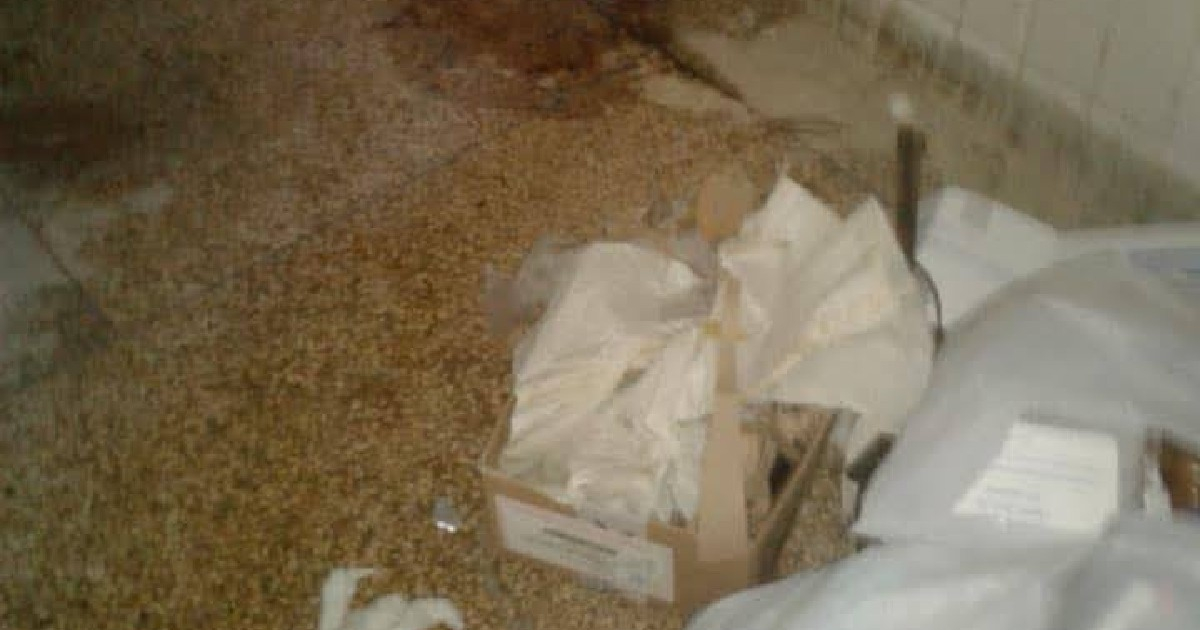
A report published on Facebook exposes the severely unsanitary conditions of the Intensive Care Unit at the Orlando Pantoja Tamayo General Hospital, in Contramaestre, Santiago de Cuba, where the most critical patients in the municipality are treated.
The post, published by independent journalist José L. Tan Estrada, includes images from photographer Yois Ramos that should raise the utmost alarm. "A toilet filled to the rim with sewage. A floor turned into a swamp of unidentified liquids. Rotten boxes. Bags thrown about. Waste paper scattered on the ground. Walls that haven't seen a clean cloth in who knows how long," Tan Estrada described.
"The cruelest part of all," the journalist remarked, "is that the patient inside did not choose to be there. Neither did their family. They arrived with fear, with pain, and with the hope that the hospital would save them. And the hospital welcomed them with that."
Meanwhile —he pointed out— the executives of the Ministry of Public Health "continue giving speeches about 'health as a conquest of the Revolution'," the party officials sleep soundly, and the nation continues to export medical services.
The same hospital had already been pointed out in December 2025 for its deplorable conditions. In January 2026, also in Santiago de Cuba, but at the Juan Bruno Zayas Clinical Surgical Hospital, sewage running under patients' beds was reported, clearly indicating a sustained structural and sanitary deterioration.
The images contribute to a series of complaints regarding the collapse of the Cuban hospital system. The Juan Bruno Zayas was also a victim of a massive cockroach infestation in the maternity ward bathroom, while children admitted to the La Colonia Española Children's Hospital, in the same province, were left without available treatment because the facility lacked distilled water, a basic requirement for conducting necessary tests.
The deterioration is not limited to the eastern territory of the Island. In Havana, the Calixto García Hospital experienced a partial roof collapse last November, while at the national level it was confirmed that, in July 2025, only 30% of the essential medication list was available, according to the admission of the government itself. With the intensification of the multidimensional crisis that is affecting the country, this shortage of medications may be even worse currently.
In addition to the above, there is the massive decrease in healthcare professionals. Cuba lost 30,767 doctors in just three years, dropping from 106,131 registered in 2021 to 75,364 in 2024, according to figures published by the National Office of Statistics and Information (ONEI), which leaves the system without the necessary personnel to maintain even minimal care.
In contrast, the Island's government continues to wield its rhetoric of "creative resistance" and praise the achievements of what was once a "medical powerhouse." Statements similar to those made by the Deputy Minister of MINSAP, Carilda Peña García, who stated on national television last December that "the Cuban system is better than that of many countries," are not uncommon. What a consolation.
Filed under: