
Related videos:
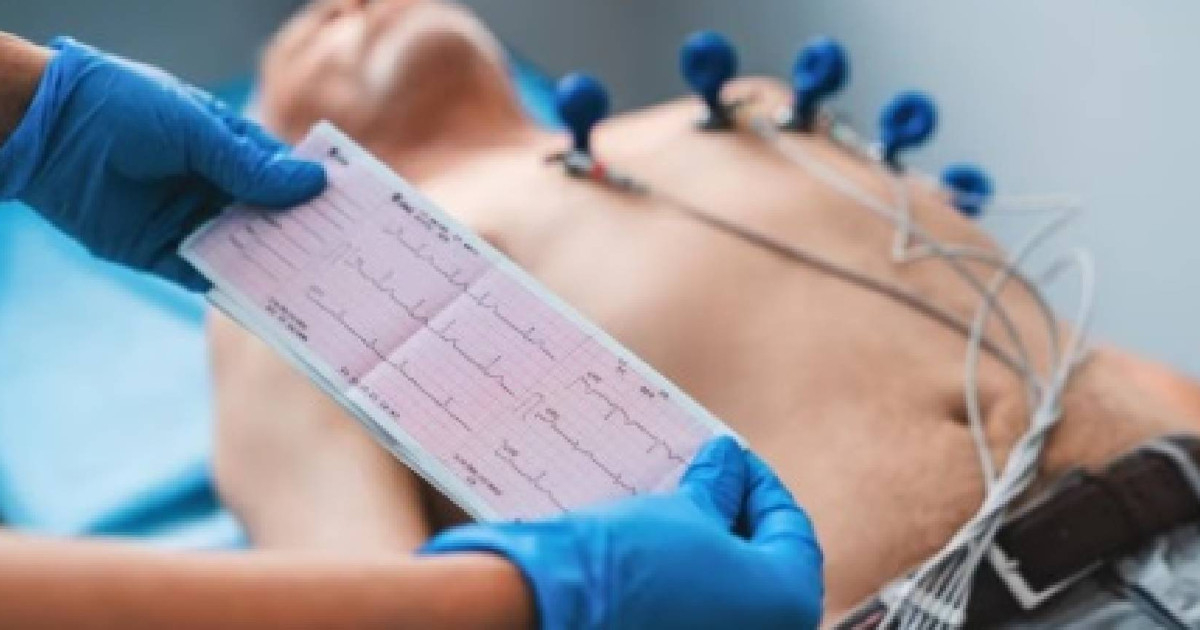
A man from Camagüey, suspected of having a heart attack, visited three medical centers on a recent Saturday before finally managing to get an electrocardiogram. In the end, the intern had to take a photo of the result with the patient's mobile phone because there was no electrocardiogram paper at the hospital.
The testimony was published on Facebook by the poet, editor, and independent journalist Pedro Armando Junco under the title "Creative Resistance," through the page of the alternative media outlet La Hora de Cuba, and it recounts the experience of his neighbor Manuel in the city of Camagüey.
It all began on a Thursday morning when Manuel, getting up in the dim light of a complete blackout, stumbled over a piece of furniture and hit his left side of the chest.
Two days later, with persistent pain under his left nipple, he decided to seek medical attention, but the family doctor's office was closed because it doesn't open on Saturdays.
He then went to the Polyclinic Center of Camagüey, the most important in the city, where he found a dark room with only two doctors on duty, no sphygmomanometers to take blood pressure, and no possibility of performing an electrocardiogram due to a lack of electricity.
The doctors examined him and, suspecting a heart attack, referred him to the provincial hospital for an electrocardiogram, cautioning him not to go on foot.
Manuel took a pedicab, which cost a significant portion of his monthly pension, and arrived at the Manuel Ascunce Domenech Clinical Surgical Hospital, the main hospital in the province.
At the heart center, they informed him that the electrocardiogram room does not operate on Saturdays and sent him to the emergency department in the other building.
There, the technician rejected his referral because only emergency orders issued at the center itself are valid, and Manuel had to wait in line again.
A young doctor attended to him, issued a new order, and took his blood pressure.
Finally, Manuel arrived at the stretcher with all the electrodes in place when the nurse made a request that encapsulated the state of the Cuban health system.
"Please lend me your mobile," said the doctor. "My mobile, for what?" Manuel replied. "To photograph the result of the electro... We don't have electrocardiogram paper," the doctor responded.
The title of Junco's story is not coincidental. Creative Resistance refers to an expression often emphasized by Miguel Díaz-Canel, and it was used again during a recent visit by the leader to the Neurology Institute in Havana to showcase advancements in artificial intelligence, while 97% of Cubans cannot find basic medications.
The Manuel Ascunce Domenech Hospital has accumulated a continuous chain of complaints: collapsed ceilings in operating rooms in November 2025, elderly patients without hygiene in Geriatrics in October 2025, and stagnant water, garbage, and rusty pipes next to the operating room documented this month.
The shortage of paper for electrocardiograms has tragic precedents. In August 2023, a patient died in Artemisa after being misdiagnosed with osteochondritis due to the lack of paper for the examination; in September of the same year, a Cuban doctor reported that her sister died in Placetas under similar circumstances.
Similarly, a group of residents from Reparto Eléctrico in Havana had to bring a private generator to the local polyclinic in June 2025 so that a patient could undergo an electrocardiogram, due to the total lack of electricity, generators, and emergency resources.
In March, the Director-General of the World Health Organization (WHO), Tedros Adhanom Ghebreyesus, described the health situation in Cuba as "deeply concerning", and warned that hospitals are struggling to maintain emergency and intensive care services, while the UN reports at least , including 11,000 in children.
Filed under: