
Related videos:
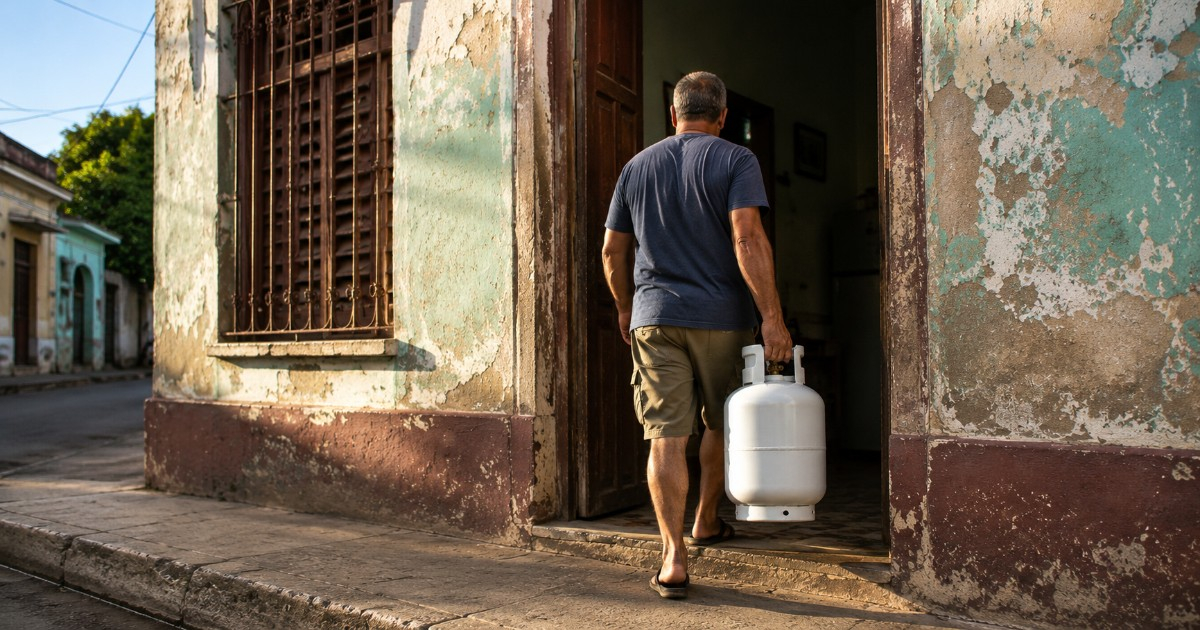
The liquefied gas canisters that Supermarket23 was selling until Wednesday for 29 dollars disappeared from its platform within hours, triggering a wave of ironic and indignant comments among Cubans trying to purchase them.
The question circulating on social media is the same one that a user summarized on Facebook: «Have they sold them all or were they told to take them down?».
The theories are multiplying, and none cast the regime in a good light. Some Cubans point to a political decision: “It was an order from above”, a commentator wrote sarcastically.
Others believe it was a deliberate market test: "That was definitely a test to gauge their acceptance. They ran out, but they will come back."
"They must have run out of capacity until they recharge again because that's a lucrative business and a necessity for Cubans," commented a user.
There are those who directly blame resellers: "Now search on social media, the resellers have them all. Good luck with that."
Internet users report that in the informal market, liquefied gas canisters are already being offered for 45,000 Cuban pesos, well above the price on the Supermarket23 and Katapulk platforms, where the product seems to still be available.
The most critical reading points to a familiar pattern: “Once again they set a bait for us and off we go to take the hook. They ran out and collected the money. My question is whether they know that a gas cylinder lasts only a couple of months and doesn’t refill itself. In two months, families will still be the same or worse.”
Another comment drew a parallel with the sale of fuel for dollars: "It was the same with gasoline, and now there’s an app because the line is so long with the number of people buying it. The same will be the business with the gas canister."
A person remarked: "In this country, how people criticize Americans while we are living thanks to them. Which blockade is worse, the one from outside or the one we have here within? No words."
The episode occurs within the context of a chronic crisis of state-supplied liquefied gas that the Cuban regime has been unable to resolve.
In January of this year, the tanker Emilia returned empty from Jamaica due to the inability of the Cuban government to pay, and more than 109,000 households in Matanzas have been without regular supply since October 2024.
In July of last year, Cuba halted the sale of liquefied gas nationwide while awaiting the arrival of the next ship, and prior to that it kept a ship anchored for nearly four months without being able to unload due to lack of payment.
In light of that gap, the regime has allowed private micro, small, and medium enterprises to import fuels from the United States under licenses from the U.S. government.
Platforms like Supermarket23 and Katapulk began selling the cartridges for $29 —equivalent to about 15,660 Cuban pesos at the unofficial exchange rate— a figure that is out of reach for most workers and retirees who receive salaries in national currency.
The outrage on social media sums it up plainly: "It's shameful that they don't give it to the people because supposedly there isn't any, and then, as if nothing is happening, they sell it in dollars."
With the inventory supposedly depleted and no confirmed restocking date, the lingering question is whether the platform will offer the product again —and at what price— or if this episode will remain just another chapter in the accelerated dollarization of essential services in Cuba.
Filed under: