
Related videos:
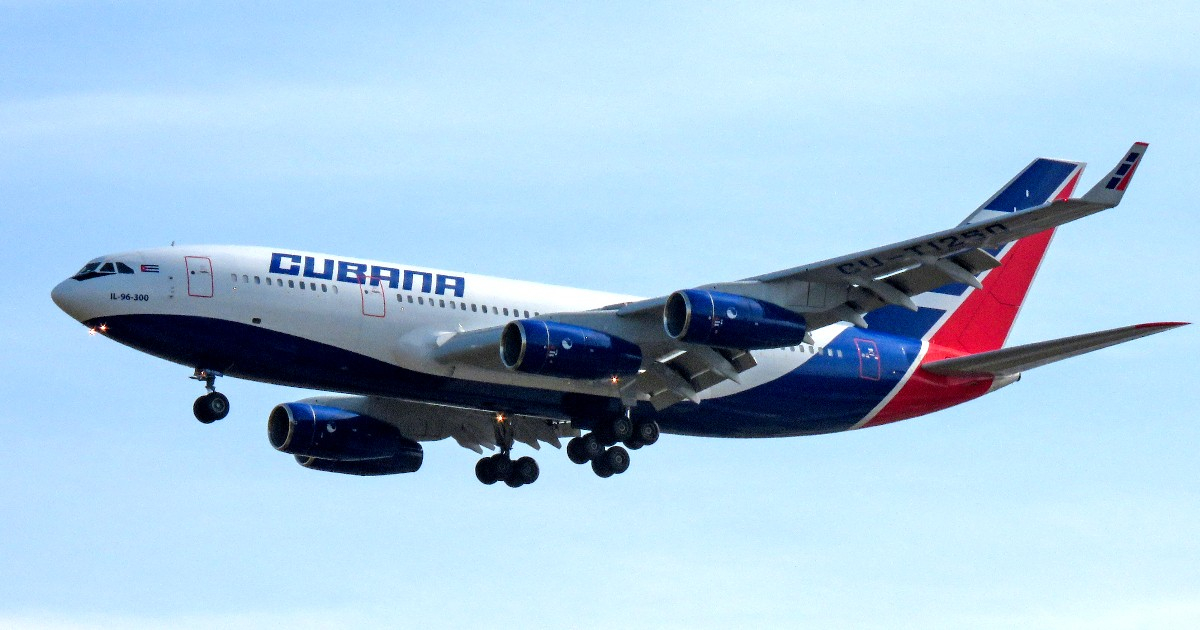
The state airline Cubana de Aviación canceled its only flight between Cuba and Spain starting Tuesday, May 12, according to Diario de Cuba (DDC), which accessed a statement sent to tour operators, sales agencies, and clients.
The notice states that "the operator contracted for the execution of your flights has announced the immediate cancellation of flights CU471/CU470 on the Madrid-Santiago de Cuba-Havana-Santiago de Cuba-Madrid route."
The operator referred to in the statement, without naming it, is the Spanish company Plus Ultra Líneas Aéreas, provider of Airbus A330-200 aircraft and crews for that route under ACMI contract.
According to the text, "the operator informs that the measure responds to risks arising from the Executive Order of May 1, 2026, issued by the Presidency of the United States, constituting a force majeure event beyond the company's control."
The executive order signed by President Donald Trump expands sanctions against the security apparatus of the Cuban regime and includes secondary measures that threaten to exclude foreign banks and companies that operate with sanctioned Cuban entities from U.S. markets.
That direct financial risk —the same risk that threatens Spanish hotel groups on the Island— led Plus Ultra to immediately cease its operation under the Cubana code, leaving the state airline without any transatlantic flights to Spain.
Plus Ultra, rescued with public funds and now under investigation for money laundering, has been supported by capital associated with chavismo, Equatorial Guinea, and contracts with the Cuban regime.
Cubana de Aviación reported that "the ticket amount will be refunded, in accordance with current regulations."
This cancellation is not the first sign of deterioration on the route. In February, Cubana had already reduced its frequencies due to the severe fuel crisis affecting the island, temporarily suspending one of its two weekly flights.
That service was also operated with a leased Airbus A330-200 from Plus Ultra and particularly affected passengers from eastern Cuba, who represented about 70% of the route's users.
Since then, return flights to Madrid were required to make a technical stop in Santo Domingo to refuel, another sign of the operational collapse that plagues Cuban aviation.
On its part, Iberia announced in April the cancellation of its direct flights from Madrid to Havana starting in June, with a possible resumption in November "provided that conditions allow it." During May, the Spanish airline will only operate two weekly flights before suspending its direct operations.
The overall picture is one of collapse: eleven airlines have suspended flights to Cuba in 2026, with over 1,700 flights canceled, leaving only eight companies operating routes to the island.
While the interruption of Cubana lasts, passengers will be able to fly to Cuba via Panama thanks to Iberia's code-sharing agreement with Copa Airlines, although this will result in longer travel times and additional costs for a Cuban community in Spain that is already facing very limited options.
Filed under: