
Related videos:
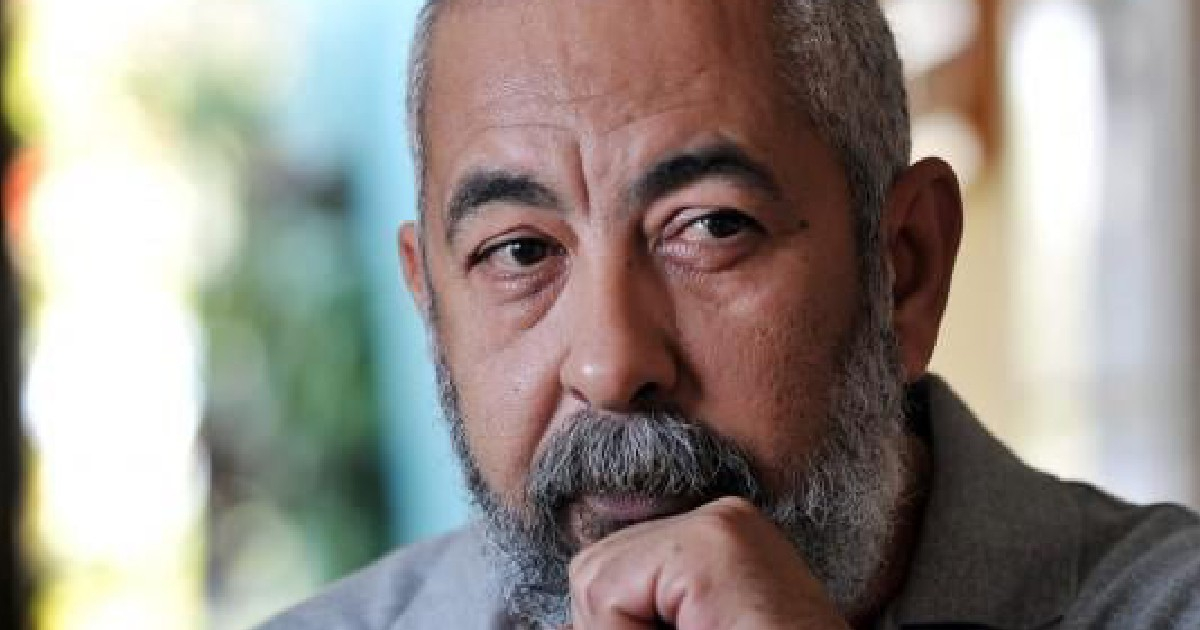
The Cuban writer Leonardo Padura published an opinion article this Saturday in El País titled "Cuba: dying in the sand" in which he dismantles, with historical irony and personal memory, the package of 176 economic measures approved by the regime in June 2026, and warns that the State, although conceding economic ground, will not relinquish the power that matters most to it.
Padura opens the text in the Spanish newspaper with a memory from 1968: while walking to school in his Havana neighborhood, he found the local hardware store closed, intervened by the Revolutionary Offensive that year, which nationalized thousands of small private businesses across the island.
That episode was, he writes, his first revelation of what it meant to undergo a radical revolutionary process: the store "would become the property of the people, although in reality it belonged to the State," and it never reopened.
From that image, the novelist charts an arc of nearly six decades to reach the present: the same government, with the same system and almost the same people in charge, now announces that any Cuban can open a factory with salaried workers or establish a private bank.
"It has taken the Cuban society to descend into the darkest general crisis for what is unacceptable, punishable, and condemnable to be considered now convenient, appropriate, and just," writes Padura.
The writer points out that the regime's greatest fear for decades was not private property itself, but its political consequences: "Without it being expressly stated, that has always been the political reason influencing that society. It is well known that money can alter policies."
Padura also points to external pressure as a trigger: "a maximum pressure policy projected from Washington, including threats of military action, has been necessary for the rigid economic system of the country to be reversed." However, he warns that this opening has a precise limit: the State intends to maintain "the most important and efficient of its industries, that of control." In Cuba, he writes, "one can play with each link in the chain but without touching the monkey."
The article also has an autobiographical dimension that illustrates the brutality of the prohibitions that are now being lifted: Padura's father was sentenced in 1985 to six months in prison "accused of currency trafficking for having purchased hair dye for the hair salon —of course, clandestine— that my mother operated in the patio of our house."
The 176 measures approved by the regime include the authorization of private banking, currency exchange houses, the elimination of the 100-worker limit for small and medium-sized enterprises, and the possibility for an individual to hold more than one company. The economist Pedro Monreal described them as a "deformed hybrid" for being based on the logic of revocable concessions rather than guaranteed rights.
The context in which these reforms arrive is devastating: power outages of up to 22 hours a day in Havana and many more in the interior provinces, shortages of most essential medications, a 26% drop in GDP since 2020, and a real inflation rate close to 70%. Since 2021, nearly two million Cubans —approximately 15% of the population— have left the country.
Padura describes this social fracture with precision: “while in some sectors of society flashes of wealth can be seen, in others, the majority, a rampant impoverishment has occurred that, by 2026, has forced that large human mass to exist at stark levels of survival.”
The writer concludes with questions he deems almost always alarming: who will trust a government that has spent decades cultivating distrust to now invest in Cuba, and who, within the power structures, will be better positioned to benefit from what he refers to as a "predictable investor piñata."
Filed under: