Related videos:
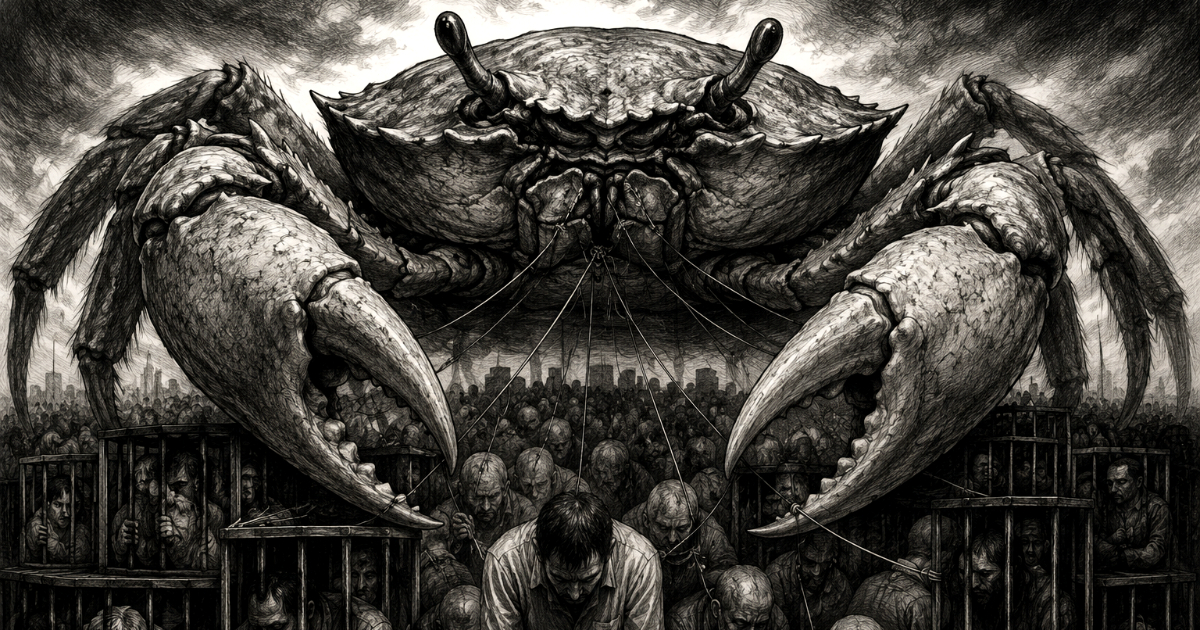
Raúl Guillermo Rodríguez Castro, known as 'El Cangrejo', stated that the Cuban regime would be willing, “under the right conditions,” to release individuals “considered political prisoners”.
He did not explain what those conditions were. And in that omission likely lies the most important part of his message.
'El Cangrejo' did not present the release as a remedy for an injustice, the result of a judicial review, or the restoration of violated rights. It was presented as a possibility subject to conditions that are still unknown.
The difference is fundamental: those who acknowledge a right do not demand a price to return it.
He also did not say who would have to meet those conditions. Would it be the United States, through a relaxation of sanctions, easing fuel imports, or some form of political recognition? The prisoners themselves, accepting exile, silence, or a freedom subject to monitoring?
So far, there is no public explanation. However, the context and background allow for questions that Havana should address.
Conditions for Washington?
The statement did not arise in a conversation about justice or human rights. It was part of the first interview granted to a U.S. media outlet by a member of the Castro family in decades and the presentation of 'El Cangrejo' as a potential interlocutor for Washington.
Rodríguez Castro, a colonel of the Ministry of the Interior (MININT) without an official position in the government, claimed that he could negotiate with any representative appointed by the United States, including Donald Trump.
In that same context, their support for an agreement with Vanguard Energy to send approximately 250,000 barrels of gasoline and diesel to Cuba was announced, an operation that could partially alleviate the severe energy shortage on the island.
There is no public evidence that 'El Cangrejo' was offering prisoners in exchange for fuel or relief from sanctions. To assert it as a fact would go beyond the available information. However, it is legitimate to wonder if the “appropriate conditions” relate to that broader negotiation.
Selective releases in exchange for reopening oil channels? A humanitarian gesture in exchange for reducing pressure on the regime's economic structures? Recognition of 'El Cangrejo' as an acceptable interlocutor? Acceptance of some market reforms without a political transformation?
The phrase is particularly disturbing because it turns prisoners into a potential diplomatic resource. Their freedom stops being seen as a state obligation and begins to function as something that the leadership could grant when external circumstances are favorable.
Conditions for prisoners?
The other possibility is even more concrete, as it has numerous precedents: that the conditions are not directed solely at Washington, but also at those who are in prison.
In Cuba, "to liberate" has not always meant to fully restore freedom.
A report from Justicia 11J on the releases that began in 2025 documented revocable prison benefits, movement restrictions, police surveillance, frequent summonses, and threats of returning to prison.
The sentences remained in effect and state control continued outside of prisons. The organization described the process as a shift in punishment: from formal incarceration to monitored release.
That background allows us to ask what El Cangrejo understands by "liberate".
Leaving prison while holding onto the sentence? Not posting on social media? Stepping away from activism? Regularly reporting to the police? Accepting that any criticism could lead to being returned to a cell?
Or abandon the country?
The cases of Luis Manuel Otero Alcántara and Maykel Osorbo provide a particularly serious clue. According to recordings obtained by , agents of State Security presented them with an alternative after a meeting between representatives from Cuba and the United States: exile or imprisonment.
Osorbo was reportedly warned that he could emigrate or remain imprisoned until 2030.
The situation following Otero Alcántara's case raises even more questions. As he completed his five-year sentence, he was taken out of Guanajay prison without his family knowing his whereabouts.
While under the control of State Security, agents inquired within his circle about the processing of a humanitarian parole to travel to the United States.
Amnesty International demanded her immediate release and reported that she remained missing after her sanction formally expired.
That procedure does not resemble a release. It resembles the state administration of the fate of a person whose sentence has already ended.
The prisoner does not regain the right to return home, continue their work, and remain in their country. The authorities decide if, when, and where they must go.
The exile is presented as a penitentiary benefit.
What 'El Cangrejo' Didn't Say
Rodríguez Castro did not talk about reviewing judicial processes, overturning arbitrary convictions, investigating torture, or providing reparations to those who were imprisoned for exercising fundamental rights.
It also did not mention the restoration of civil rights, the end of surveillance, the possibility for exiles to return, or the necessary guarantees to ensure that no one returns to prison for protesting, writing a slogan, or publishing a complaint.
He spoke about releasing individuals when the appropriate conditions are met.
The difference between both formulations is the difference between justice and transaction.
The regime already demonstrated in April that it knows how to distinguish perfectly between common prisoners and political prisoners. It announced a pardon for 2,010 inmates, but Human Rights Watch, Justicia 11J, and Prisoners Defenders did not identify a single political prisoner among those granted the pardon.
The exclusion specifically affected individuals convicted under charges such as contempt, propaganda, outrage, and other so-called "crimes against authority."
The decision revealed that the leadership is aware of who the political prisoners are. They identify them when they need to exclude them and mention them when they believe they can negotiate with them.
A power that does not come from the law
There is another question that the phrase leaves open: what authority does 'El Cangrejo' speak with?
He is neither the Minister of Justice, the president of a court, nor an elected representative. He does not hold an official position that would allow him to announce a penitentiary policy or negotiate judicial decisions. However, he speaks as someone who can place the freedom of hundreds of citizens on the negotiation table.
His power does not come from the law or from votes. It comes from the surname, from his influence over the military establishment and from his proximity to the family core that has governed Cuba for decades.
This perhaps explains the ease with which he presents freedom as something available for negotiation. In a rule-of-law state, a government cannot keep innocent people imprisoned until it receives something in return. In a patrimonial system, prisons can become storage facilities for political concessions.
The problem is not just that there are political prisoners. It's that someone without a citizen mandate (even if it's formal) takes it upon themselves to decide who may be released and under what conditions.
The "appropriate conditions" should not be those that guarantee fuel, relief from sanctions, investments, or continuity for the leadership. Nor should they force prisoners to choose between silence, surveillance, and exile.
The only response compatible with justice is immediate and unconditional release, the annulment of arbitrary convictions, and the full restoration of their rights.
Everything else runs the risk of turning human beings into negotiable capital.
The Crab did not specify the price. But when discussing "appropriate conditions," it made it clear that those in power believe they have the right to set it. It emphasized that Cuba is a dictatorship.
Filed under: