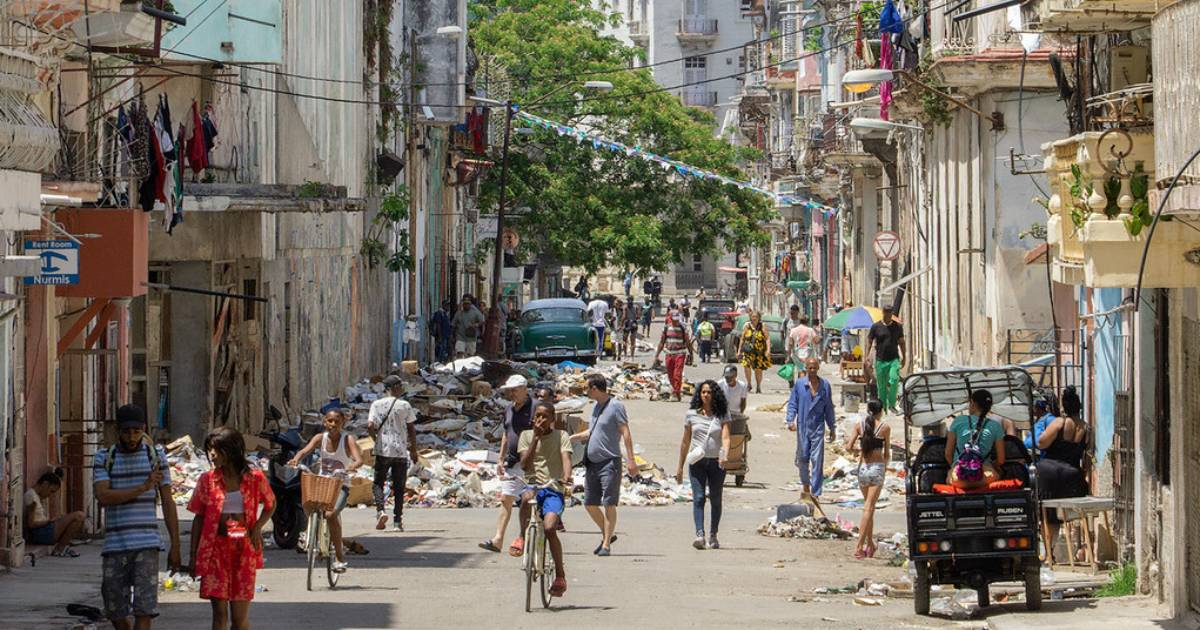
A primary care doctor in Cuba summed up the deep emotional exhaustion she observes among her patients amid the crisis the country is facing: "There was hope before."
"Right now, what people have lost is exactly that," stated Dr. Yomeidis Felicó Riverón to the agency AP in a report on the psychological cost of the crisis.
Felicó Riverón explained that people come to his practice who, in addition to their physical ailments, need to vent about a daily reality marked by blackouts, scarcity, and difficulties in meeting basic needs.
"They come to cry about their troubles because they have no one else to confide in," he recounted. "It falls to us to be a bit like psychologists."
Emotional deterioration is also reflected in recent research. A study published in 2026 in Social Science & Medicine, based on 415 adult Cubans surveyed between July and November 2025, found that 55.4% experienced extremely severe depression, while 66% reported severe anxiety and 65.8% experienced extreme stress.
The pressure on Cubans comes from multiple fronts: prolonged power outages, difficulties accessing water, fuel shortages, the deterioration of housing, and serious transportation issues, in a country that has seen a population decline after years of emigration.
This is compounded by the deterioration of sanitary conditions. The U.S. Embassy in Havana recently issued two public health alerts. On August 28, it warned that "the water supply infrastructure in Cuba is becoming increasingly unstable" and that some neighborhoods go long periods without service.
On September 4, the diplomatic mission also warned about an increase in gastrointestinal diseases, including infections from E. coli, norovirus, and Shigella, which it linked to the "deterioration of water and energy infrastructure."
Exhausted parents facing a crisis that is also affecting their children
The psychological impact particularly affects parents, often forced to try to protect their children from the hardships faced by the family.
Felicó Riverón herself shared that she tries to ensure her son doesn't know when there's a shortage of food at home. "My son doesn't know if there's food or if there isn't," she explained. To keep him from noticing, she tries to distract him with games or outings.
Dianne Tamayo, another mother interviewed by AP, broke down in tears while explaining that for years she has been accumulating emotions without finding a way to release them.
"I try to do the best I can with the tools I have, but there comes a point where it overwhelms me," he acknowledged.
His description of what he is experiencing was even harsher: "They are exterminating us. And we continue to be compliant."
The lack of medications further complicates the situation. The Minister of Public Health, José Ángel Portal Miranda, acknowledged in 2025 before members of the National Assembly that the healthcare system is experiencing an unprecedented structural crisis, characterized by a coverage of barely 30% of the basic medicines list and a widespread deterioration of medical services.
Survive another day
The AP report also depicts how this exhaustion is manifested in everyday life.
Óscar Joaquín López, 81 years old, spends part of the nights sitting in the doorway, seeking some breeze and with a steel pipe by his side to protect himself from potential intruders.
His strategy in the face of despair is to resist: "Because you go crazy, and no one is going to drive me crazy."
Armando Lafita, 60 years old, walks through Old Havana pushing a cart filled with bouquets of roses and white butterflies that he sells for just a few cents. There are days when he returns home without having sold any.
"Here, everyone is fighting to survive," he stated. "Every day it's becoming more difficult."
Amidst this landscape, family ties emerge as one of the few lifelines. Lafita thinks of her 19-year-old son, while 70-year-old José Manuel Borroto Díaz draws strength from his 93-year-old mother.
"The situation we have is like a movie, but we are going to move forward," Borroto assured.
The mental health crisis in Cuba is progressing in tandem with material shortages and the decline of essential services.
But among all the testimonies, Felicó Riverón's warning perhaps encapsulates one of the deepest consequences of years of crisis: it is no longer just about living with less electricity, water, food, or medicine, but rather about an increasingly exhausted population that, as the doctor observes in her own practice, is even losing hope that the situation will improve.
Related videos:
Filed under: